Chinese
 Spanish
 Russian
 Portuguese
 French
 German
 Indonesian
 Thai
Thai Vietnamese
 Arabic
 Italian
 Turkish
 Polish
 Japanese
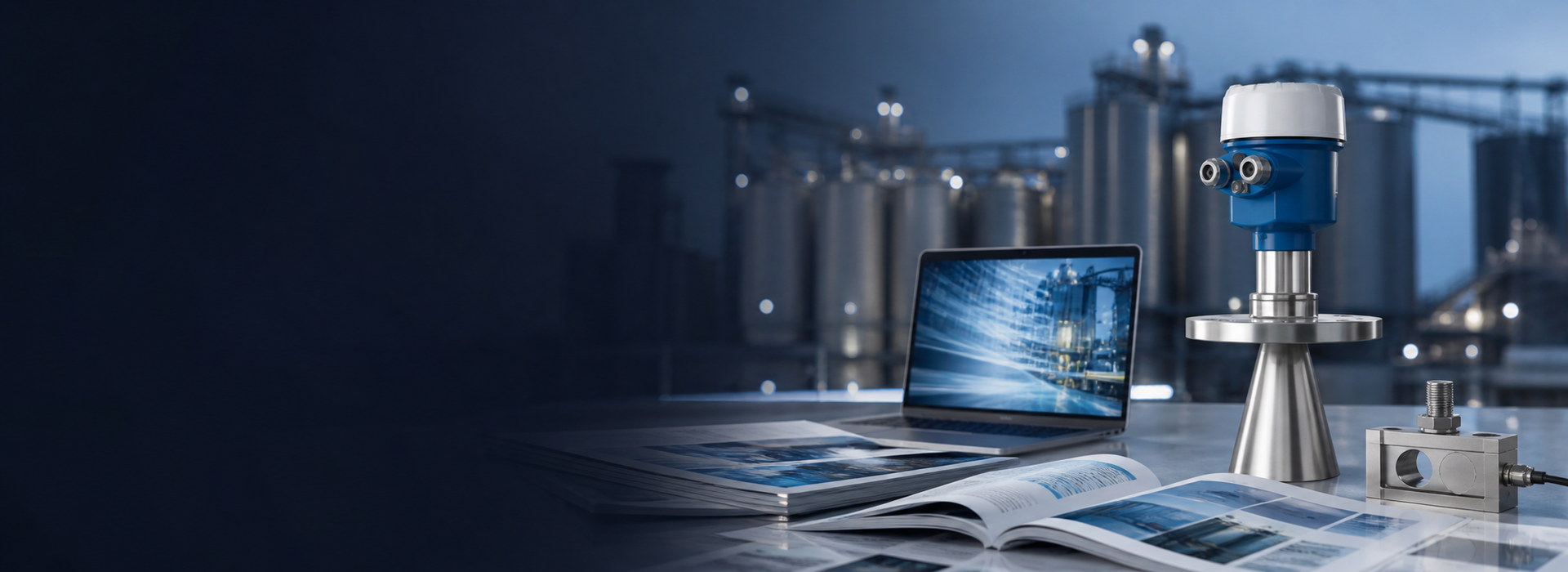
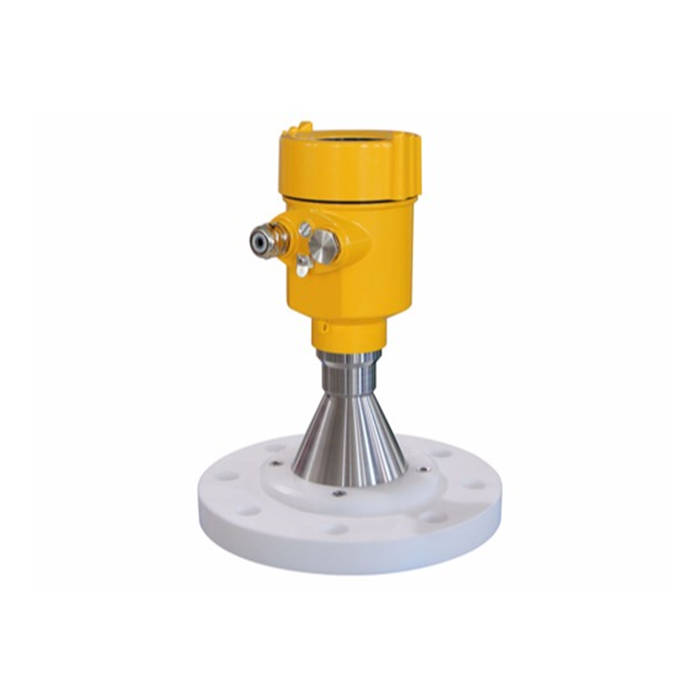
A radar level sensor is a non-contact instrument that uses electromagnetic waves for continuous level measurement. It is normally installed above a tank, vessel, basin, or silo and transmits radar signals toward the liquid or material surface. The reflected echo is then analyzed to determine the distance between the sensor and the measured surface.
Compared with pressure-based, float, and other contact measurement technologies, free-space radar does not need to remain immersed in the process medium. This makes radar particularly suitable for corrosive, viscous, high-temperature, high-pressure, and difficult-to-maintain applications. Radar technology is also widely used for liquids, slurries, powders, and granular bulk solids.
1. How Does a Radar Level Sensor Work?
Radar Transmission
The antenna transmits high-frequency electromagnetic waves toward the material surface.
Surface Reflection
The radar signal is reflected by the liquid or solid surface and returns to the sensor.
Distance Calculation
The instrument analyzes the transmitted and reflected signals to determine the distance to the material surface.
Level Conversion
Tank geometry and configured range values are used to convert distance into level, percentage, or volume.
2. Why Is Radar Considered a Non-Contact Level Sensor?
A free-space radar sensor is mounted above the process medium and does not need to be immersed in the liquid or bulk material. This eliminates many mechanical and process-contact problems associated with floats, moving parts, and permanently immersed probes.
No Direct Contact
Suitable for corrosive, viscous, or contaminating process media.
Low Mechanical Wear
There are no float mechanisms that must move continuously with the liquid level.
Reduced Maintenance
Routine checks mainly focus on the antenna, wiring, sealing, and instrument diagnostics.
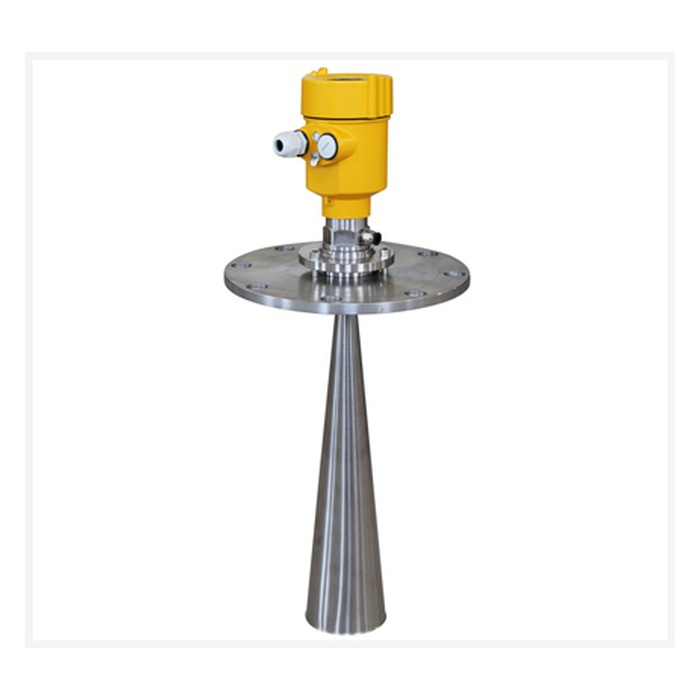
3. Main Advantages of Radar Level Sensors
| Advantage | Engineering Benefit |
|---|---|
| Non-contact measurement | Reduces corrosion, contamination, and mechanical wear. |
| Independent of liquid density | Density changes do not directly create level conversion errors as they can with hydrostatic measurement. |
| Suitable for demanding process conditions | Specialized models are available for high temperature, high pressure, and vapor applications. |
| Liquids and bulk solids | One measurement principle can cover tanks, vessels, basins, and silos. |
| Wide accuracy range | Different radar designs can provide millimeter-level process measurement and high-accuracy tank gauging. |
4. Is Radar Completely Unaffected by the Process Medium?
No. Radar is generally not directly affected by density in the same way as hydrostatic level measurement, and it does not depend on the speed of sound in air like ultrasonic measurement. However, the process medium and surface condition still influence echo quality.
Dielectric Properties
The dielectric properties of the medium influence radar reflection strength.
Surface Condition
Turbulence, agitation, or inclined surfaces may change the direction of the reflected signal.
Foam
The effect depends on foam thickness, density, and dielectric behavior.
Antenna Buildup
Heavy condensation, coating, or crystallization may reduce signal strength.
5. Common Problem: False Echoes from Internal Obstructions
Typical vessel internals include:
Support beams;
Grids;
Heating coils;
Agitators;
Internal supports;
Pipes.
These structures can generate strong reflections and may cause unstable readings, fixed values, or incorrect full-scale indication. Modern radar instruments often use multi-echo tracking and false-echo suppression to distinguish the true product surface from internal obstructions.
Recommended action:First optimize sensor location and beam direction to avoid major obstructions. If this is not possible, analyze the echo curve and use false-echo suppression according to the instrument manual.
6. Common Problem: Installation Too Close to the Filling Point
A radar sensor should generally not be installed directly above a strong filling stream.
Splashing
Liquid droplets or moving material may enter the near-field measurement zone.
Severe Surface Movement
Fast filling can produce turbulence and inclined liquid surfaces.
Dust or Vapor
The filling process can create complex atmospheric conditions in the vessel.
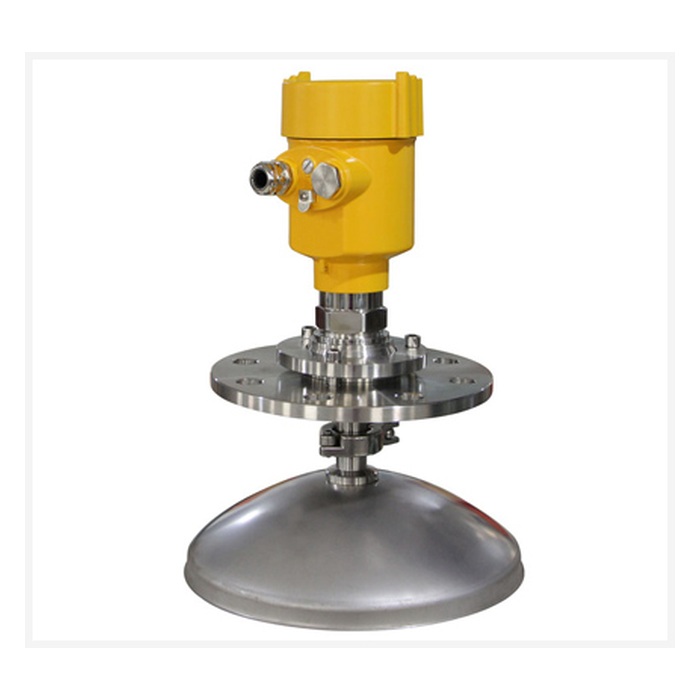
7. Common Problem: Foam and Vapor
Radar generally performs better than ultrasonic measurement in vapor applications because electromagnetic waves do not depend on the speed of sound in the gas space. However, it is not correct to assume that all vapor and foam conditions have zero effect.
Special evaluation may still be required when there is:
Thick foam;
Severe boiling;
Heavy condensation;
Rapid temperature changes;
Liquid accumulation on the antenna.
8. Why Does a Radar Level Meter Suddenly Jump to Full Scale?
| Possible Cause | What to Check |
|---|---|
| Loss of true surface echo | Review echo curves and diagnostic status. |
| Strong near-field interference | Check nozzles, beams, and structures close to the antenna. |
| Foam or splashing | Observe process conditions during filling and agitation. |
| Incorrect configuration | Check measuring range, blocking distance, fault output, and false-echo settings. |
9. Typical Applications of Radar Level Sensors
Liquid Storage Tanks
Water, oils, chemicals, and other process liquids.
Process Vessels
Suitable for demanding process conditions, with careful consideration of agitators and internals.
Wastewater and Sludge
Non-contact measurement reduces direct contamination of the sensor.
Bulk-Solid Silos
Suitable for grain, cement, mineral powders, pellets, and other bulk solids.
High Temperature and Pressure
Specialized radar models are available for extreme process conditions.
Corrosive Media
Free-space radar avoids direct contact with the process medium, although process-connection materials must still be compatible.
10. What Information Is Needed for Radar Level Sensor Selection?
Medium
Liquid or solid
Medium name
Viscosity
Foam
Dielectric properties
Tank
Height
Diameter
Internal structures
Filling point
Process connection size
Process
Temperature
Pressure
Vapor
Dust
Vacuum condition
Electrical
Power supply
4–20 mA
HART
RS485
Explosion protection
FAQ: Radar Level Sensors
1. Is a radar level sensor a non-contact sensor?
Yes, free-space radar is a non-contact measurement technology. The sensor is installed above the medium and measures the surface using electromagnetic waves.
2. Can radar measure bulk solids?
Yes. Radar level transmitters are widely used for cement, mineral powder, grain, plastic pellets, and other powdered or granular bulk materials.
3. Is radar affected by liquid density?
Radar directly measures distance, so changes in liquid density generally do not cause the direct level conversion errors associated with hydrostatic measurement.
4. Is radar affected by vapor?
Normal vapor conditions generally have limited influence, but severe steam, condensation, extreme temperature, or liquid accumulation on the antenna still require proper instrument selection.
5. Why does radar sometimes jump to full scale?
Common causes include loss of the true surface echo, internal obstructions, filling interference, thick foam, strong near-field echoes, or incorrect range and fault settings.
6. Can radar be installed directly above the filling point?
It is generally not recommended because filling streams, splashing, dust, and severe surface movement may increase measurement interference.
7. What information does METRAVON need for selection?
Please provide the medium, measuring range, tank height and diameter, internal structures, filling point, temperature, pressure, foam, vapor, dust, process connection size, output signal, explosion-protection requirements, and installation photos.
Conclusion
Radar level sensors are a mature non-contact technology for continuous level measurement. Their main advantages include no direct contact with the process medium, wide application range, low sensitivity to density changes, and strong suitability for demanding temperature, pressure, and dusty environments.
However, radar measurement is not completely independent of process conditions. Internal obstructions, filling location, foam, condensation, antenna buildup, and the dielectric properties of the medium can all influence measurement performance. For METRAVON radar level sensor selection, the medium, measuring range, vessel structure, process conditions, installation position, and signal requirements should always be considered together.