Chinese
 Spanish
 Russian
 Portuguese
 French
 German
 Indonesian
 Thai
Thai Vietnamese
 Arabic
 Italian
 Turkish
 Polish
 Japanese

1. What Does a Radar Level Transmitter Antenna Actually Do?
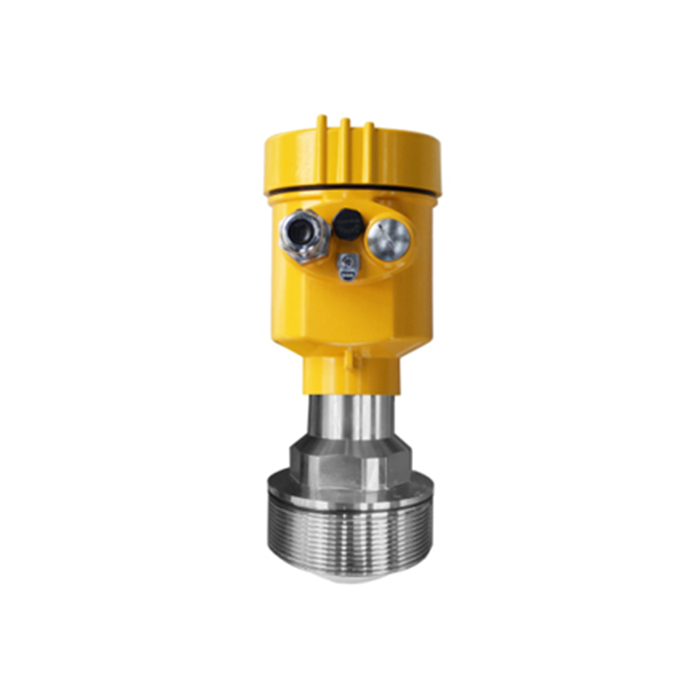
The antenna is one of the most critical components of a radar level transmitter.
It mainly performs two functions:
First, it transmits electromagnetic waves toward the surface of the measured medium.
Second, it receives the radar echoes reflected from the surface of the measured medium.
The instrument's electronic unit then calculates the distance between the antenna and the medium surface based on the relationship between the transmitted signal and the returned signal.
Therefore, the antenna is not simply an external accessory or housing component.
The antenna structure directly affects:
Beam angle;
Signal gain;
Echo strength;
Resistance to interference;
Installation dimensions;
Temperature resistance;
Corrosion resistance;
Resistance to condensation and material buildup.
2. Why Does a Larger Antenna Usually Produce a Narrower Beam?
For radar instruments operating within the same frequency band, a larger effective antenna aperture generally produces a narrower beam and higher directivity.
Taking one 26 GHz radar product from Endress+Hauser as an example:
A 40 mm antenna corresponds to a beam angle of approximately 23°, while a 100 mm antenna can reduce the beam angle to approximately 8°. At a measuring distance of 20 m, the difference in beam coverage diameter between the two antenna sizes is significant.
Siemens technical data for 25 GHz industrial radar shows a similar relationship. Depending on horn size, typical beam angles are approximately 19°, 15°, 10°, and 8°, and the manufacturer recommends using a larger antenna where installation conditions allow.
This means that in tall and narrow tanks:
The narrower the beam, the easier it is to avoid tank walls and internal structures.
3. What Is the Beam Angle of a Radar Level Transmitter?
The beam angle does not mean that there is absolutely no radar energy outside the specified angle.
Industrial radar instruments normally define beam angle according to a specified energy reduction boundary within the main beam, such as the 3 dB beamwidth.
Even outside the nominal beam angle, some radar energy may still be present.
Therefore, a very strong reflecting object located near the edge of the main beam may still generate a false echo.
This is why radar installation should not be evaluated based only on a single centerline.
The entire beam coverage area should be considered.
4. What Types of Radar Antennas Are Commonly Used?
4.1 Horn Antenna
Horn antennas are one of the most common structures used in traditional industrial radar level transmitters.
Typical characteristics include:
Good directivity;
Mature industrial application technology;
Availability in different aperture sizes;
Suitability for most storage tanks;
Suitability for liquids and some bulk-solid level applications.
At the same operating frequency, a larger horn aperture generally provides better focusing capability.
Typical applications include:
Chemical storage tanks;
Water tanks;
Oil tanks;
Process vessels;
General bulk-material silos.
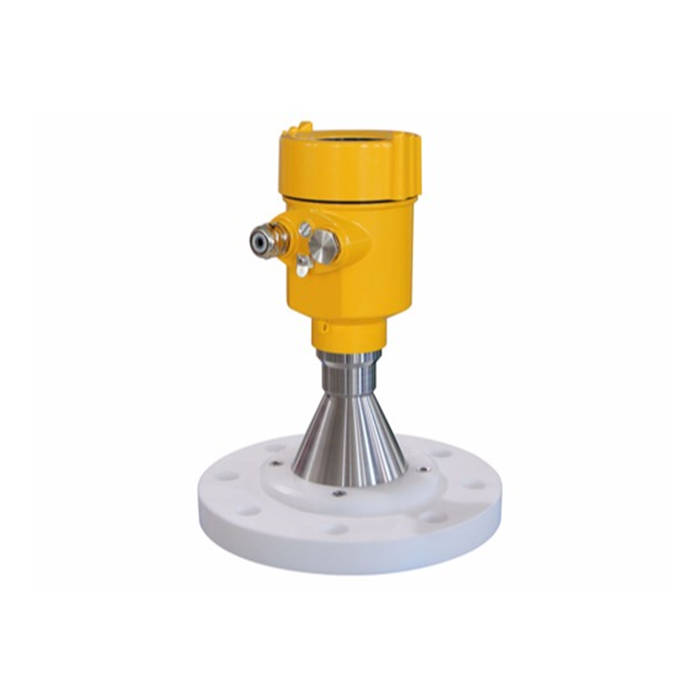
4.2 Parabolic Antenna
The main advantages of a parabolic antenna are high gain and strong focusing capability.
In traditional 26 GHz radar level transmitters for bulk solids, large parabolic antennas can produce very narrow beams. They are therefore particularly suitable for:
Tall silos;
Narrow silos;
Vessels with many internal structures;
Low-reflectivity bulk solids;
High-dust applications.
According to Endress+Hauser technical data for a 26 GHz bulk-solids radar, DN200 and DN250 parabolic antennas can provide typical beam angles of approximately 4° and 3.5 %, respectively.
4.3 Rod Antenna
Rod antennas have a relatively compact structure and are suitable for smaller process connections.
Different products may use PTFE, PEEK, or other corrosion-resistant materials.
They are commonly used for:
Small process connections;
Corrosive media;
Storage tanks with limited installation space.
However, actual temperature resistance, pressure resistance, and chemical compatibility must be evaluated according to the specific antenna material.
It should not be assumed that all rod antennas are suitable for every corrosive medium.
4.4 Planar Antenna
Some planar antennas are specifically designed for stilling-pipe applications.
For example, certain radar products use a specially designed planar antenna together with a metal stilling pipe to improve signal propagation and echo measurement stability inside the pipe.
The installation requirements for this type of structure are not completely identical to those of conventional free-space radar.
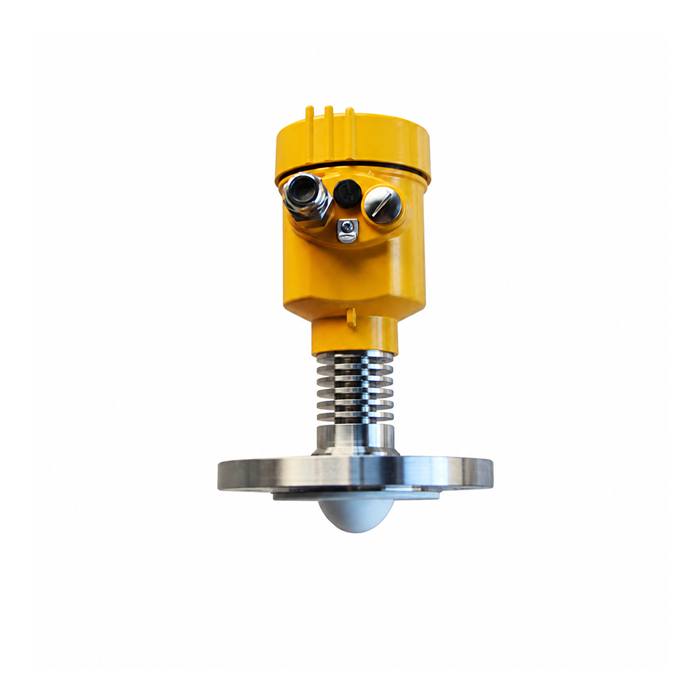
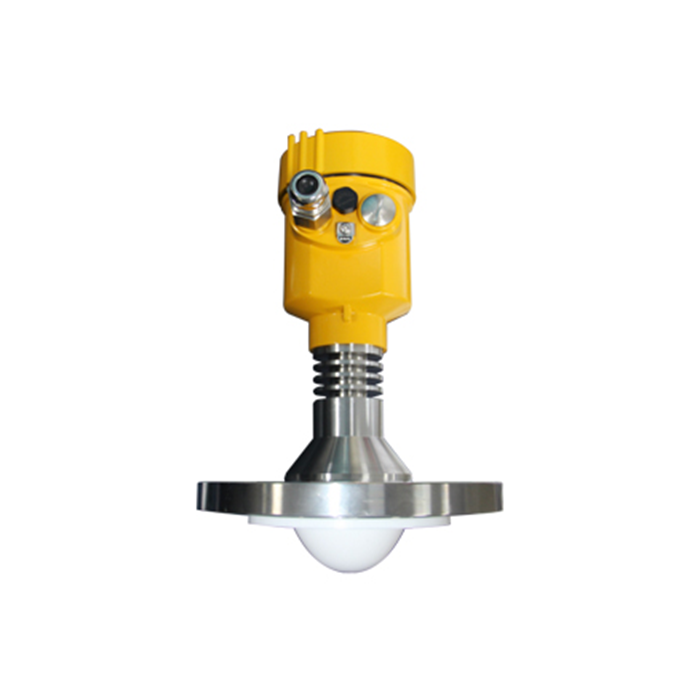
4.5 Lens or Integrated Antenna
With the increasing adoption of high-frequency radar, particularly 80 GHz radar, compact lens antennas and integrated antenna structures have become increasingly common.
Higher frequencies allow narrower beams to be achieved with smaller antenna dimensions, making these antennas particularly suitable for:
Small vessels;
Small process connections;
Tanks with complex internal structures;
Installations close to the tank wall.
5. Why Is Antenna Selection Especially Important for Bulk-Solid Level Measurement?
Bulk solids behave differently from liquids.
A liquid surface is usually relatively flat, whereas bulk solids may form:
Angles of repose;
Material peaks;
Material depressions;
Irregular surfaces.
For example, when material is filled from the top, it may form a conical pile.
When material is discharged from the bottom, a funnel-shaped depression may form.
In these situations, radar waves striking different areas of the material surface can produce different reflections.
Therefore, bulk-solid silo applications require consideration not only of measuring distance but also of:
Where the radar beam is directed;
The direction of the inclined material surface;
Whether the reflected echo can return to the antenna.
For tall silos, a narrower beam generally makes it easier to avoid the silo walls and concentrate the measurement on the target area.
6. Should the Antenna Extend Beyond the Mounting Nozzle?
For some traditional horn-antenna radar products, manufacturers require the antenna horn to extend beyond the mounting nozzle or require the nozzle to remain within specified dimensions. Otherwise, the mounting nozzle itself may generate strong false echoes.
However, this requirement cannot be generalized to all radar instruments.
Different types of radar, including:
26 GHz radar;
80 GHz radar;
Lens antennas;
Rod antennas;
may have different allowable mounting-nozzle lengths.
Therefore, during project procurement, both of the following parameters should be provided to the supplier:
Process connection diameter + mounting nozzle height.
7. Will Water Droplets on the Radar Antenna Affect Measurement?
The effect depends on the severity of the condensation.
Radar itself is not particularly sensitive to changes in ambient humidity. However, if a large amount of condensation directly covers the antenna surface, it may:
Attenuate the radar signal;
Change the radiation characteristics of the antenna;
Generate additional near-field echoes.
Heavy buildup from highly viscous media can create similar problems.
Therefore, where severe condensation, crystallization, or material buildup is expected, the following factors should be considered during model selection:
Antenna surface structure;
Antenna material;
Whether an air-purge system can be used;
Installation angle;
Whether an isolation structure is required.
8. How Should a Radar Antenna Be Selected?
At minimum, the following operating-condition information should be provided:
| Parameter | Selection Significance |
|---|---|
| Measured Medium | Determines reflection capability and corrosiveness |
| Maximum Measuring Distance | Determines required signal margin |
| Tank Diameter | Determines available beam space |
| Process Connection Diameter | Determines the antenna size that can be installed |
| Mounting Nozzle Height | Helps prevent the antenna from being obstructed by the nozzle |
| Temperature | Confirms the required process connection and antenna construction |
| Pressure | Confirms sealing and mechanical rating requirements |
| Dust | Determines whether an air-purge system may be required |
| Internal Obstacles | Determines the required beam characteristics |
| Explosion-Proof Requirement | Determines the required certified version |
FAQ
Q1: Is a larger radar level transmitter antenna always better?
A: Within the same frequency band, a larger antenna can generally provide a narrower beam and higher gain. However, installation space, process connection dimensions, and operating conditions must also be considered.
Q2: Which is better, a horn antenna or a parabolic antenna?
A: Neither is universally better. Horn antennas are commonly used for conventional storage tanks, while parabolic antennas may be more suitable for large or tall silos and applications requiring a narrower beam.
Q3: Why do 26 GHz radar transmitters often use relatively large antennas?
A: Under otherwise similar conditions, increasing the effective antenna aperture can further reduce the beam angle and improve focusing capability.
Q4: Can a radar antenna come into contact with the liquid?
A: A free-space non-contact radar does not normally need to contact the measured medium during operation. Continuous submersion of the antenna is not considered a normal operating condition for most conventional non-contact radar instruments. The specific model documentation should be checked.
Q5: Will dust on the radar antenna cause inaccurate measurement?
A: A light layer of dust may not immediately affect measurement, but severe dust accumulation can weaken the effective echo. Applications involving heavy dust should therefore consider air purging and periodic inspection.
Q6: Which antenna type is suitable for a small process connection?
A: Compact rod antennas, lens antennas, or high-frequency radar designs can often be considered. Final selection should still be based on nozzle dimensions, measurement range, and actual operating conditions.
Q7: Is a smaller beam angle always better?
A: Narrow beams provide clear advantages in complex and confined vessels, but radar selection must also consider medium reflectivity, measuring range, and installation structure.
Q8: What information does METRAVON need to confirm the correct radar antenna?
A: It is best to provide tank drawings or field installation photos together with the process connection size, measuring range, internal structures, and medium parameters rather than providing only the tank height.
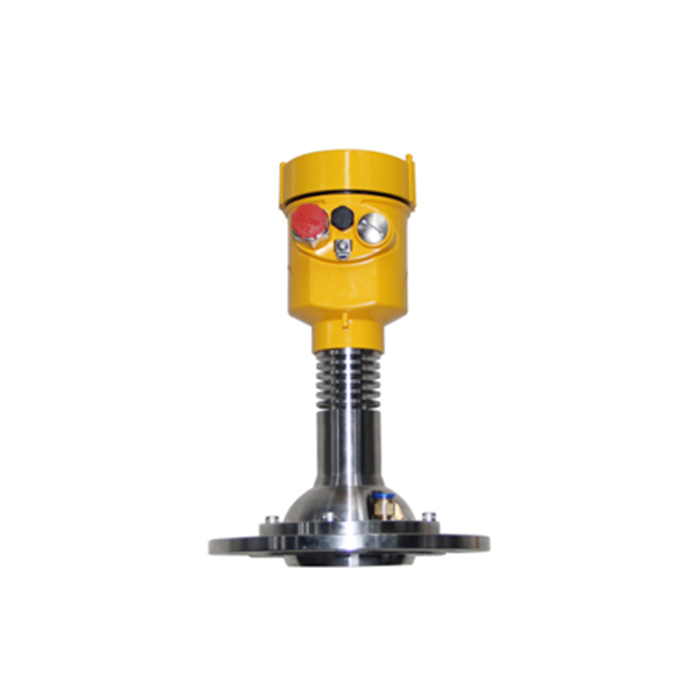
Conclusion
The antenna of a radar level transmitter determines much more than the external appearance of the instrument. It directly affects radar-wave directivity, signal-to-noise ratio, and the instrument's ability to identify the correct target in complex tanks.
The antenna-selection logic is different for ordinary liquid storage tanks, corrosive media, high-dust silos, and narrow vessels.
When selecting a radar level transmitter, METRAVON recommends evaluating operating frequency, antenna type, beam angle, and installation structure as an integrated system rather than comparing only maximum measuring range and nominal accuracy.
Related resources
Radar level meters · Level measurement
Author: Arvin · Source: METRAVON Instruments