


 Chinese
 Spanish
 Russian
 Portuguese
 French
 German
 Indonesian
 Thai
 Vietnamese
 Arabic
 Italian
 Turkish
 Polish
 Japanese


Radar housing moisture is a different maintenance problem from condensation on the process-facing antenna. Water inside an electronics enclosure requires investigation of entries, covers and exposure before the loop is returned to service. A clean antenna and a temporarily normal display do not establish that the electronics enclosure is dry or undamaged.
Make the inspection safe and preserve the as-found condition
Follow the site's isolation and hazardous-area procedures before opening any enclosure. Do not open an energised instrument where doing so is prohibited or unsafe. Record the timing of rain, washdown, cable work or cover removal, and retain photographs of accessible external conditions before disturbing seals.
Where an authorised inspection finds moisture, record its location and signs of corrosion without assuming the entry point. Water can travel along a cable route or enter through an unsuitable or disturbed fitting. Internal condensation is also possible under some conditions; the presence of droplets alone does not identify a single cause.
Radar housing moisture needs a path-by-path review
| Location | Inspection question |
|---|---|
| Cable entry | Does the fitted gland suit the cable and enclosure, and is its sealing arrangement intact? |
| Cover | Was the specified seal seated correctly after the last authorised opening? |
| Unused entry | Is it closed with the approved component rather than a temporary transport fitting? |
| Cable route | Could water reach the entry or connected equipment along the installed route? |
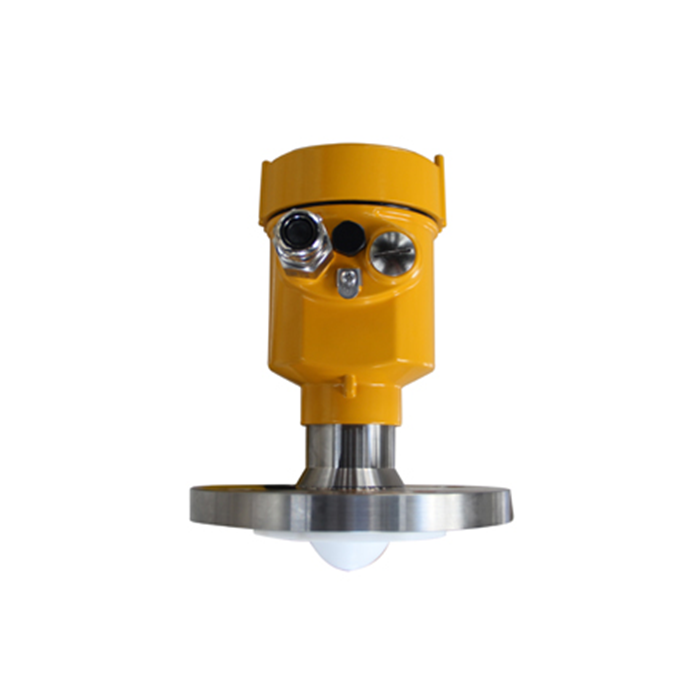
Check the actual housing version
The METRAVON MV-RD12 selection information distinguishes metal IP67 and ABS IP65 housing options. Identify the delivered construction before interpreting its protection rating. Neither entry authorises arbitrary glands, damaged seals or an unspecified washdown exposure.
Do not drill drain or breather holes, substitute sealants or heat-dry the electronics without an approved service instruction. Such work can alter enclosure protection and, where applicable, hazardous-area suitability. Ask the service provider whether the assembly requires inspection, replacement or a documented repair before re-energisation.
Verify the repair rather than only the display
The service record should identify the observed condition, work performed and approved sealing components. After authorised reinstatement, check the electrical readings and receiving-system behaviour, then monitor through the relevant exposure condition. A repair to the electronics without correction of the water path may leave the original cause in place.
Q1. Is it safe to restart once the visible water has dried?
Dry appearance does not establish insulation condition or absence of corrosion. Use the applicable inspection and service decision before returning the instrument to duty; do not infer electrical safety from a working display.
Q2. Should the antenna be cleaned during the same job?
Only if inspection identifies a separate need and the approved cleaning procedure can be followed. External antenna deposits and internal moisture should have distinct findings so one does not conceal the other.
Summary
Identify and correct the water path before treating an enclosure fault as resolved. Provide housing identity, entry photographs and exposure history when requesting an MV-RD12 service assessment.
