


 Chinese
 Spanish
 Russian
 Portuguese
 French
 German
 Indonesian
 Thai
 Vietnamese
 Arabic
 Italian
 Turkish
 Polish
 Japanese


A tank that holds water during commissioning may later contain a different liquid, a foaming mixture or a cleaning solution. The first successful fill does not qualify all those duties. Selecting radar level for multi-product tanks starts with a complete recipe and cleaning list, including transitions between batches.
Which recipe makes the installation hardest to accept?
There may be several answers. One liquid can challenge material compatibility, another can produce foam, and a hot cleaning stage can set the temperature requirement. Review these separately instead of naming one product as the universal worst case. A quiet, clean surface is not a substitute for the agitated process that follows.
| Operating state | Information to collect |
|---|---|
| Stored product | Composition, normal temperature and the actual minimum and maximum levels. |
| Mixing | Surface movement, foam and operating combinations of mixer and feed. |
| Changeover | Residual material, draining conditions and possible temporary phase separation. |
| Cleaning | Fluid, concentration, temperature, pressure and exposure of the installed assembly. |
Radar level for multi-product tanks needs an assembly review
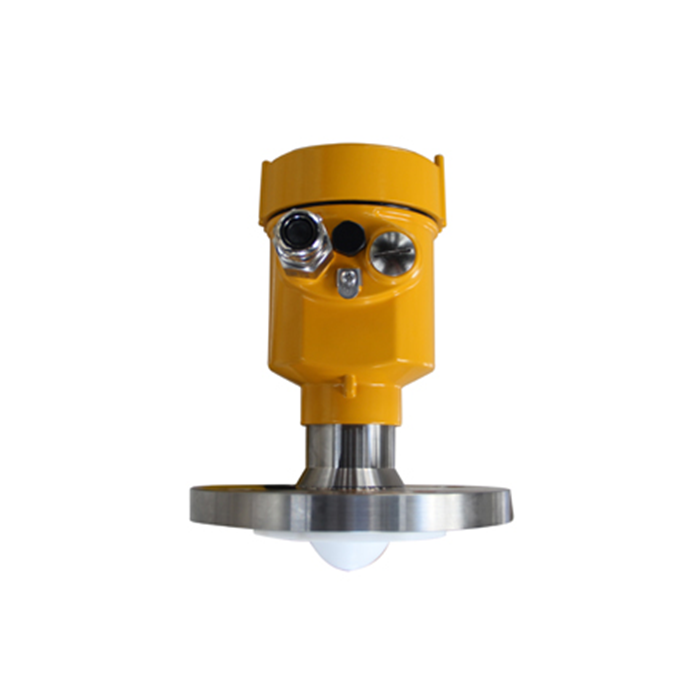
The METRAVON MV-RD12 is a liquid radar with a PTFE lens and selectable process connections. That lens material is not a compatibility statement for every seal, connection and cleaning fluid. Confirm all exposed components for the delivered version and the complete duty list.
Likewise, a published distance range does not establish that every recipe gives an equally usable return through the proposed nozzle. Submit vessel geometry and the relevant surface conditions for assessment. If cleaning requirements include hygienic design or specific approvals, obtain that evidence separately; a material name does not establish such qualification.
Keep recipe settings identifiable
Where authorised settings differ between products, record which configuration belongs to which duty and who controls the change. Do not assume the transmitter can store or automatically switch recipe profiles unless that function is documented. A PLC recipe change and a transmitter configuration change are separate actions.
After a changeover, check that the displayed variable, range and receiving-system interpretation remain correct. A plausible level can hide a retained offset or a filtering choice from the previous batch. Keep observations with the product identity so later troubleshooting can distinguish a recipe effect from an intermittent installation fault.
Acceptance across the product schedule
Agree representative trials for materially different conditions. Record which recipes were tested, which were assessed from documentation and which remain pending. Do not report a complete multi-product acceptance when the difficult product was absent during commissioning.
Q1. Must every small composition change require a new instrument?
No. Review whether the change affects compatibility, measurement conditions or agreed limits. The outcome may be no action, a controlled test or a different configuration; it should follow evidence rather than the recipe name alone.
Q2. Can a cleaning cycle be excluded because its readings are not used?
The measurement may be intentionally unavailable, but the installed assembly still experiences the cleaning exposure. Assess mechanical, material and temperature suitability even when the controller ignores the level value.
Summary
Approve the measurement against the operating schedule, not just the first liquid. Provide the recipe matrix, cleaning conditions and vessel drawing for an MV-RD12 assessment with explicit outstanding tests.
