


 Chinese
 Spanish
 Russian
 Portuguese
 French
 German
 Indonesian
 Thai
 Vietnamese
 Arabic
 Italian
 Turkish
 Polish
 Japanese

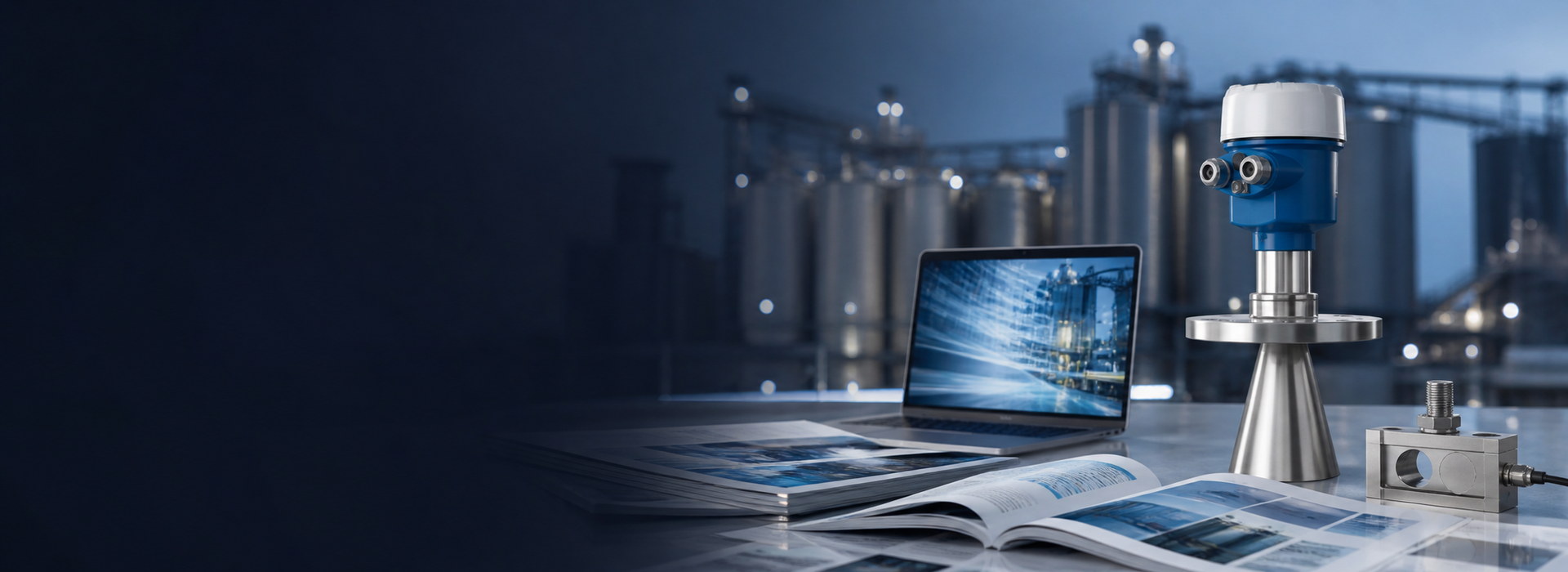
Choosing radar or ultrasonic for remote sumps is partly a maintenance-access decision. A sensor may meet its distance requirement while being difficult to inspect, remove or return to the correct position. Include those tasks in the installation review before deciding where the instrument will be mounted.
Walk through the actual service job
- Identify how a technician reaches the enclosure and observes the sensing face without entering the sump.
- Check which isolation, access or lifting arrangements the site requires.
- Establish how the complete instrument can be removed without damaging the cable or process connection.
- Define how position and measurement reference will be checked after reinstatement.
This review should use the site's access procedures. A sketch showing a sensor over the centre of an opening is not enough to establish that routine work can be performed from a protected position. Do not treat the ability to see a display as equivalent to access for cleaning or removal.
Radar or ultrasonic for remote sumps: compare service scope
| Task | Information for the installation offer |
|---|---|
| Inspection | View of the sensing face, cable entries and mounting condition. |
| Removal | Space, support, connection access and the approved handling method. |
| Reinstatement | Repeatable bracket location, orientation and reference-height verification. |
| Continuity | How monitoring or control is maintained while the instrument is unavailable. |
Specify a bracket arrangement, not just a sensor
The METRAVON MV-RD12T is an above-water radar option for suitable sump duties. Supply the proposed mounting drawing and access constraints when requesting it. Do not assume that a bracket shown in a product photograph includes a hinged arm, locking device or the structural capacity required at the site.
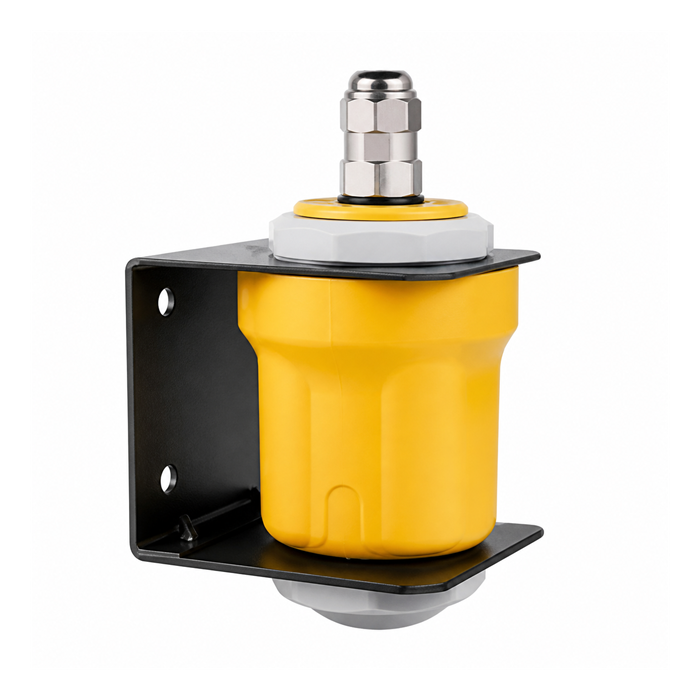
If a movable support is proposed, its returned position matters to the measurement. Review the locking and locating arrangement with the responsible designer. A new angle or elevation after maintenance can alter the observed target or level conversion even when the electronics have not changed.
Price the work that the site will actually need
Separate the transmitter, mounting fabrication, cable arrangement, access equipment and reinstatement checks in the enquiry. Ask which items are included. No universal service interval or cost saving follows from choosing radar over ultrasonic; deposits and site access can dominate the maintenance task for either.
Q1. Does non-contact measurement remove the need for service access?
No. The face, mounting and electrical connections still require the inspection and maintenance appropriate to their exposure. Above-water installation changes the job, but does not eliminate it.
Q2. Can an inaccessible unit be treated as maintenance-free?
Inaccessibility is an installation constraint, not a performance characteristic. Resolve the service arrangement or choose another suitable location before relying on that assumption.
Summary
Approve the service and reinstatement arrangement with the sensor selection. Send the sump access drawing and intended maintenance method for an MV-RD12T mounting assessment.
