


 Chinese
 Spanish
 Russian
 Portuguese
 French
 German
 Indonesian
 Thai
 Vietnamese
 Arabic
 Italian
 Turkish
 Polish
 Japanese


Radar level measurement errors cannot be calculated reliably from readings taken at different times while the liquid is moving. A manual reference noted before a radar screenshot may differ simply because the tank continued filling. Establish timestamps and measurement delay before changing calibration to remove an apparent offset.
Estimate how much level could change between observations
For an approximately constant level-change rate v and a time mismatch delta t, the apparent difference attributable to timing is approximately v multiplied by delta t. This is an estimate for a moving surface, not a sensor error specification. If the rate varies, use the observed level history rather than extending a constant-rate assumption across the whole interval.
As an illustrative case, a rise of 12 mm per second over a five-second mismatch produces a 60 mm difference. That is far larger than a millimetre-scale distance specification, yet it need not indicate a faulty radar. The assumed rate and time are not METRAVON performance figures.
Radar level measurement errors: align the evidence
| Record | Check before subtraction |
|---|---|
| Clock | Instrument, logger, camera and manual record refer to the same time basis. |
| Sample | The timestamp identifies acquisition time rather than arrival at the server. |
| Filter | Known averaging or damping can delay the displayed response to a changing level. |
| Reference | The comparison measures the same quantity, surface location and datum. |
Correct an identified clock error in the analysis record without silently rewriting original observations. Keep both the original time and the documented correction. Filtering delay is different from a clock offset: shifting a timestamp does not necessarily undo the shape change caused by averaging.
Use a settled comparison to separate timing from bias
Where the process permits, compare readings after the surface has settled and both instruments have completed their response. Then examine a controlled changing-level period separately. A difference that grows with level-change rate but reduces at rest suggests a timing or response issue worth investigating; it is not conclusive proof on its own.
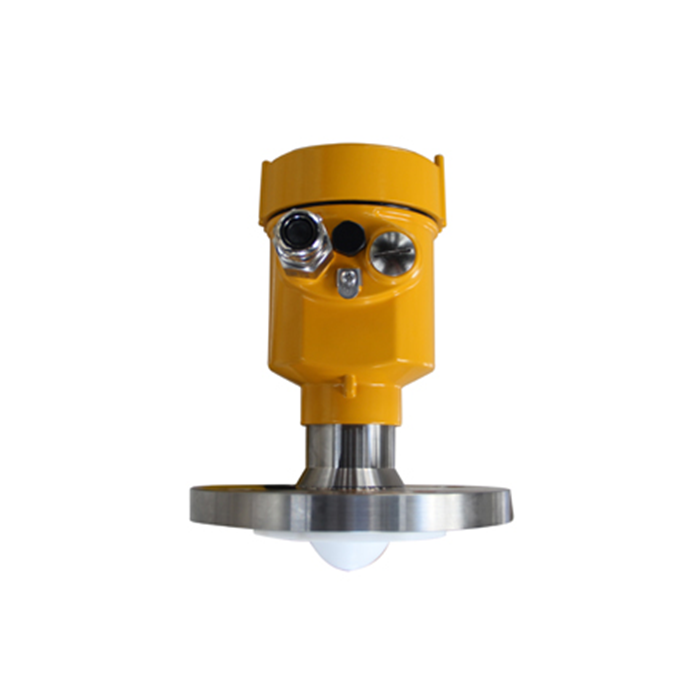
The METRAVON MV-RD12 has a published nominal accuracy of +/-2 mm. Installed acceptance also depends on the reference method and process conditions. Do not judge it by subtracting an old manual measurement from a newer PLC value, or by comparing a filtered display with a near-instantaneous observation without accounting for their responses.
Calibration questions
Q1. Should the transmitter offset be changed if the difference is constant during filling?
Not immediately. Constant filling rate combined with constant delay can create an apparently constant difference. Repeat a settled comparison and verify the datum before deciding that a static offset exists.
Q2. Are server receipt times good enough?
Not when network delay or queued uploads are significant relative to the process change. Retain acquisition timestamps and measurement validity where the selected system supports them.
Summary
Synchronise observations before attributing a difference to calibration. Provide original timestamps, raw readings and filter settings so an MV-RD12 error review can separate timing effects from a persistent measurement bias.
