Chinese
 Spanish
 Russian
 Portuguese
 French
 German
 Indonesian
 Thai
Thai Vietnamese
 Arabic
 Italian
 Turkish
 Polish
 Japanese

A split-type ultrasonic level meter consists of an ultrasonic sensor and a separate transmitter. It is widely used for level measurement in water tanks, wastewater pits, storage tanks, silos, and open channels. Although this type of instrument normally has few mechanical wear parts, long-term operation can still be affected by sensor contamination, condensation, loose wiring, cable aging, and sealing failure. The main maintenance focus should therefore be on the sensor, wiring, power supply, sealing condition, and echo stability.
1. Which Parts Require Regular Maintenance?
Ultrasonic Sensor
Check whether the sensor surface is covered by sludge, condensation, dust, algae, or other deposits.
Transmitter
Check the display, parameters, power supply, output signal, and fault indications.
Connection Cable
Inspect for damage, looseness, moisture ingress, aging, or shielding and grounding problems.
Mounting and Sealing
Check brackets, threads, flanges, cable glands, and housing seals.
2. Clean the Ultrasonic Sensor Regularly
The sensor face is critical for transmitting and receiving ultrasonic signals. Sludge, oil, algae, dust, or condensation on the sensor surface may weaken the echo signal and cause unstable readings, signal loss, or measurement errors.
Industrial ultrasonic instrument maintenance instructions generally recommend periodic inspection and cleaning according to the actual level of contamination at the installation site.
Recommended practice:Use clean water, a soft cloth, or a soft brush where appropriate. Avoid steel brushes, abrasive paper, or strongly corrosive solvents that could damage the sensor surface.
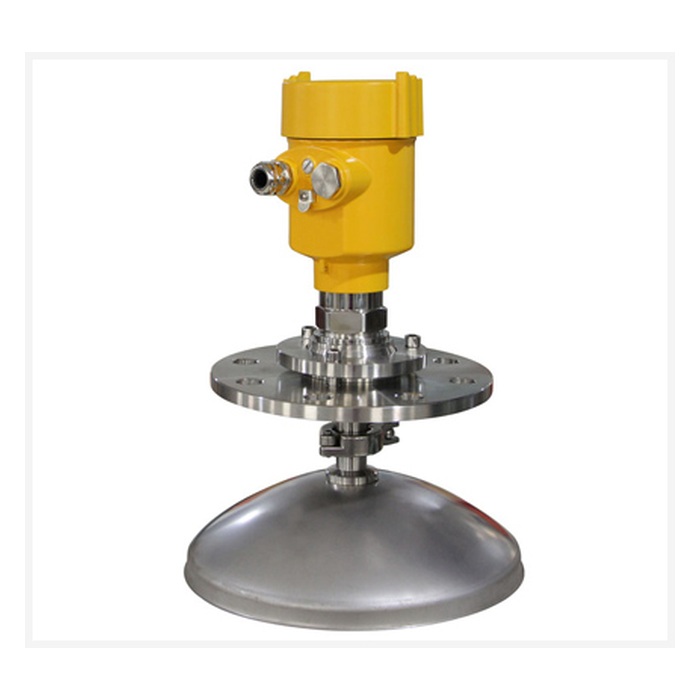
3. Check Cables, Terminals and Power Supply
Because the sensor and transmitter are installed separately, the connecting cable becomes an important part of the measurement system.
| Inspection Item | What to Check |
|---|---|
| Power Supply | Confirm that the supply voltage is within the specified range and remains stable. |
| Terminals | Check for looseness, oxidation, or moisture ingress. |
| Sensor Cable | Check for damaged insulation, pulling, aging, or poor sealing at cable entries. |
| Shielding and Grounding | Verify that shielding and grounding follow the installation requirements. |
4. Does an Ultrasonic Level Meter Need Frequent Calibration?
A split-type ultrasonic level meter usually does not require frequent calibration in the same way as analytical sensors such as pH or conductivity probes.
Routine verification should focus more on the following items:
Empty Distance
Confirm that the installation reference point and range parameters have not been changed incorrectly.
Actual Level
Compare the instrument reading with a reliable reference level when possible.
4–20 mA or RS485
Verify that the transmitter output matches the PLC, controller, or data logger reading.
Echo Condition
Check whether new obstacles or abnormal echoes have appeared in the measuring path.
If the instrument has remained stable and its reading matches the actual level, there is usually no need to repeatedly change calibration parameters. If a sudden measurement deviation occurs, first inspect the installation, sensor condition, and echo quality before modifying the range settings.
5. Check Waterproofing, Dust Protection and Sealing
Moisture and dust are common causes of long-term instrument failure, especially in outdoor installations, wastewater plants, and dusty industrial environments.
Make sure the housing cover is properly tightened.
Check whether cable glands are loose.
Seal unused cable entries correctly.
Inspect sealing rings for aging or damage.
Check for condensation or moisture inside the enclosure.
Cleaning and maintenance should always be carried out without allowing water or dust to enter the transmitter housing.
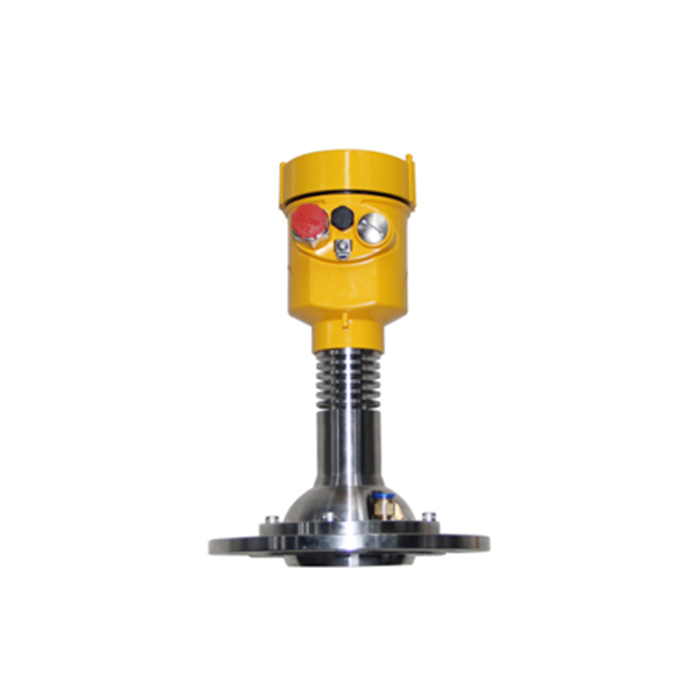
6. Avoid Impact, Vibration and Changes in Sensor Position
An ultrasonic sensor must maintain the correct measurement direction. If the mounting bracket becomes loose or the sensor angle changes, the ultrasonic beam may hit the tank wall, pipes, beams, or other obstacles and create false echoes.
Check the Mounting Bracket
Make sure bolts and supports remain secure.
Check Sensor Alignment
The sensor should remain correctly directed toward the liquid or material surface.
Avoid Mechanical Impact
Do not use the sensor or transmitter as a handhold or structural support.
7. What Should Be Checked When Abnormal Readings Appear?
| Symptom | Check First |
|---|---|
| Reading fluctuates suddenly | Surface movement, contamination, foam, loose mounting, or false echoes |
| Reading remains fixed | Power supply, sensor connection, fault hold mode, and echo signal |
| Frequent signal loss | Sensor deposits, foam, vapor, dust, or incorrect measuring range |
| PLC value differs from local display | 4–20 mA scaling, RS485 communication, wiring, and PLC settings |
8. Recommended Routine Maintenance Items
The maintenance interval should be determined according to contamination level, installation environment, operating conditions, and the plant's maintenance procedures. A single fixed interval is not suitable for every application.
Routine Inspection
Check the display, alarm status, actual level, and mounting condition.
Sensor Cleaning
Clean according to the amount of sludge, dust, condensation, or other deposits.
Electrical Inspection
Inspect the power supply, cables, terminals, grounding, and surge protection.
Measurement Verification
Compare the measured value with the actual level or another reliable reference.
FAQ: Split-Type Ultrasonic Level Meter Maintenance
1. How often should an ultrasonic sensor be cleaned?
There is no universal cleaning interval. Clean-water applications normally require less maintenance, while wastewater, sludge, dusty, or high-condensation environments should be inspected more frequently.
2. Can I clean the ultrasonic sensor with a high-pressure water jet?
It is generally not recommended unless the product documentation specifically allows it. Cleaning methods should always comply with the sensor's protection rating and maintenance instructions.
3. Does an ultrasonic level meter need annual calibration?
Not necessarily. The verification interval should follow the project's quality requirements and maintenance program. In many process applications, checking the measured value and configuration is more important than frequent recalibration.
4. Can condensation on the sensor affect measurement?
A small amount of condensation may not immediately cause a problem, but heavy or continuous water accumulation can weaken the ultrasonic signal and should be investigated.
5. Why does the reading still fluctuate after cleaning the sensor?
Check for liquid surface movement, foam, vapor, installation angle, fixed obstacles, range settings, and damping parameters. Sensor contamination is only one possible cause.
6. What are the common cable problems in a split-type ultrasonic level meter?
Typical problems include loose terminals, damaged cables, moisture ingress, incorrect shielding or grounding, and electrical interference from nearby power equipment.
7. What information should be provided if a METRAVON ultrasonic level meter operates abnormally?
Please provide the model number, local display value, actual level, installation photos, sensor surface photos, supply voltage, output signal, and any fault or alarm information. These details help identify whether the problem is related to the sensor, installation, wiring, or configuration.
Conclusion
A split-type ultrasonic level meter normally requires relatively simple maintenance. The most important items are sensor cleanliness, stable mounting, cable condition, power supply, enclosure sealing, and measurement verification.
For wastewater, silos, chemical tanks, and other demanding applications, the inspection frequency should be adjusted according to the actual level of contamination and environmental conditions. When abnormal measurement occurs, METRAVON recommends checking the sensor surface, wiring, installation, and echo condition before changing the range or recalibrating the instrument.