Chinese
 Spanish
 Russian
 Portuguese
 French
 German
 Indonesian
 Thai
Thai Vietnamese
 Arabic
 Italian
 Turkish
 Polish
 Japanese
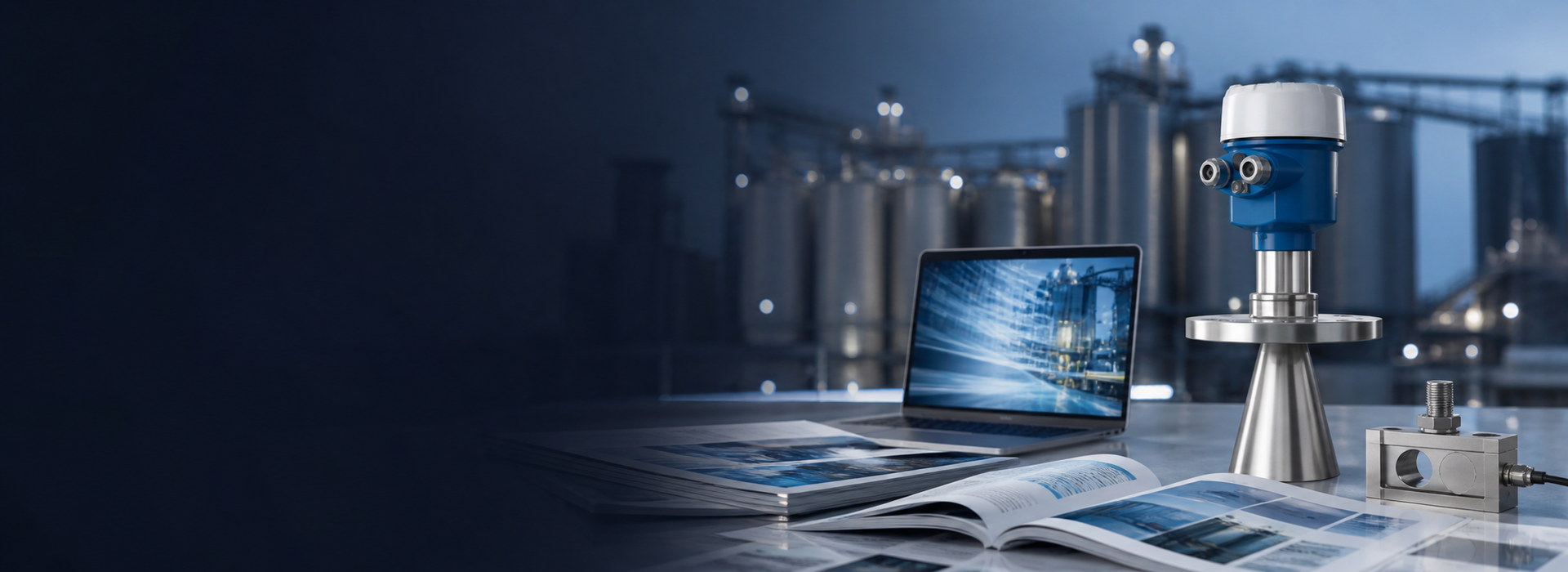
There is no single fixed price for every radar level transmitter. The final cost depends on the radar frequency, measuring range, antenna design, process temperature and pressure, process-wetted materials, enclosure protection, hazardous-area requirements and communication interfaces.
For this reason, asking only for “the price of a radar level transmitter” is normally not enough to prepare an accurate quotation. The process medium, measuring range, temperature, pressure, tank or silo geometry and required output signal should first be defined so that the appropriate radar configuration can be selected.
1. What Factors Affect Radar Level Transmitter Price?
Radar Frequency
24/26GHz, 80GHz and other radar designs have different antennas, beam angles and application characteristics.
Measuring Range
Small tanks and large bulk-solid silos require different measurement ranges and echo-processing capability.
Process Temperature and Pressure
High-temperature and pressurized applications require suitable process connections, seals and materials.
Process Medium
Water, chemicals, oils, slurries, powders and bulk solids can require different radar configurations.
Protection and Certification
Outdoor, corrosion-resistant and hazardous-area versions may require different enclosure designs and certifications.
Output and Communication
4–20mA, HART, RS485 Modbus RTU and relay options may affect the final configuration.
2. Why Is Measuring Range Alone Not Enough for a Price Quotation?
Two radar level transmitters with the same measuring range may require completely different configurations. A transmitter for a normal-temperature water tank is very different from one used on a high-temperature chemical vessel or a dusty bulk-solid silo.
Radar measurement depends on the reflected electromagnetic signal from the material surface. Dielectric properties, surface condition, tank geometry and internal structures all influence echo quality. The application therefore needs to be evaluated as a complete process condition rather than only as a “10 m” or “20 m” measurement requirement.
3. What Is the Difference Between 80GHz and 24/26GHz Radar?
Industrial radar level instruments operate at different frequencies. Higher-frequency radar can generally produce a narrower beam and use a smaller antenna, which can be advantageous in narrow vessels, tanks with internal structures and many bulk-solid applications.
Lower-frequency radar also remains useful for certain process conditions. The highest frequency is not automatically the best choice for every application. Foam, condensation, dielectric properties, antenna buildup and vessel geometry should all be considered.
4. Radar vs Ultrasonic Level Measurement
| Comparison | Radar | Ultrasonic |
|---|---|---|
| Measurement Signal | Electromagnetic wave | Acoustic wave |
| Measurement Method | Non-contact | Non-contact |
| Temperature Influence | Generally low | Sound velocity changes with temperature |
| Pressure / Vacuum | Suitable versions can operate in vacuum and pressurized processes | Generally more suitable for atmospheric or near-atmospheric conditions |
| Steam and Gas | Generally less sensitive | Strong vapor or gas changes can affect acoustic propagation |
| Foam | Performance depends on foam density, thickness and radar frequency | Thick foam can strongly attenuate the ultrasonic echo |
| Bulk Solids | Suitable for many powders, granules and bulk solids | Possible in selected solids applications with consideration of dust and scattering |
Radar should not automatically be described as more accurate than ultrasonic measurement in every application. Accuracy depends on the specific instrument, measuring range, installation and process conditions. Ultrasonic measurement remains suitable for many conventional water and wastewater applications, while radar generally offers a wider application window under pressure, temperature, vapor and demanding process conditions.
5. Can Radar Measure Through Foam?
Radar should not be described as being able to penetrate all foam without limitation. Foam can also attenuate or reflect microwave energy, and the result depends on foam thickness, density, water content and radar frequency.
Thin and light foam may allow some radar configurations to obtain a usable liquid-level echo, while dense or thick foam may significantly attenuate the radar signal or produce a stronger reflection from the foam surface itself. Foam applications should therefore be evaluated individually.
6. Why Do High-Temperature Radar Transmitters Cost More?
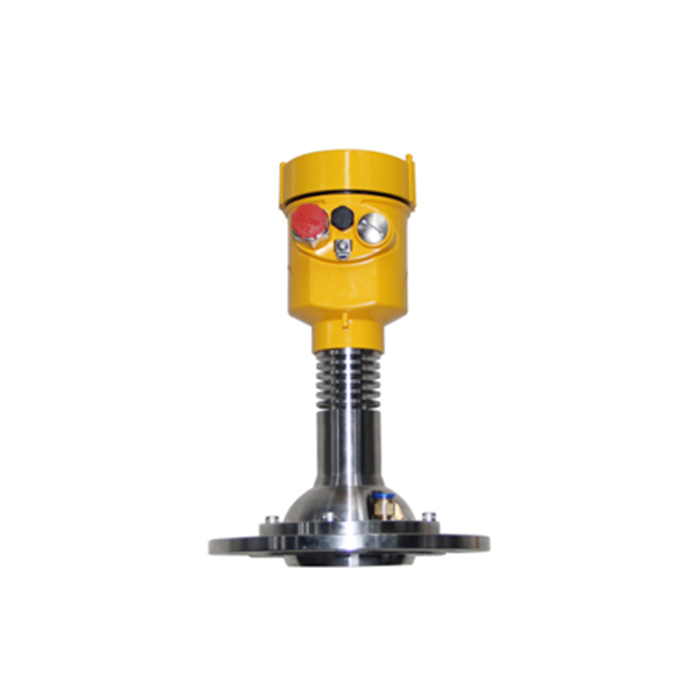
High-temperature capability does not depend only on using a stainless-steel housing. The antenna, process connection, seals, thermal isolation and materials exposed to the process must all be suitable for the specified temperature.
High-temperature projects also need to consider pressure, chemical compatibility, flange standard, vapor and condensation. Industrial radar technology can be used in demanding high-temperature applications, but the maximum process temperature is specific to the selected product and should not be generalized across all radar transmitters.
7. What Can Radar Level Sensors Measure?
Water and Wastewater
Storage tanks, basins, pumping stations, treatment processes and open-water applications.
Oils and Chemical Liquids
Selection depends on dielectric properties, process temperature, pressure and material compatibility.
Slurries and Process Liquids
Suitable configurations can be used where vapor, agitation or surface movement is present.
Powders and Granules
Cement, grain, minerals, plastic pellets and chemical raw materials.
Bulk Solids
Coal, limestone, ore and other bulk products where dust and surface angle should be considered.
8. How Do Radar Antenna Designs Differ?
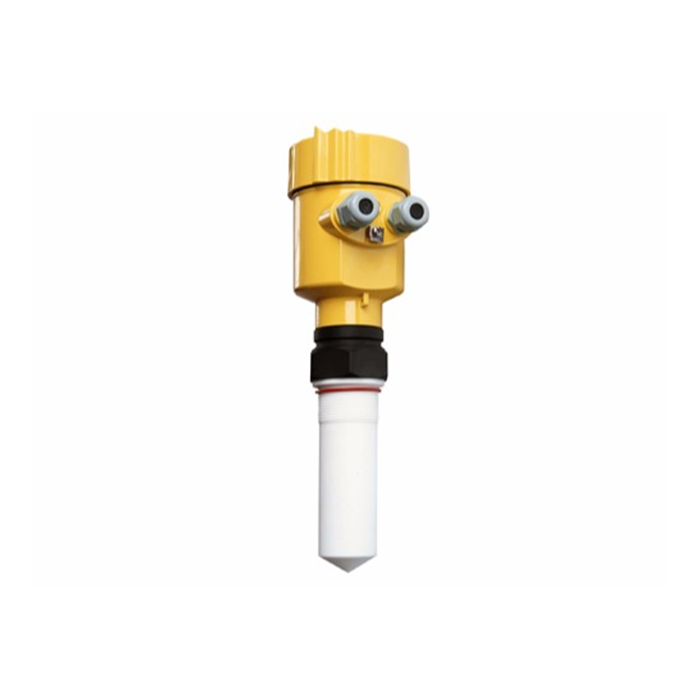
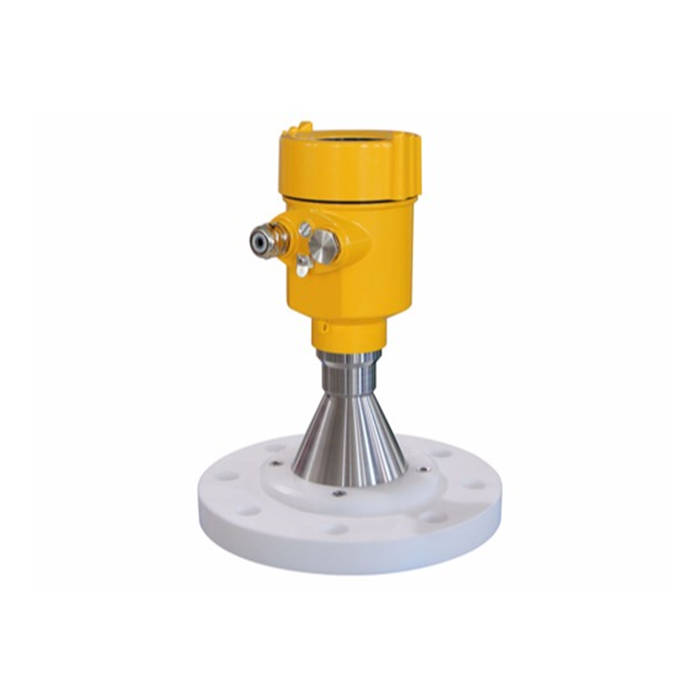
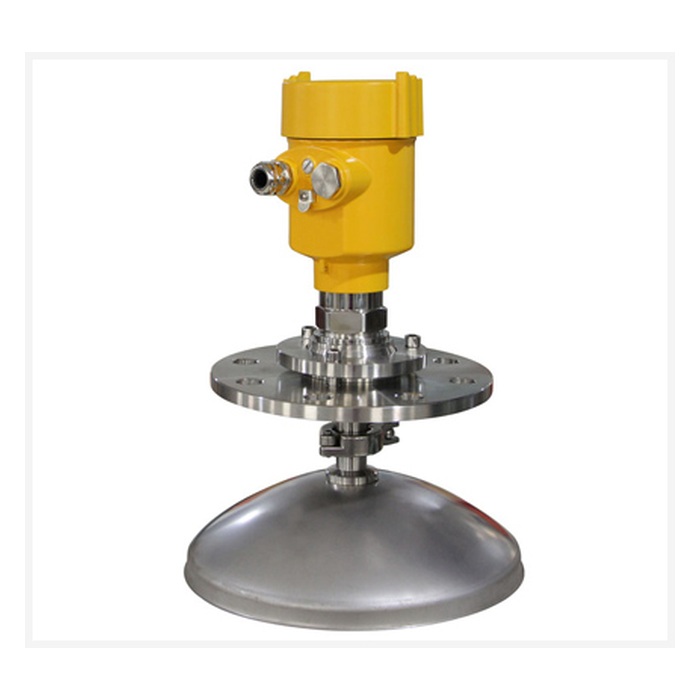
Radar level transmitters can use different antenna and process designs according to operating frequency and application. Traditional radar instruments may use horn, rod or encapsulated antennas, while modern high-frequency radar may use compact lens or integrated antenna structures.
Antenna selection should not be simplified into fixed rules such as “rod for corrosive liquids, horn for liquids and parabolic for solids.” Frequency, dielectric properties, range, dust, condensation, process connection and available installation space should all be considered.
9. What Is an FMCW Radar Level Transmitter?
FMCW stands for Frequency Modulated Continuous Wave. The instrument continuously transmits a radar signal whose frequency changes over time. The frequency difference between the transmitted signal and the reflected signal is analyzed to calculate the distance to the material surface.
Modern industrial radar level transmitters widely use FMCW technology. Operating frequency and bandwidth depend on the actual product design, so FMCW radar should not be universally described as a 24GHz device with a 1GHz bandwidth. Industrial products include 24/26GHz as well as higher-frequency 80GHz radar technologies.
10. What Information Is Required for a Radar Level Transmitter Quotation?
| Quotation Parameter | Information Required |
|---|---|
| Process Medium | Water, oil, chemical liquid, slurry, powder, granules or bulk solids |
| Measuring Range | Maximum distance from the installation position to the lowest expected level |
| Process Temperature | Normal, minimum and maximum temperature |
| Process Pressure | Atmospheric, positive pressure or vacuum, including maximum pressure |
| Process Conditions | Foam, vapor, dust, agitation, condensation and surface condition |
| Process Connection | Thread, flange, size and applicable standard |
| Output Signal | 4–20mA, HART, RS485 Modbus RTU or other required interface |
| Environmental Requirements | Outdoor, waterproof, corrosion-resistant or hazardous-area requirements |
FAQ
Q1: How much does a radar level transmitter cost?
A1: There is no universal price. A basic water-tank application, a high-temperature chemical vessel and a large bulk-solid silo require different radar configurations. The correct model should be selected before an accurate quotation is prepared.
Q2: Is 80GHz radar always better than 26GHz radar?
A2: No. 80GHz offers advantages such as a narrow beam and compact antenna, but different frequencies perform differently with foam, condensation, dielectric properties and installation conditions.
Q3: Is radar always more accurate than ultrasonic level measurement?
A3: No. Accuracy depends on the instrument and application. Radar generally has a wider operating window under temperature, pressure and vapor conditions, while ultrasonic technology remains suitable for many conventional water-level applications.
Q4: Can radar measure the true liquid level through foam?
A4: Sometimes, but not in every case. Foam thickness, density, water content and radar frequency all influence whether the radar sees the liquid surface, the foam surface or loses the echo.
Q5: Can radar level transmitters measure solids?
A5: Yes. Radar is widely used for powders, granules and bulk solids such as cement, grain, minerals, coal and chemical raw materials.
Q6: Can radar operate in a vacuum?
A6: Yes. Radar uses electromagnetic waves and does not require air for propagation. The selected transmitter must still meet the required process-temperature, pressure and mechanical specifications.
Q7: What is the maximum measuring range of a radar level transmitter?
A7: It depends on the product. The range should not be universally limited to 70 m. Radar frequency, antenna, medium reflectivity, silo geometry and instrument design all influence the usable range.
Q8: Why can two radar transmitters with the same range have very different prices?
A8: Frequency, antenna design, temperature and pressure ratings, materials, hazardous-area certification, enclosure protection, process connections and communication interfaces can all be different.
Conclusion
Radar level transmitter pricing cannot be reduced to one fixed number. Two instruments with the same nominal measuring range may require very different frequency, antenna, sealing, materials and process connections when used on a water tank, high-temperature chemical vessel or dusty bulk-solid silo.
Radar and ultrasonic technologies should also not be compared using simplified statements such as “radar is always more accurate” or “radar penetrates all foam.” Reliable selection requires consideration of process medium, dielectric properties, foam, dust, vapor, temperature, pressure and installation geometry.
METRAVON radar level measurement products can be configured for liquid tanks, water treatment, industrial processes and bulk-solid silos. Providing the medium, measuring range, temperature, pressure, installation method and required output interface allows the appropriate model and corresponding price to be determined more efficiently.