Chinese
 Spanish
 Russian
 Portuguese
 French
 German
 Indonesian
 Thai
Thai Vietnamese
 Arabic
 Italian
 Turkish
 Polish
 Japanese
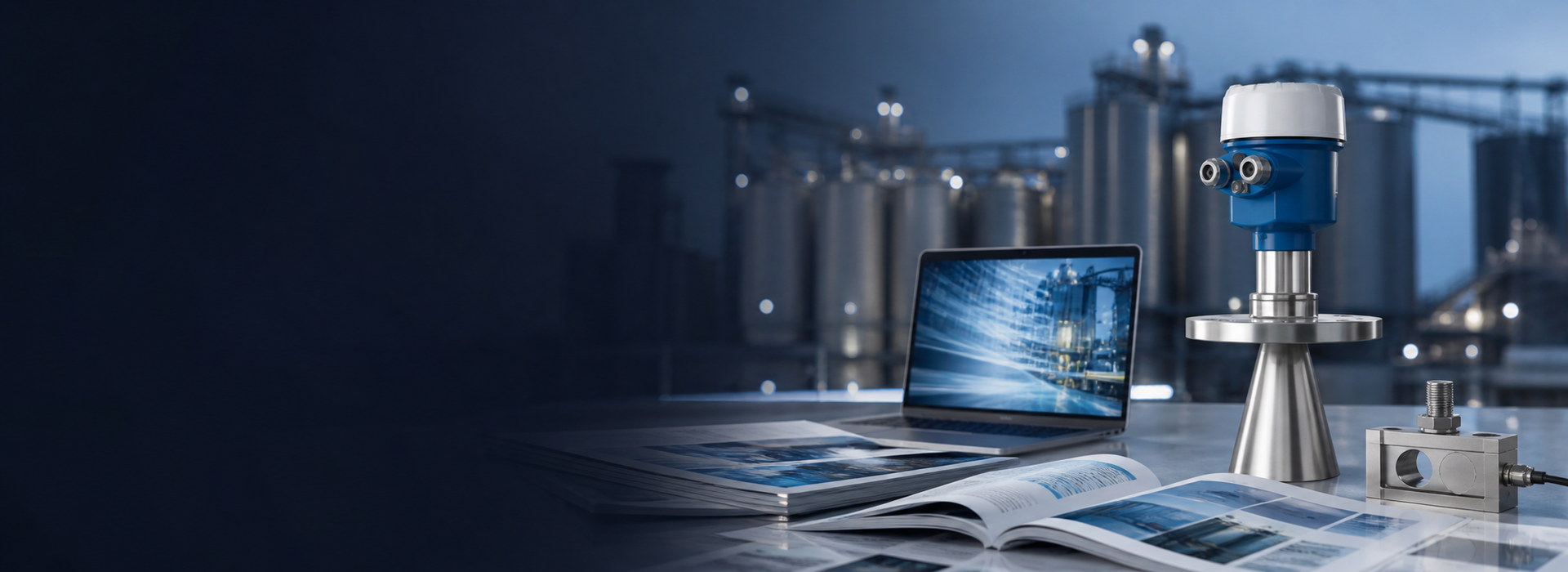
In industrial process control, chemical storage and transportation, and warehouse management systems, high-precision continuous measurement of level, including liquid level and material level, directly affects production safety and the level of automation. High-frequency radar level meters, including high-frequency pulse radar liquid level meters and high-frequency pulse radar solids level meters, use 25 GHz/26 GHz high-frequency transmission as their core technology. Their maximum measurement range can reach 30 meters, and they support multiple installation methods such as threaded and flange connections. They are widely used for continuous level monitoring in reactors, solid material silos, and complex process vessels.
This article provides a systematic explanation of the working principle, core characteristics, and key advantages of 25 GHz/26 GHz high-frequency radar level meters compared with traditional low-frequency radar.
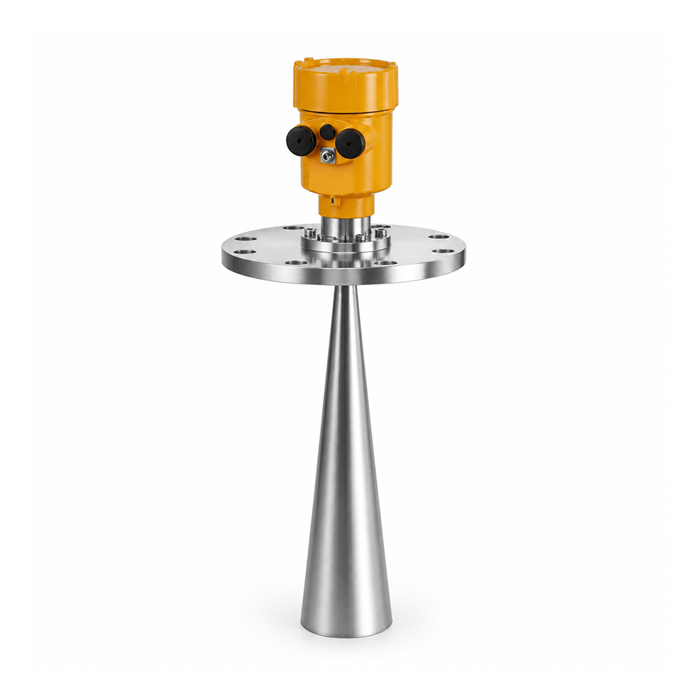
I. Working Principle of High-Frequency Radar Level Meters
METRAVON high-frequency radar level meters use a high-frequency microstrip circuit design to generate 25 GHz/26 GHz high-frequency microwave pulse signals internally.
Pulse transmission: Based on high-frequency waveguide design principles, microwave pulses are transmitted from the end of a highly corrosion-resistant PTFE (polytetrafluoroethylene) antenna toward the surface of the measured medium.
Signal reflection: When the transmitted pulse reaches the surface of the measured medium, part of the microwave energy is reflected back toward the antenna and received because of the change in dielectric constant at the medium interface.
Time-of-flight calculation: The instrument contains an intelligent microprocessor that uses time-of-flight measurement technology to accurately calculate the time interval Δt between the transmitted pulse and the received pulse.
Distance and level calculation: Based on the electromagnetic wave propagation speed c, the instrument calculates the distance D from the antenna reference plane to the surface of the medium and then determines the real-time level according to the total vessel height:
D = c × Δt / 2
II. Core Characteristics of High-Frequency Radar Level Meters
High-frequency radar level meters offer the following notable physical characteristics and adaptability to demanding industrial conditions:
Excellent reflection performance: The microwave wavelength is short. For example, the wavelength at 26 GHz is approximately 11 mm, providing good reflection performance from inclined solid material surfaces.
High focusing capability and strong interference resistance: The narrow beam angle concentrates transmitted energy, produces a strong echo signal, and helps avoid reflections from internal tank structures and obstacles.
Small dead zone and suitability for small vessels: A small dead zone combined with a wide measurement range enables accurate measurement even in vessels with small diameters and limited heights.
No mechanical wear and no contamination: The antenna is compact and easy to install. The non-contact measurement design eliminates mechanical wear and does not contaminate the measured medium.
Adaptability to low-dielectric-constant media: It is suitable for bulk solids and certain liquids with relatively low dielectric constants, such as light oils and organic solvents.
High signal-to-noise ratio and resistance to surface fluctuation: A high signal-to-noise ratio helps maintain stable measurement output even when the medium surface is strongly disturbed or turbulent.
Strong environmental adaptability: The instrument can be used under conditions involving corrosive gases, foam, water vapor, temperature variation, pressure changes, and high dust concentrations, subject to the specifications of the selected model and actual operating conditions.
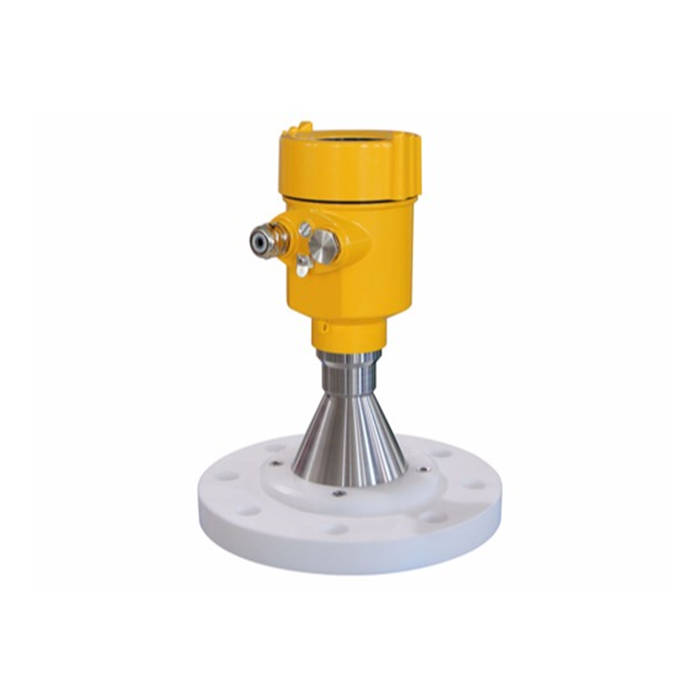
III. Core Advantages of High-Frequency Radar Compared with Low-Frequency Radar
High-frequency radar level meters operating at 25 GHz/26 GHz overcome several limitations of earlier 6GHz low-frequency radar instruments, such as wide beam dispersion and large antenna dimensions, and provide significant engineering advantages:
| Selection and Performance Dimension | Advantages of High-Frequency Radar (25 GHz / 26 GHz) | Limitations of Low-Frequency Radar (6GHz) |
|---|---|---|
| Beam Focusing and Directionality | Highly concentrated energy with a narrow beam angle, making it easier to avoid internal pipes and agitators | Wide beam angle makes microwave signals more likely to strike tank walls and internal obstacles, creating false echoes |
| Bulk Solids Level Measurement | An approximately 11 mm short wavelength provides strong reflection from inclined bulk material surfaces, making it well suited to bulk solids level measurement | Longer wavelengths may produce weaker reflected signals from inclined bulk material surfaces |
| Installation in Small Vessels | Higher frequency enables a compact antenna suitable for small mounting nozzles and small storage tanks | Larger antenna dimensions require more installation space and larger process openings |
| Resistance to Buildup and Condensation | Compact antenna design makes it easier to add dust protection or anti-condensation structures, reducing the influence of deposits | Larger antennas may be more susceptible to material buildup or moisture accumulation, which can attenuate microwave signals |
| Isolated Non-Contact Measurement | Excellent directionality can support measurement through suitable non-metallic windows in certain external measurement applications | More dispersed microwave energy makes accurate measurement through isolating materials more difficult |
IV. METRAVON Engineering Applications and System Integration Support
As a professional supplier of industrial monitoring and automation equipment, METRAVON has optimized its high-frequency radar level meters for industrial system integration and EPC project requirements:
Industrial standard communication protocols: Native support for 4–20mA + HART and RS-485 (Modbus RTU) communication facilitates integration with PLCs, DCS platforms, and industrial IoT systems.
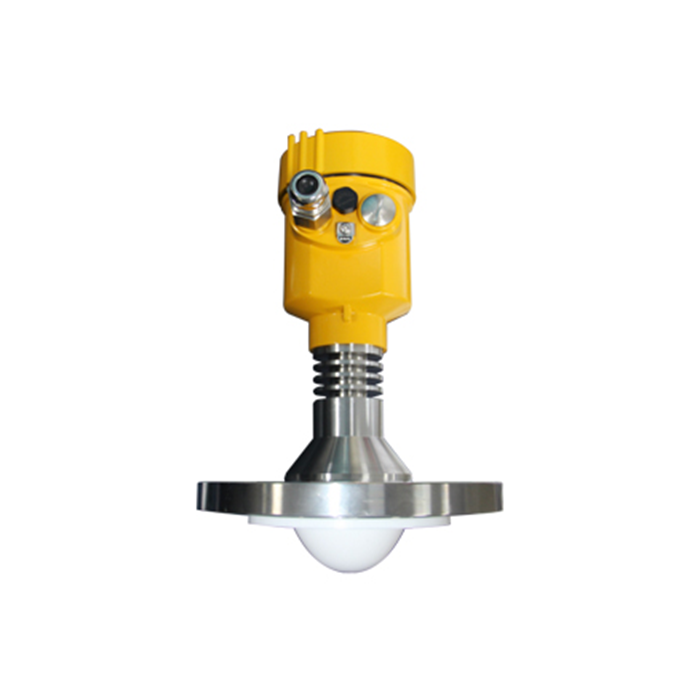
High-reliability structural design: Multiple flange and threaded process connection options are available, together with PTFE corrosion-resistant linings and optional purging interfaces for high-dust environments, helping meet the requirements of high-temperature, high-pressure, and strongly corrosive operating conditions.
Low maintenance and long-term operation: A solid-state circuit design combined with intelligent echo-processing algorithms helps reduce on-site maintenance requirements and supports long-term measurement stability in engineering projects.
FAQ
Q1: Why Is 26 GHz High-Frequency Radar More Suitable for Measuring Bulk Solids in Cement Silos and Coal Silos?
Because the wavelength of 26 GHz radar is only approximately 11 mm, the shorter wavelength provides strong reflection from inclined and uneven bulk solid surfaces. Combined with a narrow beam angle, it can operate effectively in dusty spaces and capture the actual echo from the material surface.
Q2: How Does a High-Frequency Radar Level Meter Avoid Interference in a Reactor with an Agitator?
The narrow beam angle of 25 GHz/26 GHz high-frequency radar allows the radar beam to pass through available spaces between the agitator and tank wall. In addition, the instrument's built-in False Echo Suppression function can suppress reflections from fixed internal structures and improve measurement stability.
Q3: Are High-Frequency Radar Level Meter Antennas Easily Affected by Material Buildup or Condensation?
High-frequency radar antennas are compact, making it easier to use PTFE anti-condensation protection on the antenna surface. Under extremely dusty or crystallizing conditions, an optional flange with an Air Purging interface can also be used for periodic cleaning of the antenna surface.
Conclusion
With their 25 GHz/26 GHz narrow beam, high signal-to-noise ratio, compact antenna size, and strong resistance to steam and dust interference, high-frequency radar level meters have become an important solution for continuous level monitoring in modern industrial vessels and solid material silos.
METRAVON is committed to providing global system integrators, IoT solution providers, project contractors, and engineering companies with stable and efficient industrial level measurement equipment and technical selection support.
Project Selection and Engineering Consultation
Need the METRAVON high-frequency radar level meter selection manual, installation dimension drawings, or a customized solution for your project?
Contact the METRAVON technical team for professional B2B engineering selection support!