


 Chinese
 Spanish
 Russian
 Portuguese
 French
 German
 Indonesian
 Thai
 Vietnamese
 Arabic
 Italian
 Turkish
 Polish
 Japanese


Instrument Grounding, Shielding and Lightning Protection: The Underrated Fault Source
Intermittent offsets or communication faults can originate in wiring, bonding, supply quality or surge exposure. Diagnose the complete installation before replacing the transmitter. Keep protective earthing, signal reference and cable shielding distinct in the review.
Separate protective bonding from signal reference
Protective bonding limits hazardous touch potentials and provides the required fault-current path. A signal reference and cable shield serve different functions. Reference differences can disturb a signal when unwanted current enters its circuit or the interface exceeds its common-mode limit.
Some low-frequency analog circuits use a single defined signal-reference connection. That does not mean disconnecting field protective earths or replacing a bonded plant network with one isolated earth point. Follow the equipment manuals, electrical design and applicable safety requirements.
Shield termination: one end or both?
A cable shield provides a path for interference currents; its effectiveness depends on frequency, termination impedance and the equipotential-bonding system. A one-end connection is common for some low-frequency analog circuits. Both-end or circumferential bonding may be required for other circuits, particularly at higher frequencies.
Choose shield termination from the manuals at both ends and the site EMC design. Where bonding at both ends could carry unwanted low-frequency current, assess equipotential bonding, isolation or an approved capacitive arrangement. Do not lift a protective conductor or invent a field termination to cure noise.
| Function | Design check | Failure to avoid |
|---|---|---|
| Protective bonding | Required continuous fault path and equipotential network | Hazardous exposed metal |
| Signal reference | Circuit grounding and common-mode limits | Offset or interface damage |
| Shield termination | Required frequency response and termination geometry | Interference or unwanted shield current |
| Cable routing | Separation from noisy power circuits | Induced disturbances |
| Surge protection | Coordinated protection and short low-impedance bonding | Transient damage or an ineffective SPD |
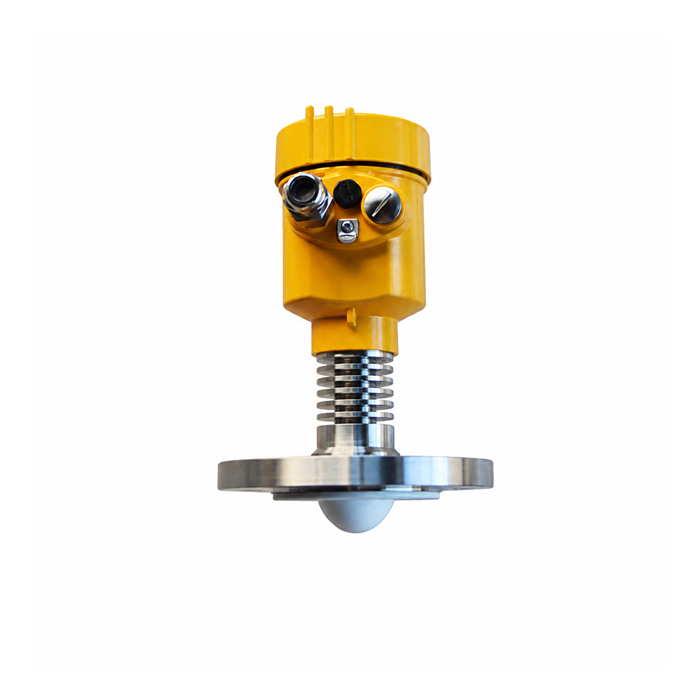
Where lightning actually enters an instrument
Surges can enter through power, signal, communications and differences in earth potential after direct or nearby lightning. Locate and coordinate SPDs at exposed cable or protection-zone boundaries, which may require protection at both ends. A single SPD at one transmitter is not a complete lightning-protection design.
A surge protective device (SPD) works by clamping the transient to earth, so it needs a short, direct, low-impedance earth connection. An SPD bolted to a painted panel with a metre of thin wire is decorative; an SPD bonded directly to a clean earth bar protects.
A practical grounding checklist
Verify the protective bonding network and the intended signal-reference connections. Do not remove field earths as a generic ground-loop remedy.
Check each shield against the approved termination drawing, including continuity, exposed length, glands and any required bonding at both ends.
Separate the trays. Keep 4–20 mA and digital cables out of the same tray as motor and power cables, and cross at right angles where they must cross.
Bond the SPD properly. A surge protector is only as good as its earth bond — short, wide, direct.
Check the plant earth grid. An instrument ground tied to a corroded or disconnected grid is not a ground.
Questions technicians ask
Q1. Why does my reading drift when a pump starts?
Possible causes include supply dips, inductive coupling, reference differences, interface limits and actual process changes. Trend the supply and signal safely, inspect routing and compare the event before changing a bond. The symptom does not prove a second earth path.
Q2. Should I earth the shield at the transmitter or the panel?
Use the equipment and site EMC requirements. A panel-only connection is common for some analog loops, but digital interfaces, surge protection and equipotential bonding may require a different arrangement.
Q3. Do I need surge protection on every loop?
Use the site lightning and surge-risk assessment, cable exposure, protection-zone boundaries and equipment withstand ratings. Include compatible signal, voltage, HART and hazardous-area requirements where applicable; outdoor location alone does not specify a complete SPD design.
Q4. Can I use the shield as a spare conductor?
Never. The shield is a screen, not a conductor; using it to carry current defeats its purpose and couples noise directly into the signal.
Related technical guides
- Radar Level Transmitter Output Signals: Choosing the Right One
- Radar Level Transmitter Maintenance: What to Do, and What Not to Bother With
Discuss your measurement application with METRAVON
