Chinese
 Spanish
 Russian
 Portuguese
 French
 German
 Indonesian
 Thai
Thai Vietnamese
 Arabic
 Italian
 Turkish
 Polish
 Japanese
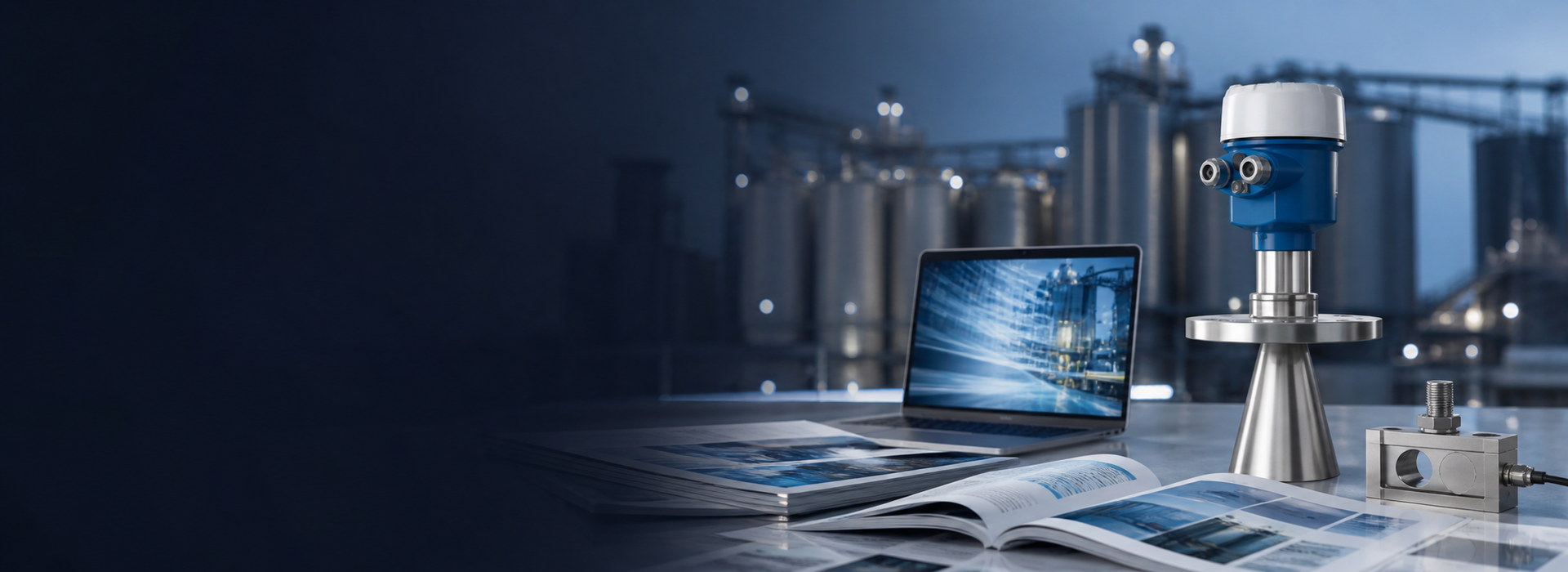
Ultrasonic Level Transmitter Common Problems: Closed Tanks, Turbulent Surfaces, Blind Zone and Installation Guide
Ultrasonic level transmitters use non-contact time-of-flight measurement to determine the position of a liquid or bulk-solid surface. The sensor emits an ultrasonic pulse toward the material, receives the reflected echo and calculates the distance from the measured travel time and the current speed of sound.
Ultrasonic measurement is widely used in water tanks, wastewater systems, reservoirs, open channels, industrial vessels and selected bulk-solid silos. Measurement stability can be affected by temperature, gas composition, vapor, condensation, foam, surface movement, dust and installation geometry. Correct selection and installation are therefore important for long-term performance.
1. How Does an Ultrasonic Level Transmitter Work?
The ultrasonic transducer is installed above the process medium and transmits an acoustic pulse toward the liquid or solid surface. The sound wave is reflected by the material surface and part of the echo returns to the transducer, where it is converted into an electrical signal.
The instrument measures the round-trip travel time and calculates distance using the speed of sound in the gas space:
Distance = Sound Velocity × Round-Trip Time ÷ 2
When the installation reference height is known, the actual level can be calculated as:
Level = Reference Height − Distance to Material Surface
Because the speed of sound in air changes with temperature, industrial ultrasonic level instruments commonly use temperature sensing and compensation to reduce temperature-related measurement error.
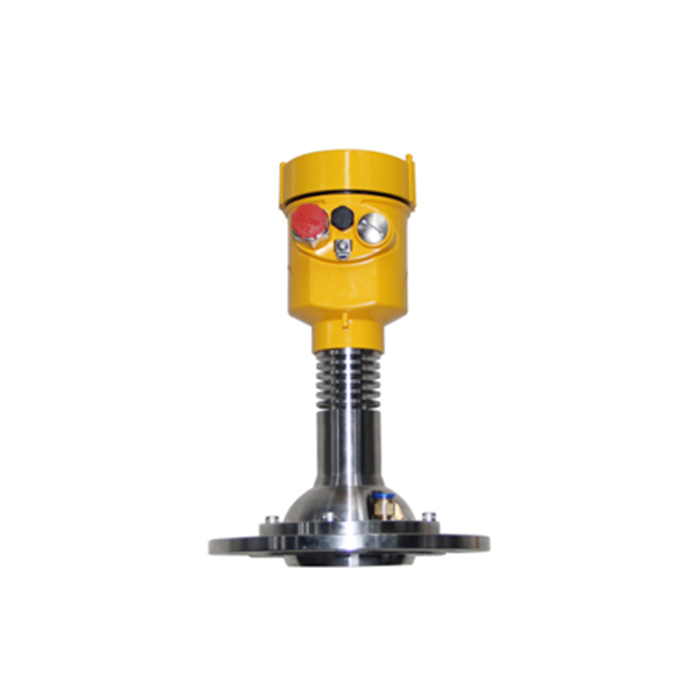
2. How Should Volatile Liquids in Closed Tanks Be Measured?
Closed tanks containing volatile liquids require attention to the gas composition above the liquid and to condensation at the transducer. Ultrasonic signals travel through the gas space, so if the vapor composition differs significantly from normal air, the actual speed of sound may also differ and introduce a distance error.
Volatile media can also condense on a cooler transducer surface. A persistent liquid film or condensate layer may attenuate the transmitted and received sound waves and cause unstable echoes.
Confirm Gas Composition
If the vapor space differs significantly from air, evaluate the effect on sound velocity and measurement accuracy.
Monitor Condensation
Persistent liquid films on the transducer can reduce echo strength and may require a different mounting position or periodic inspection.
Evaluate Vapor Variation
Processes with changing vapor concentration should be evaluated carefully, and radar or another non-contact technology may be compared where appropriate.
3. How Can Measurement Be Stabilized on a Strongly Moving Liquid Surface?
Filling, draining, agitation, aeration and pump operation can cause continuous surface movement. When the ultrasonic pulse reaches a sloped or rapidly moving surface, part of the acoustic energy may be reflected away from the transducer, reducing the usable echo.
Measurement stability is normally improved through mounting position, range selection and signal processing.
Optimize Mounting Position
Install the sensor above a relatively stable area that represents the average liquid level and away from agitators, inlets and severe turbulence.
Allow Sufficient Measuring Margin
Surface movement, foam and vapor can reduce usable echo strength, so measuring range should include suitable application margin.
Use Damping and Filtering
Averaging, damping and echo-processing settings can balance response speed and output stability.
Use a Stilling Well Where Appropriate
Selected liquid applications can use a properly designed stilling well to create a more stable measurement surface.
4. What Temperature and Pressure Conditions Are Suitable for Ultrasonic Measurement?
Allowable temperature and process pressure depend on the transducer material, process connection and instrument construction. Different ultrasonic models can have significantly different limits.
Project selection should therefore confirm process temperature, ambient temperature and allowable process pressure separately. High-temperature, high-pressure, heavy-vapor or unusual gas-phase applications require additional evaluation before ultrasonic measurement is selected.
5. What Is the Blind Zone of an Ultrasonic Level Transmitter?
After transmitting an ultrasonic pulse, the transducer continues to vibrate for a short period and cannot reliably detect a reflected signal that returns too quickly. This creates a short non-measurable region near the sensor, commonly called the blind zone, blocking distance or dead zone.
The highest expected level should remain outside this blocking distance. Installation height should therefore include suitable clearance above the maximum process level.
Blocking distance varies with transducer frequency, range and construction. Short-range and long-range ultrasonic transmitters can have very different blind zones, so the actual value should be confirmed from the selected model datasheet.
6. What Is the Difference Between Two-Wire, Three-Wire and Four-Wire Ultrasonic Transmitters?
The wiring arrangement depends on the instrument power supply and output design. Common industrial configurations include two-wire, three-wire and four-wire structures.
| Wiring Type | Structure | Typical Characteristics |
|---|---|---|
| Two-Wire | Power and 4–20mA signal share the same current loop | Simple wiring and common in industrial process transmitters |
| Three-Wire | Some designs use a separate supply conductor and signal conductor with a shared common | Exact wiring depends on the instrument circuit design |
| Four-Wire | Power and signal circuits use separate conductors | Suitable for instruments requiring independent power or additional functions |
Wiring type alone does not determine ultrasonic transmission performance. Actual measuring capability depends on transducer size, electronics design, energy management and instrument range. Installation should follow the wiring diagram of the selected product.
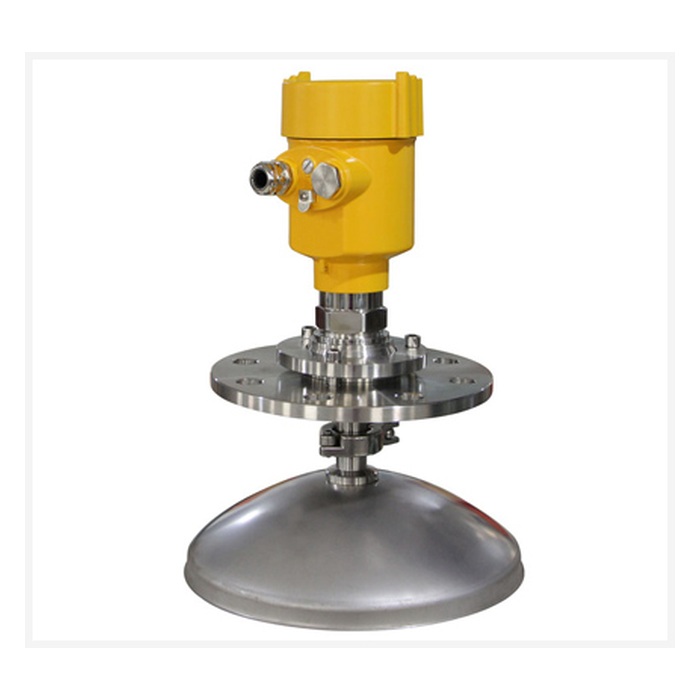
7. What Matters Most During Engineering Selection?
Mounting position has a major influence on ultrasonic measurement stability. The sensor should be installed above a representative surface and should have a clear acoustic path.
Avoid Filling Points
Falling solids and incoming liquid can block the true surface and create unstable echoes.
Avoid Agitators
Agitator blades and turbulence continuously change the surface condition.
Avoid Fixed Obstacles
Ladders, beams and pipes can generate unwanted acoustic reflections.
Allow for the Blind Zone
The maximum process level should remain outside the specified blocking distance.
8. How Should Flange and Nozzle Dimensions Be Selected?
Mounting-opening dimensions depend on sensor range, transducer diameter, acoustic beam and product construction. A long or narrow nozzle can restrict sound propagation and generate additional internal reflections.
Flange size and nozzle length should therefore follow the installation requirements of the specific ultrasonic level transmitter. Long-range transducers generally require suitable clearance around the transducer, while short-range products must also have enough opening area for normal transmission and reception.
| Installation Item | Information to Confirm |
|---|---|
| Flange / Opening Size | Large enough for the transducer dimensions and acoustic beam requirements |
| Nozzle Length | Follow the allowable dimensions of the product and avoid unnecessary long nozzles |
| Nozzle Interior | Keep smooth and minimize steps, burrs and large weld beads |
| Transducer Position | Confirm whether the transducer should extend beyond the nozzle according to the specific model |
9. What Is the Difference Between an Ultrasonic Level Transmitter and an Ultrasonic Solid Level Sensor?
“Ultrasonic level instrument” is a general term covering non-contact measurement of both liquids and bulk solids.
When used for liquids, the instrument is usually called an ultrasonic level transmitter. When used for powders, granules or other solids, it is commonly called an ultrasonic solid level sensor or ultrasonic level sensor for bulk solids. The time-of-flight principle is the same, but solid applications usually require more measuring margin and stronger echo-processing capability.
10. How Effective Is Ultrasonic Measurement for Bulk Solids?
Ultrasonic instruments can measure powders, granules and selected bulk solids. However, solid surfaces usually create more complex echo conditions than liquid surfaces. Bulk materials can form sloped surfaces, acoustic scattering and airborne dust that reduce echo strength.
Solid applications therefore normally require additional measuring margin and careful mounting away from the filling stream. The preferred position should represent the average material level and provide a stable reflection zone.
The effective measuring range for solids can be lower than the liquid range of the same transducer. The exact relationship depends on particle size, dust, angle of repose and acoustic reflectivity, so the usable range should be evaluated for the specific bulk material.
11. Are Corrosive, Viscous or Turbid Liquids Suitable for Ultrasonic Measurement?
Because ultrasonic level transmitters are normally installed above the liquid and do not remain immersed in the process, they can be useful for selected corrosive, viscous or turbid liquids.
The application should still consider vapor, foam, condensation and process temperature. Highly volatile media, strongly changing vapor composition or persistent thick foam can affect sound propagation and echo quality and should be evaluated during selection.
12. Common Problems and Inspection Directions
| Observed Condition | Possible Cause | Inspection Direction |
|---|---|---|
| Persistent Measurement Offset | Temperature compensation, gas composition or incorrect reference height | Check temperature, mounting reference and vapor-space conditions |
| Unstable Reading | Surface turbulence, filling, agitation or insufficient echo | Optimize mounting position, damping and filtering |
| Unable to Measure at High Level | Level enters the blocking distance | Check maximum level against the specified blind zone |
| Echo Gradually Weakens | Condensation, contamination, dust or buildup on the transducer | Inspect the transducer surface and process environment |
| Unstable Solid Level | Dust, sloped material surface or acoustic scattering | Adjust mounting position and reevaluate measuring margin |
FAQ
Q1: Can an ultrasonic level transmitter be used for volatile liquids in a closed tank?
A1: Yes, depending on vapor-space conditions. Volatile gases can change the speed of sound, and condensation may reduce transducer performance, so medium, temperature and vapor conditions should be evaluated.
Q2: Can ultrasonic measurement be used when the liquid surface is strongly moving?
A2: Yes. Measurement stability can be improved through better mounting position, suitable measuring margin, damping and filtering. Selected liquid applications can also use a properly designed stilling well.
Q3: What is the blind zone of an ultrasonic level transmitter?
A3: It is the area close to the transducer where reflected echoes cannot be detected reliably. The maximum process level should remain outside this zone.
Q4: What is the advantage of a two-wire ultrasonic level transmitter?
A4: A two-wire transmitter typically uses the same pair of wires for power supply and 4–20mA signal transmission, providing simple field wiring for process instrumentation.
Q5: Is a three-wire ultrasonic transmitter the same as a four-wire transmitter?
A5: No. They use different wiring structures. Some three-wire designs share a common conductor between power and signal, while four-wire designs normally separate power and signal circuits.
Q6: Can ultrasonic level transmitters be used with corrosive liquids?
A6: Non-contact measurement reduces direct liquid exposure, but transducer material, corrosive vapor, temperature and condensation should still be considered.
Q7: Can ultrasonic instruments measure powders and granules?
A7: Yes. Dust, sloped surfaces and acoustic scattering can reduce usable echo strength, so additional measuring margin and careful mounting are often required.
Q8: How should the mounting opening be selected?
A8: Flange, thread or nozzle dimensions should be selected according to transducer size, measuring range, beam characteristics and the installation requirements of the specific model.
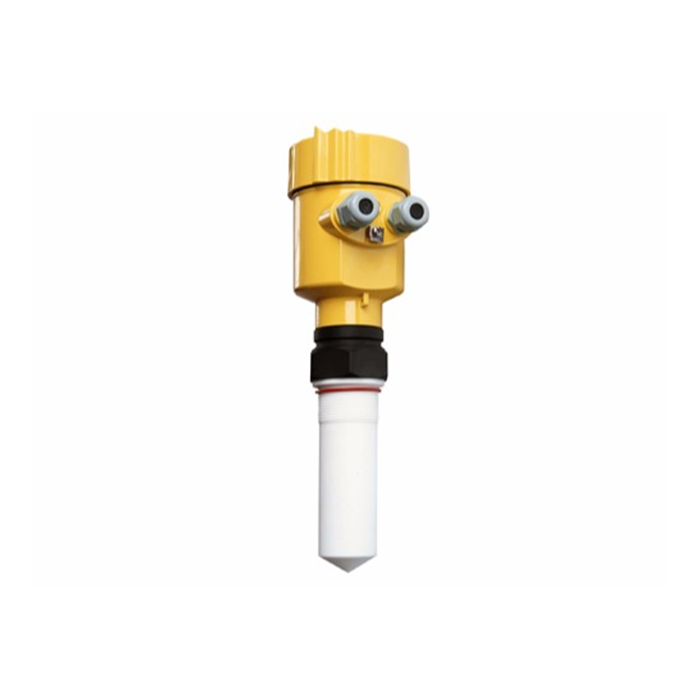
Conclusion
Ultrasonic level transmitters are a mature non-contact measurement technology for water, wastewater, storage tanks and selected bulk-solid applications. Long-term measurement stability depends on gas-phase sound velocity, temperature compensation, vapor condensation, surface movement, blind zone and mounting position.
Volatile liquids in closed tanks require attention to gas composition and condensation. Dynamic liquid surfaces benefit from suitable mounting, measuring margin and digital filtering. Bulk-solid applications require consideration of dust, scattering and material slope. Two-wire, three-wire and four-wire designs should be selected according to the instrument power and signal architecture, while flange size, nozzle length and blocking distance should follow the technical documentation of the selected model.
METRAVON ultrasonic level measurement products can be configured according to process medium, measuring distance, environmental conditions, power supply and system interfaces such as 4–20mA and RS485 Modbus RTU, supporting integration with PLCs, RTUs, data-acquisition systems and remote monitoring platforms for stable and scalable liquid and solid level measurement.