Chinese
 Spanish
 Russian
 Portuguese
 French
 German
 Indonesian
 Thai
Thai Vietnamese
 Arabic
 Italian
 Turkish
 Polish
 Japanese
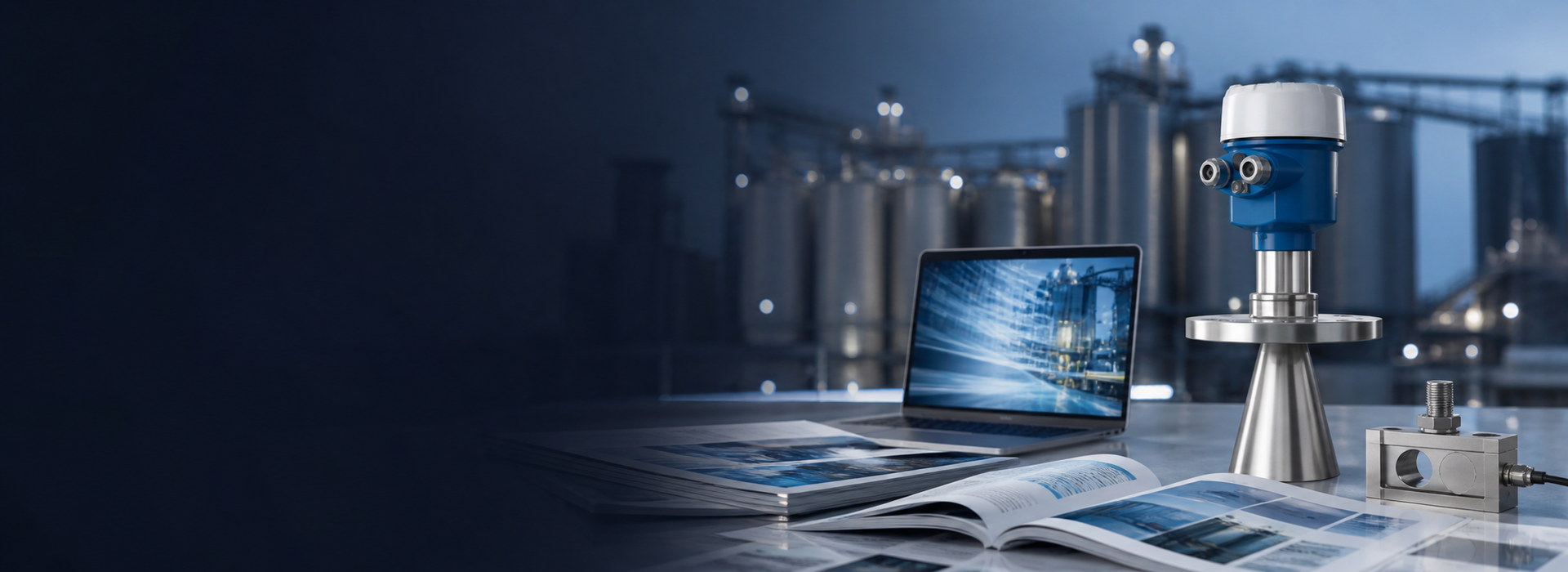
Fish ponds, shrimp ponds, aquaculture tanks and recirculating aquaculture systems all require reliable water-level monitoring. Water level can change because of filling, drainage, evaporation, rainfall, filtration-system operation and routine water exchange. Excessively high or low water levels may affect pumps, filtration equipment, drainage systems and overall aquaculture-system operation.
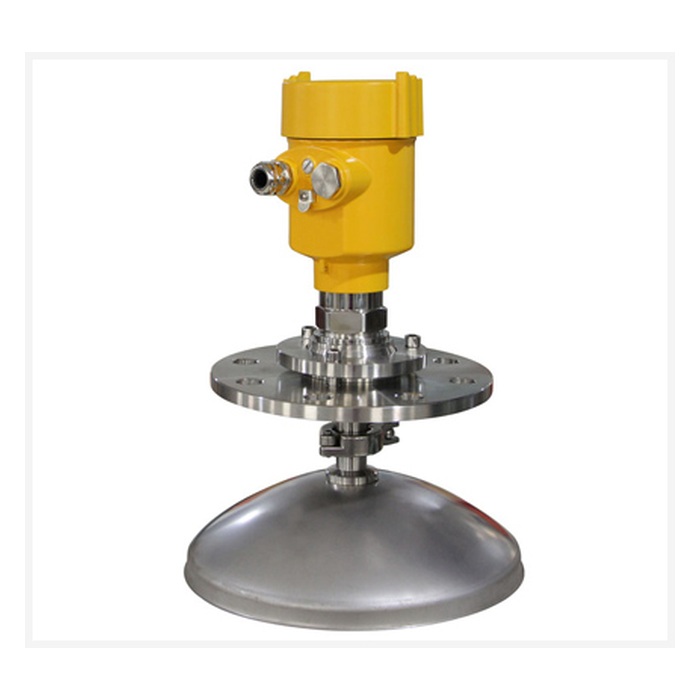
Radar level transmitters provide continuous non-contact water-level measurement by installing the sensor above the water surface. The instrument transmits electromagnetic waves toward the water and calculates the distance from the reflected signal. Because the sensor does not need to remain immersed in the pond, radar measurement can reduce problems associated with biological fouling, sediment, salt and maintenance of submerged sensing elements.
1. What Makes Aquaculture Pond Level Measurement Different?
Aquaculture ponds may appear to be simple water-level applications, but their operating environment is often more complex than a closed storage tank. Aerators, circulation pumps, outdoor weather, saltwater exposure, surface movement and foam can all influence instrument selection and installation.
Continuous Water-Level Change
Filling, drainage, evaporation and rainfall can change pond level continuously, so continuous measurement is often more useful than a single high- or low-level switch.
Moving Water Surface
Aerators, pumps, water inlets and wind can create waves and continuous surface movement.
Outdoor Environment
The instrument may be exposed to rain, solar radiation, humidity, temperature changes and strong wind.
Corrosive Conditions
Marine and high-salinity aquaculture applications require suitable housing, mounting and fastener materials.
2. How Does Radar Measure Water Level in an Aquaculture Pond?
The radar transmitter is mounted above the pond and sends high-frequency electromagnetic waves toward the water surface. The signal is reflected by the surface and received by the instrument. The transmitter then calculates the distance between the sensor and the water surface from the reflected signal.
When the installation reference height is known, actual water level can be calculated as:
Water Level = Reference Height − Measured Distance to Water Surface
The complete measurement process is non-contact. No sensing probe has to remain permanently submerged in the pond, which can reduce direct exposure to biological growth, sediment, salt and routine cleaning operations.
3. Why Use Non-Contact Radar for Aquaculture Water-Level Monitoring?
Submersible pressure sensors, floats and other contact-type level devices can also be used in aquaculture ponds. However, sensors that remain submerged for long periods may be affected by biofouling, sediment, salt deposits or mechanical damage.
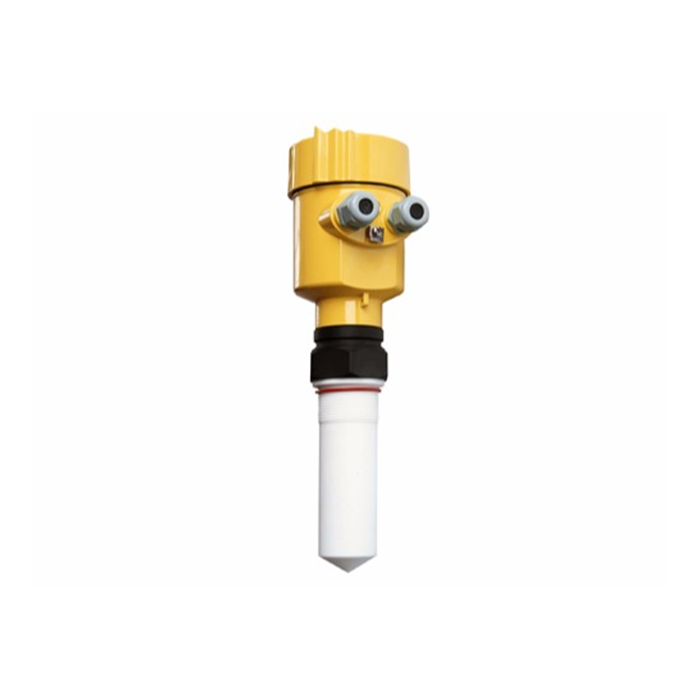
Radar level transmitters are mounted above the water surface and have no sensing element continuously immersed in the pond. This can be useful where maintenance access is limited, where the operator wants to avoid submerged wiring, or where several ponds need to be integrated into a centralized remote monitoring system.
4. Do Mist, Humidity and Rain Affect Radar Level Measurement?
Radar uses electromagnetic waves rather than acoustic waves. Unlike ultrasonic measurement, radar does not depend on the speed of sound in air, so normal changes in air temperature, humidity and airflow generally have less direct influence on the propagation speed of the measurement signal.
However, radar should not be described as being able to penetrate unlimited mist, water droplets or condensation without any effect. Heavy condensation, a persistent water film or contamination on the antenna can still reduce echo quality. Outdoor installations should therefore consider enclosure protection, sensor position, mounting stability and, where appropriate, weather protection.
5. Can Aerators Affect Radar Water-Level Measurement?
Paddle-wheel aerators, diffused-air systems and circulation equipment can create strong water-surface movement, bubbles and splashing. If the radar transmitter is mounted directly above a highly turbulent area, the measured value may fluctuate even though the average pond level is stable.
The transmitter should therefore be installed away from the strongest aeration, inlet and outlet zones and positioned over an area that represents the average pond level. Where moderate surface movement remains, damping, averaging or filtering can be used to improve output stability.
6. Does Foam Affect Radar Level Measurement?
Foam may develop in aquaculture ponds because of aeration, dissolved organic matter or changing water conditions. Radar should not be assumed to penetrate all foam automatically. Foam thickness, density, water content and radar frequency all influence the reflected signal.
A thin or intermittent foam layer is different from a dense and persistent foam layer. If heavy foam is regularly present, it should be included in the application information during product selection so that the radar frequency, mounting position and expected echo performance can be evaluated properly.
7. What Are the Advantages of 80GHz Radar in Aquaculture Applications?
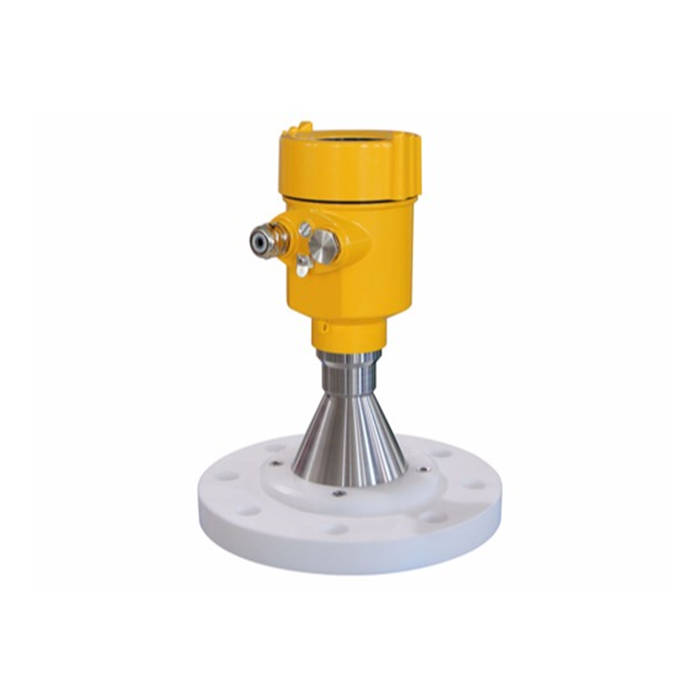
80GHz radar can produce a relatively narrow measurement beam. This can be useful when the sensor is mounted near the pond edge, on a structural beam, or where pipes, brackets or other fixed objects are located close to the measurement path.
The compact antenna size can also simplify installation. However, 80GHz is not automatically required for every aquaculture pond. The appropriate radar frequency should still be selected according to measuring distance, installation height, surface conditions and surrounding structures.
8. Radar vs Ultrasonic for Aquaculture Pond Level Measurement
| Comparison Item | Radar Level Transmitter | Ultrasonic Level Transmitter |
|---|---|---|
| Measurement Principle | Electromagnetic waves | Acoustic waves |
| Contact with Water | No | No |
| Temperature Influence | Generally low | Sound velocity changes with temperature |
| Airflow Influence | Generally low | Strong airflow can affect acoustic propagation |
| Surface Movement | Requires suitable mounting and filtering | Also requires installation away from strongly turbulent zones |
| Outdoor Use | Suitable with appropriate enclosure and mounting design | Suitable with temperature compensation and outdoor protection |
| System Integration | 4–20mA, RS485 and other interfaces depending on model | 4–20mA, RS485 and other interfaces depending on model |
Both radar and ultrasonic technologies can be used for conventional aquaculture water-level measurement. For applications with large outdoor temperature changes, stronger airflow, narrow installation space or nearby structural obstacles, radar may provide useful installation advantages. Ultrasonic measurement can still be suitable for simpler ponds where acoustic conditions are stable.
9. Typical Aquaculture Applications
Fish Pond Level Monitoring
Continuously monitors water-level changes caused by filling, drainage, rainfall and evaporation and provides data for manual or automatic water replenishment.
Shrimp Pond Level Monitoring
Suitable for high-salinity and marine aquaculture applications when mounting hardware, fasteners and instrument materials are selected for salt and corrosion exposure.
Recirculating Aquaculture Systems
Can monitor culture tanks, filtration tanks, reservoirs and treatment tanks as part of a centralized PLC or RTU monitoring system.
Automatic Filling and Drainage
Continuous water-level signals can be used by a PLC to control refill valves, drainage pumps and alarm functions.
10. How Can Radar Level Data Be Monitored Remotely?
The radar level transmitter is responsible for measuring water level, while remote data transmission is normally handled by a PLC, RTU, data logger or industrial gateway. Depending on the selected instrument, 4–20mA or RS485 Modbus RTU can be used to transfer water-level data to the control system.
Radar Level Transmitter → PLC / RTU / Data Logger → 4G / Ethernet / LoRaWAN → Remote Monitoring Platform
The upper-level system can provide historical trends, alarm records, refill control and centralized monitoring of multiple ponds. Automatic control logic should include appropriate hysteresis and time delay so that short-term surface movement does not cause pumps or valves to switch too frequently.
11. What Information Is Required for Aquaculture Radar Level Transmitter Selection?
| Selection Parameter | Information to Confirm |
|---|---|
| Aquaculture Type | Freshwater fish, marine fish, shrimp or other aquaculture species |
| Maximum Measuring Distance | Distance from the sensor installation point to the lowest expected water level |
| Water-Surface Condition | Aeration, waves, persistent foam, inlet or outlet disturbance |
| Installation Position | Pond-side bracket, structural beam, roof or other fixed support |
| Environmental Conditions | Rain, temperature, salt spray, solar exposure and humidity |
| Output Signal | 4–20mA, RS485 Modbus RTU or other required system interface |
| Remote Monitoring | Whether 4G, Ethernet, LoRaWAN or cloud-platform communication is required |
| Control Requirement | Monitoring only, or automatic refill, drainage and high/low level alarms |
12. Installation Considerations
The radar transmitter should be mounted above a location that represents the average pond water level. Avoid installing it directly over paddle-wheel aerators, strong inlet jets, drainage outlets or other areas with severe surface disturbance.
Fixed brackets, pipes and other structures should also be kept out of the primary radar beam where possible. Outdoor mounting structures should be mechanically stable, and cable sealing, drip loops, surge protection and grounding should be considered according to the site electrical design.
For seawater or high-salinity aquaculture systems, corrosion resistance of mounting brackets, fasteners, enclosures and exposed materials should also be included in the selection process.
FAQ
Q1: Is radar suitable for fish pond water-level monitoring?
A1: Yes. Radar provides non-contact continuous measurement and does not require the sensing element to remain submerged in the pond.
Q2: Can radar level transmitters be used in shrimp ponds and seawater aquaculture?
A2: Yes, but saltwater and salt spray can be corrosive. Mounting hardware, fasteners and instrument materials should be selected accordingly.
Q3: Can an aerator interfere with radar measurement?
A3: Yes. Strong surface movement and splashing can cause short-term measurement fluctuations. The sensor should be installed away from the most turbulent zone and appropriate filtering can be applied.
Q4: Can mist or high humidity stop radar measurement?
A4: Normal humidity usually has limited direct influence on radar propagation, but heavy condensation, persistent water films or antenna contamination can still affect echo quality.
Q5: Can radar be used when foam is present?
A5: It depends on the foam thickness, density and duration. Thin intermittent foam and dense persistent foam are very different measurement conditions, so heavy foam should be identified during selection.
Q6: Can radar automatically control pond filling?
A6: The radar transmitter provides the continuous water-level signal. A PLC or controller can use that signal to operate refill valves, drainage pumps or alarms according to configured level thresholds.
Q7: Can pond water level be viewed on a phone or cloud platform?
A7: Yes. The radar signal can be collected by an RTU or IoT gateway and uploaded through 4G, Ethernet, LoRaWAN or another network to a remote monitoring platform.
Q8: Should an aquaculture pond use radar or ultrasonic level measurement?
A8: Both can be suitable. Radar can be advantageous where outdoor temperature changes, airflow, nearby structures or narrow-beam installation are important. Ultrasonic measurement can remain practical for simpler ponds with stable acoustic conditions.
Conclusion
Radar level transmitters are suitable for non-contact continuous water-level monitoring in fish ponds, shrimp ponds, recirculating aquaculture systems and other open aquaculture water bodies. Because the sensing element does not remain submerged, radar can reduce direct exposure to biological fouling, sediment and salt while providing an interface for PLC, RTU and remote monitoring integration.
Reliable performance still depends on correct installation. Aeration, surface waves, foam, outdoor weather, salt spray and nearby structures should all be considered during sensor placement and product selection. Radar should not be described as completely unaffected by mist, foam or condensation, but it generally provides a robust non-contact option for many outdoor aquaculture applications.
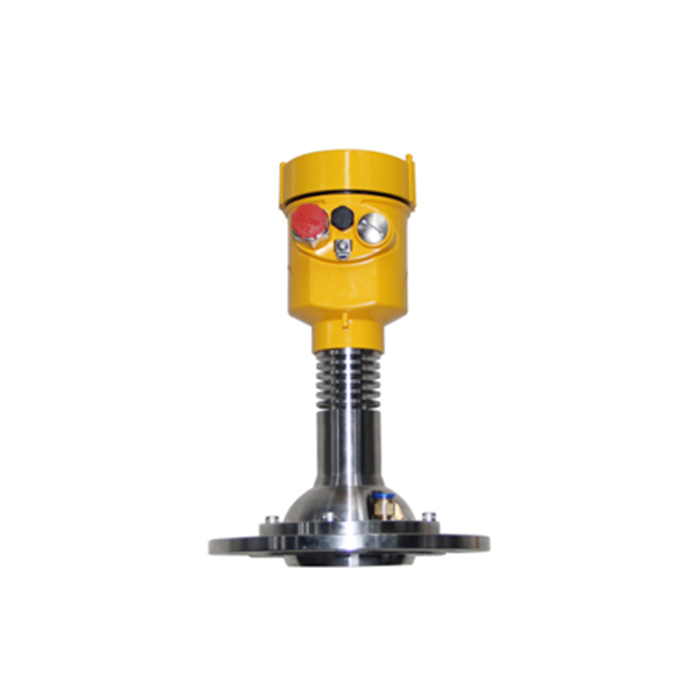
METRAVON radar level measurement products can be configured according to pond measuring distance, environmental conditions, required output interface and remote monitoring architecture. Interfaces such as 4–20mA and RS485 Modbus RTU can be integrated with PLCs, RTUs and industrial IoT systems to support water-level monitoring, refill and drainage control, and centralized management of multiple aquaculture ponds.