


 Chinese
 Spanish
 Russian
 Portuguese
 French
 German
 Indonesian
 Thai
 Vietnamese
 Arabic
 Italian
 Turkish
 Polish
 Japanese

Radar materials for acids and alkalis cannot be selected from pH alone. Concentration, temperature, impurities and cleaning exposure can change the material decision. A tank's production liquid may also differ from the fluid left in its nozzle after washing or shutdown.
Build a Chemical Exposure Schedule
| Stage | Record | Parts to include |
|---|---|---|
| Production | Actual composition and concentration range, including impurities. | Probe or antenna, connection, gasket and process seal. |
| Cleaning | Each agent, rinse sequence, temperature and exposure duration. | Surfaces reached by spray or condensate, not only normally wetted parts. |
| Changeover | Residual fluids and approved mixtures between batches. | Crevices, dead spaces and exposed lining edges. |
| Shutdown | Cooling, evaporation, deposits and retained liquid. | Probe covering, end termination and regions difficult to drain. |
Keep uncertain mixtures marked as unresolved rather than choosing a material for the best-known ingredient. The process owner supplies the chemistry; the equipment and material review must address the construction actually being offered.
Radar Materials for Acids and Alkalis: Name the Exact Construction
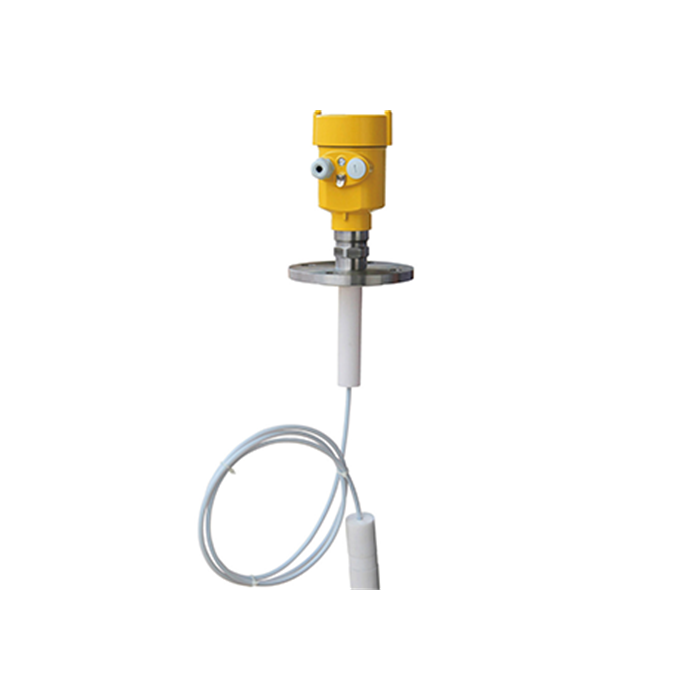
METRAVON MV-RD702 uses a fluoropolymer-covered guided wave probe. Its product information identifies PFA or PTFE construction options; that is not a statement that those materials, PVDF and stainless steel are interchangeable. Request the chosen covering, seal and exposed metal grades explicitly.
Do not transfer a chemical-resistance statement for a bulk polymer to an assembled probe without checking temperature, mechanical support and the sealing design. Likewise, a 316L description is not a universal approval for every acidic or alkaline mixture. Where published data conflict, resolve the specific conditions before purchase.
Protect the Approved Material During Installation
A compatible coating can fail as a barrier if it is scraped against a sharp nozzle or altered at its end. Provide a clear insertion route and prevent contact with moving internals. Do not shorten a covered cable unless the exact assembly has an approved modification and resealing procedure.
The material review also applies to cleaning tools and chemicals. Do not prescribe a scraper, solvent or hot rinse from the deposit's appearance alone. Specify the acceptable procedure and the condition that requires repair or replacement rather than continued cleaning.
Make Purchasing and Receiving Use the Same List
Put approved materials and any exclusions in the order attachment. At receipt, compare the model suffixes, probe length, connection and material documentation. If the supplied covering differs from the reviewed option, obtain a new approval instead of treating it as a harmless substitution.
Keep chemical compatibility separate from measurement acceptance. Crystals or films can interfere with an otherwise chemically intact probe. Record diagnostics before and after the planned cleaning cycle, with actual process conditions.
Chemical-Service Questions
Q1. Can one approved chemical justify all future recipes?
No. Treat changes in composition or cleaning conditions as changes to the approved exposure schedule. Confirm the affected parts before using the new duty.
Q2. Does a non-contact radar remove this review?
No. Vapour, condensate and splash still contact its antenna and joint. Compare the exposure reduction offered by the different construction, not an assumption of zero contact.
Summary
Record chemical compatibility for each operating stage and each exposed component. Send the exposure schedule for an MV-RD702 material review, including the cleaning agents and required probe termination.
