


 Chinese
 Spanish
 Russian
 Portuguese
 French
 German
 Indonesian
 Thai
 Vietnamese
 Arabic
 Italian
 Turkish
 Polish
 Japanese


Pulp chest level measurement begins with a practical question: should the reading follow the liquid stock, a foam layer, or the usable inventory above the pump intake? Those quantities can diverge as consistency, air entrainment and agitation change. The control duty must determine the target and the acceptance test.
Assign the measurement to a specific operating decision
| Duty | Quantity needed | Limit to resolve |
|---|---|---|
| Pump supply | Usable stock above the required intake condition. | A visible surface alone may not establish the pump's acceptable suction condition. |
| Overflow | Available space for liquid and any relevant foam carryover. | A radar following stock below foam may not show the highest occupied surface. |
| Blending | A representative level through changes in furnish and mixing. | A local vortex or wall mat may not represent the chest volume. |
| Inventory | Level converted using the agreed chest geometry. | Dry-solids mass also depends on stock properties; it is not directly measured by radar. |
Locate the antenna for pulp chest level measurement
Inspect inlet streams, recirculation, baffles and the agitator's operating zone. A quiet-looking region near a wall may carry a fibre mat, while the centre may contain a moving depression. Evaluate the location with the chest in its normal operating states rather than selecting it solely for convenient roof access.
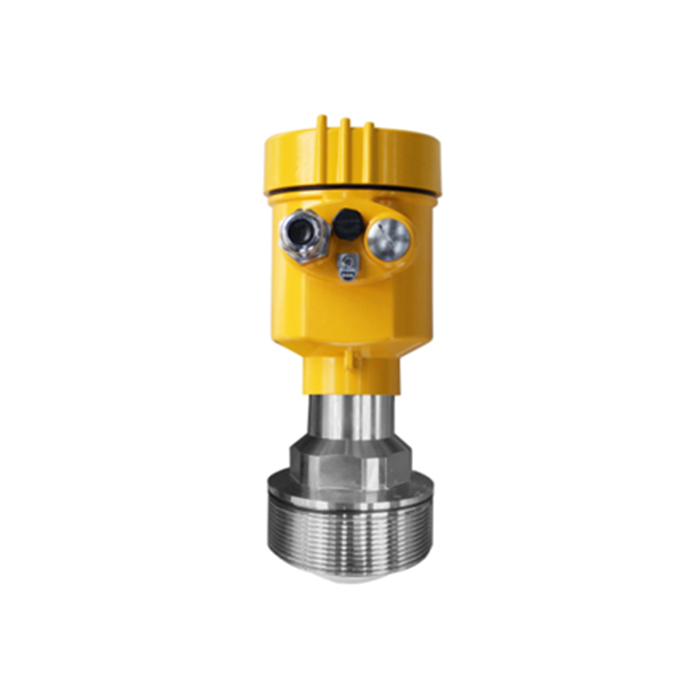
The METRAVON MV-RD13 is a liquid-level radar with a 76 mm PTFE lens. Its published 3-degree beam can help assess clearance between structures, but application testing must establish which surface it follows in the actual stock and foam. The ordered connection also needs enough access for inspection and cleaning.
Treat foam behaviour as an operating result
Save observations for wet foam, persistent foam and the accepted low-foam condition where these occur. Do not assume that one echo will always represent the same interface. Record the process state and an independent reference with the trace so later changes can be interpreted.
If foam carryover itself matters, assess whether a separate detection function is needed. A continuous value used to regulate stock may not also provide a reliable indication of foam at the overflow point. State the two duties separately instead of stretching one acceptance criterion to cover both.
Use maintenance evidence to distinguish drift from coating
Fibres can lodge around a recessed nozzle and dry after shutdown. Inspect the as-found connection before cleaning, under the site's access and isolation procedure. Compare clean and coated echo records, noting furnish, additives and shutdown duration.
Check that any wash arrangement reaches the intended surface without leaving a new obstruction. Do not add an unreviewed metal guard in the radar path. Repeated fouling should prompt a review of splash, nozzle geometry and access before simply shortening the maintenance interval.
For a hydrostatic cross-check, account for the density and aeration assumptions used by that instrument. A difference between the two methods is evidence to investigate, not a reason to adjust the radar zero immediately. Compare their actual measured quantities and reference planes.
Prove control response with the accepted filtering
Record the local value, receiving PLC tag and quality state through filling, drawdown and relevant changes in mixer operation. Include filtering and input processing when checking how quickly the system recognises a real rise. Test failure and recovery using an authorised procedure and retain the final settings.
A displayed last-known level needs an age or invalid indication. It must not be interpreted indefinitely as proof of current stock availability. The process owner should define the response of pumps and alarms for unavailable measurement, including restart conditions.
Questions about a changing stock surface
Q1. Can a clean-water test qualify the chest for production?
It can establish wiring, scaling and selected geometric checks. It does not demonstrate foam behaviour, fibre deposits or the effect of actual furnish. Record those remaining tests against the production states in which the measurement will be used.
Q2. What information is most useful before selecting a radar?
Provide chest geometry, inlet and mixer locations, stock-consistency range, known foam behaviour and cleaning access. State the operating decision supported by the signal and the existing receiver. Photos taken during an approved inspection can help explain deposits that a drawing cannot show.
Summary
Accept the target, operating states and control response together. Request a pulp-chest application assessment with the stock and installation evidence so the proposed radar is evaluated for the required service rather than for a generic liquid tank.
