


 Chinese
 Spanish
 Russian
 Portuguese
 French
 German
 Indonesian
 Thai
 Vietnamese
 Arabic
 Italian
 Turkish
 Polish
 Japanese


Ceramic slurry level measurement has to distinguish a changing batch volume from a surface distorted by mixing. A deep vortex, foam and splashed glaze can each give a repeatable reading that is not the value the operator needs. Define when the reading will be used: during agitation, after settling, or throughout both states.
The measuring position is part of the batch definition
Mark the mixer shaft, blade sweep, powder addition and liquid returns on a tank section. Avoid aiming into the vortex or the falling stream. Moving towards the wall is not automatically better: deposited glaze and liquid climbing the wall can make that position unrepresentative too.
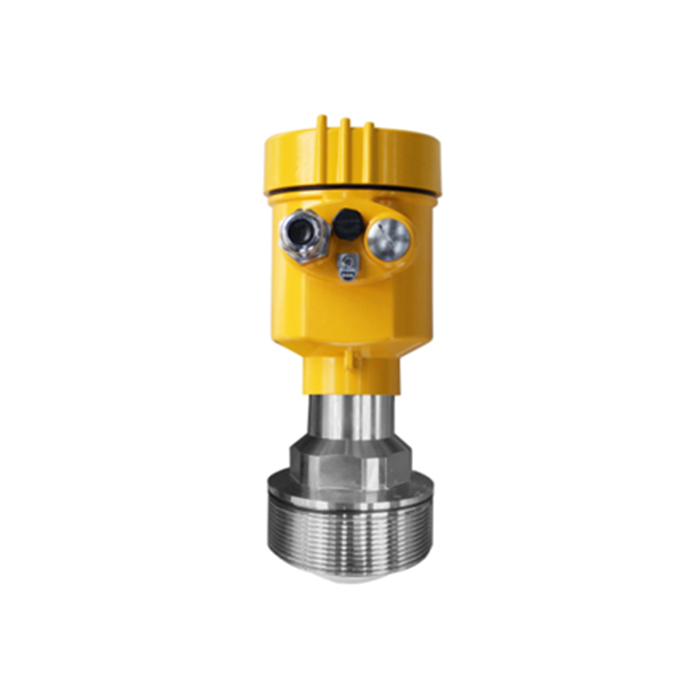
The METRAVON MV-RD13 liquid radar has a 76 mm PTFE lens and a listed 3-degree beam. Its geometry is worth assessing where a clear path is available between internals. Neither the narrow beam nor the long-range option proves that the radar will ignore a rotating agitator; test the actual assembly at the required mixer speeds.
Use recipe changes to test ceramic slurry level measurement
| Trial | Observe | Decision |
|---|---|---|
| Water fill | The local value and PLC agree at known positions. | Accept the tested scaling, but leave slurry performance open. |
| Dense slip | The echo changes as solids and mixer loading increase. | Confirm the required operating reading before choosing damping. |
| Foaming glaze | The returned target differs from the settled liquid surface. | Decide whether this condition supports the intended control duty. |
| After cleaning | A dry coating or residual film remains near the antenna. | Inspect the connection and repeat the reference comparison before release. |
A level signal is not a solids-content measurement
Level can indicate available capacity or support transfer sequencing. Calculating batch mass from it additionally requires tank geometry and current slurry density. A recipe change can alter density without a matching change in level. Do not compensate for an incorrect mass estimate by altering the radar distance offset.
If the process accepts a settled reading, define the settling interval and prevent that value from being confused with a live measurement during mixing. If level controls an operating pump or mixer, prove the response during operation rather than postponing every measurement until the agitator stops.
Make deposits visible and removable
Glaze and binder can dry around a recessed connection. Provide access that permits inspection under the plant's isolation procedure and record the as-found condition before cleaning. A lens that looks clear from below may still have material in the nozzle above it.
Specify pigments, binders, cleaning agents and temperatures when reviewing exposed materials. Non-contact measurement avoids an immersed probe, but does not isolate the process face, seal or flange from splash. Any rinse must also be acceptable for the recipe; unaccounted wash water can change the batch.
Keep a clean reference echo and a trace from the most demanding accepted recipe. When the reading changes later, compare those records before resetting calibration. Repeated deposits suggest a mounting or process issue, not necessarily a need for increasingly aggressive filtering.
Questions from slurry-tank projects
Q1. Does a stable vortex reading count as an accurate level?
It may accurately follow a local depression, but that is not automatically the vessel's representative level. Compare the location and process state used for the reference measurement. If the duty is inventory, assess how the surface profile affects the conversion.
Q2. Can one accepted glaze qualify every recipe?
Only if the qualification covers the relevant range of solids, foam, additives and cleaning conditions. Identify the recipes that could change the echo or coating behaviour. A recipe outside that range needs review instead of inheriting an unsupported approval.
Q3. What should accompany a radar enquiry?
Provide the tank drawing, mixer speeds, recipe range, operating temperatures and shortest antenna-to-surface distance. State whether the required output is live level, settled volume or an alarm input. Include the existing PLC input and cleaning procedure.
Summary
Approve the location and the operating state together. Request an MV-RD13 application review with evidence from the intended slurry, not only a water test. The accepted settings should describe which recipes and mixing conditions were actually demonstrated.
