


 Chinese
 Spanish
 Russian
 Portuguese
 French
 German
 Indonesian
 Thai
 Vietnamese
 Arabic
 Italian
 Turkish
 Polish
 Japanese

Hot ash silo level measurement requires two temperature checks: the process-facing assembly must tolerate the ash and gas exposure, while the electronics must remain within their separate ambient limits. A high-temperature model can still be installed incorrectly if roof insulation, radiant heat or a hot enclosure defeats its thermal arrangement.
Hot Ash Silo Level Measurement With MV-RD21G
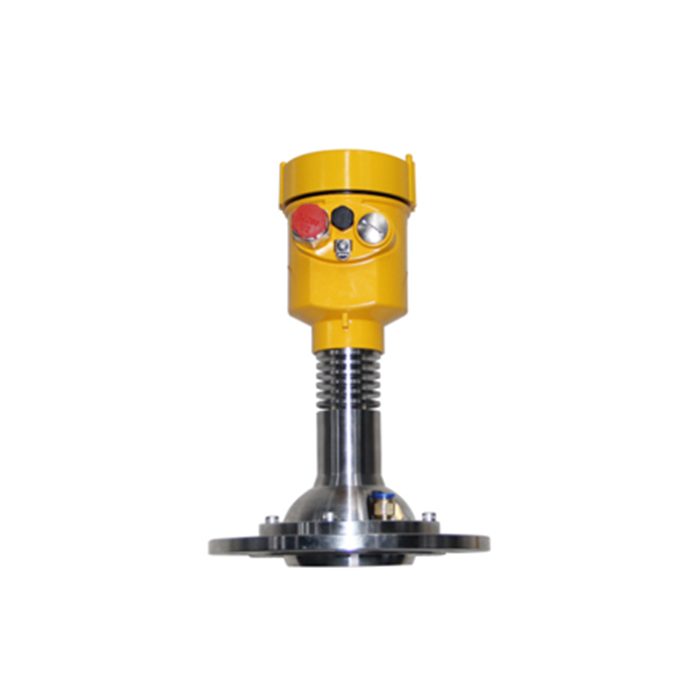
The METRAVON MV-RD21G is the hot bulk-solids configuration. It has a 76 mm PTFE lens, a 3-degree beam and a specified process temperature interval of -40 to 200 deg C. Its listed process pressure is -0.1 to 0.3 MPa; the higher pressure figures of some liquid radar models must not be applied to this solids instrument.
Provide incoming ash temperature, gas temperature, pressure excursions, roof insulation and conditions around the housing. Confirm the offered connection and seal at the concurrent operating conditions. If the expected exposure exceeds the documented construction, resolve that mismatch before installation rather than assuming the radar remains protected because it does not touch the pile.
Separate the Effects of Heat, Dust and Wet Deposits
| Condition | Observe | Review |
|---|---|---|
| Hot transfer | Process exposure and temperature around the housing. | Thermal arrangement, cable routing and enclosure location. |
| Dense dust | Echo quality during the actual conveying stage. | Beam location and the validity of readings used for control. |
| Damp ash | Adherent material on the lens or in the nozzle. | Condensation, leakage and the approved cleaning method. |
| Discharge | Surface change against outlet and feeder evidence. | Bridging or restricted flow below the measured surface. |
A stable reading with an idle conveying line is not sufficient evidence for maximum-rate filling. Save the echo before transfer, during the dusty stage and after settling. If loss of measurement occurs only during transfer, investigate that condition before increasing smoothing or hiding a wide part of the echo range.
Allow Space for Ash Still in the Conveying System
Identify which part of the transfer stops when the high-level condition occurs and what material continues arriving. Include sensor and control delays, valve or blower response and the transport sequence. Use the credible filling rate and material condition to evaluate the remaining space, then verify the control response through an approved test.
A separate high-high function may be required by the plant's risk design. Do not describe two thresholds from the same continuous radar as independent protection. Similarly, a high surface reading does not prove the discharge outlet contains flowing ash; use the relevant feeder, pressure or flow evidence for that decision.
Make the First Inspection Informative
Record the antenna and nozzle condition before cleaning. Compare the echo and measurement status before and after the approved intervention, and check mounting fasteners and cable exposure. If deposits recur after cool-down or damp weather, examine the moisture source rather than merely shortening the cleaning interval indefinitely.
Keep the instrument accessible without entering an operating silo. Any purge requires an approved connection and gas specification, including its effect on dust control. Do not improvise an air blast into a hot dust space to restore a display.
Ash-System Questions
Q1. Is 200 deg C also the allowed temperature inside the instrument housing?
No. That figure describes the specified process duty. Review the electronics environment separately, including sun and radiant heat. Keep the thermal arrangement consistent with the supplied installation requirements.
Q2. Can radar report ash tonnes for disposal records?
Only as a separately assessed estimate when the silo geometry, surface model and density basis support that use. Aeration, settling and moisture affect the conversion. Use the designated weighing record where a measured disposal quantity is required.
Q3. What should the control system show after lost echo?
It should show invalid measurement distinctly from a current stable level and follow the approved response for the transfer state. Test both the radar's output behaviour and the receiving PLC logic; a fault visible only on the local display is insufficient.
Summary
Confirm the complete thermal duty, prove the echo during conveying and allow for arrivals after a stop. Request an MV-RD21G review with the ash transfer sequence and temperature profile. Include maintenance access and the control-system fault response in the supply scope.
