Chinese
 Spanish
 Russian
 Portuguese
 French
 German
 Indonesian
 Thai
Thai Vietnamese
 Arabic
 Italian
 Turkish
 Polish
 Japanese

A useful load-cell request for quotation describes the measurement problem and installation boundary, not only capacity and quantity. Suppliers need force direction, load cases, mounting geometry, environment, signal chain and acceptance requirements to recommend a defensible sensor. Missing information encourages assumptions that surface later as drawing changes, weak signal, damaged cells or disputed accuracy. The RFQ should distinguish mandatory requirements from preferences and require deviations to be stated explicitly.
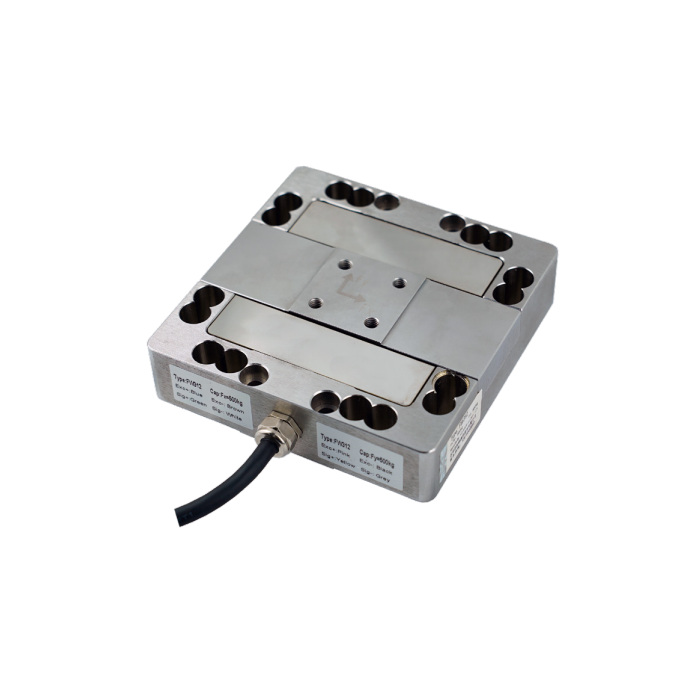
Describe the application
State machine, vessel, platform, hoist or test function and how the force value will be used. Identify process control, product acceptance, inventory or protection. Provide operating sequence, duty cycle and required response. Include photographs only with a dimensioned drawing and clear orientation.
List every force case
Specify compression, tension, shear, moment, torque, side load and reversal as applicable. Include dead load, preload, normal range, peak, shock, jam, wind, seismic and maintenance loads with duration and cycles. Separate measurement range from structural safety or proof-load requirements.
Provide mechanical drawings
Give available envelope, mounting faces, holes, threads, load point, alignment, travel, cable exit and service access. Show reaction structure and parallel paths. State material and surface requirements. For replacements, supply the controlled original drawing rather than only worn-part measurements.
Define performance realistically
State system uncertainty, repeatability, resolution, hysteresis, creep, bandwidth and temperature behavior only as relevant to the decision. Define range and reference conditions. Avoid copying unrelated maximum datasheet terms. Clarify whether acceptance applies to the bare cell or installed system.
Specify environment and compliance
List operating and storage temperature, washdown, humidity, immersion, chemicals, corrosion, vibration, outdoor and hazardous classification. Provide exact zone or division, group and temperature class. Identify legal, lifting, hygienic or quality documentation required for the complete application.
Define electrical integration
Specify mV/V, voltage, current or digital interface, excitation, cable length, connector, amplifier or indicator, PLC input, sampling and filtering. Include intrinsic-safety barriers and isolation where needed. State units, sign, scaling, fault behavior and communication protocol details.
Request calibration and documents
Define calibration direction, points, uncertainty, traceability and whether fixtures or electronics are included. Request model code, drawings, datasheet, certificate, serial traceability, wiring, installation limits and configuration files. Separate factory calibration from final system commissioning.
Set acceptance and deviation rules
Require compliance item by item and list exceptions with consequence. Define inspection, dimensional verification, electrical tests, installed calibration, alarms and documentation handover. State delivery, spares and lifecycle expectations. Do not accept an unqualified equivalent without engineering review.
Engineering checklist
- Explain what decision force supports.
- List all normal and fault loads.
- Attach controlled mechanical drawings.
- Define system-level performance.
- Give exact environment and approvals.
- Require explicit deviations and acceptance evidence.
Frequently asked questions
Is capacity and output enough for a quotation?
It may produce a price, but not a reliable application selection.
Should the RFQ demand the highest accuracy class?
Only when the system requirement and mechanics justify it; otherwise it can add cost without improving results.
What makes an equivalent acceptable?
Documented mechanical, electrical, environmental, approval and performance compatibility plus final system verification.
Decision record
Record the selected architecture, operating cases, assumptions, accepted limits and responsible approver. Attach drawings, calculations, calibration evidence and unresolved deviations. Include inspection interval, spare strategy, fault response and recoverable configuration location. Assign an owner and closure date to each conditional acceptance. Review actual drift, faults and maintenance findings after representative service, and revise the engineering basis when evidence contradicts an assumption. Make the record available to operations and maintenance, with revision history and asset identity, so later adjustments can be compared with the accepted baseline rather than treated as undocumented tuning.
Need a project-specific review? Send load cases, drawings, environment, signal requirements and acceptance criteria through our contact page.