


 Chinese
 Spanish
 Russian
 Portuguese
 French
 German
 Indonesian
 Thai
 Vietnamese
 Arabic
 Italian
 Turkish
 Polish
 Japanese

Battery powder silo level measurement must be selected for the actual electrode material and handling system. A fine cathode powder, graphite and a recycled mixture should not be treated as one generic duty. Reflection, deposits, contamination limits and area requirements need to be assessed by grade before accepting an instrument into the powder path.
Protect the Powder Before Optimising the Echo
Identify every surface that can contact powder or shed material into it: lens, seal, adaptor, fasteners and any purge fitting. Review permitted materials, cleaning methods and trapped-volume concerns with the process owner. Non-contact measurement avoids an immersed probe but does not make the roof-mounted assembly irrelevant to product quality.
If a purge is proposed, agree on the gas, cleanliness, dryness, pressure and route before adding the accessory. Do not assume plant compressed air is suitable for a moisture-sensitive or controlled-atmosphere process. Any change must also preserve the vessel's intended pressure and atmospheric conditions.
Battery Powder Silo Level Measurement by Grade
| Review | Provide | Reason |
|---|---|---|
| Material | Grade, particle properties and available reflection information. | A material name alone does not establish radar echo margin. |
| Handling | Inlet route, conveying method and expected surface profile. | Dust and moving peaks can change the target during filling. |
| Cleanliness | Allowed process materials and maintenance procedure. | Deposits and interventions can affect subsequent production. |
| Hazards | Site classification and required equipment evidence. | Equipment approval cannot be inferred from powder appearance. |
Low bulk density should not be used as a substitute for measured or documented dielectric behaviour. Provide both when available, and verify the actual echo under representative operating conditions. Likewise, do not assign a combustible-dust classification solely because the product belongs to the battery industry.
Assess MV-RD21 Without Assuming Universal Powder Performance
The METRAVON MV-RD21 is an 80 GHz solids radar with a 76 mm PTFE lens. Its nominal 3-degree beam can help locate a measurement path between internal structures. The 30 m and 150 m range configurations still require review for the selected powder, antenna position and longest operating distance.
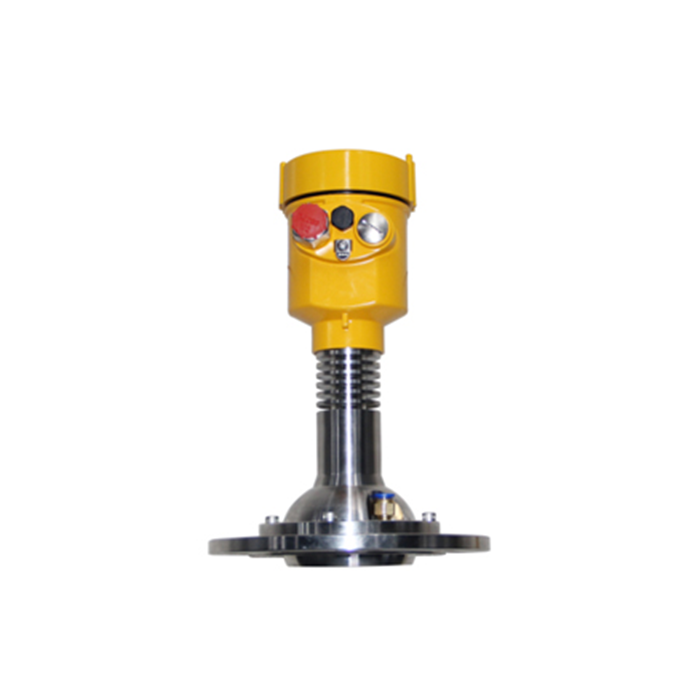
Place the antenna outside direct pneumatic or gravity filling impact. Show filters, braces and the likely pile slopes on the drawing. Avoid a powder-retaining nozzle recess and provide an approved way to inspect the face without uncontrolled entry or exposure. If the supplied construction cannot meet a mandatory contamination or area requirement, do not release it for installation.
Keep Silo Stock Out of the Dosing Accuracy Claim
The radar measures a reflecting surface. A stock estimate also needs geometry, pile assumptions and bulk density, which can vary with aeration and compaction. Electrode formulation should use its designated dosing measurement; a level trend cannot verify the mass delivered by a feeder.
Link the silo record to material grade and the feeder's actual consumption records. A high measured surface with absent feed can indicate bridging or a restricted outlet. Check the discharge equipment and its measurement rather than reducing the reported inventory solely to match a stalled process.
Questions for a Production Trial
Q1. Which operating states should be observed?
Include low stock, the dustiest normal filling stage, settling and discharge for the intended grade. Preserve the echo trace and process state together. Also inspect the approved access point for buildup after early use; a good clean-lens trial does not establish the maintenance interval.
Q2. Can the existing powder line supply purge gas?
Only after the proposed gas supply and connection meet the process quality and hazard requirements. Confirm what happens on loss of purge and how its condition is monitored. A purge should address an identified deposit mechanism, not serve as an unverified accessory added to every installation.
Q3. What evidence is needed before purchasing several identical units?
Confirm that the silos share the relevant grade, geometry, pressure, temperature and installation requirements. Preserve the trial configuration and results. Different inlet routes or material grades may require separate checks even when all instrument nameplates would be identical.
Summary
For battery powders, measurement feasibility and process compatibility must both be demonstrated. Request a grade-specific assessment with the silo layout and material restrictions. Define the trial, required documents and dosing-system boundary before committing to a multi-silo order.
