


 Chinese
 Spanish
 Russian
 Portuguese
 French
 German
 Indonesian
 Thai
 Vietnamese
 Arabic
 Italian
 Turkish
 Polish
 Japanese

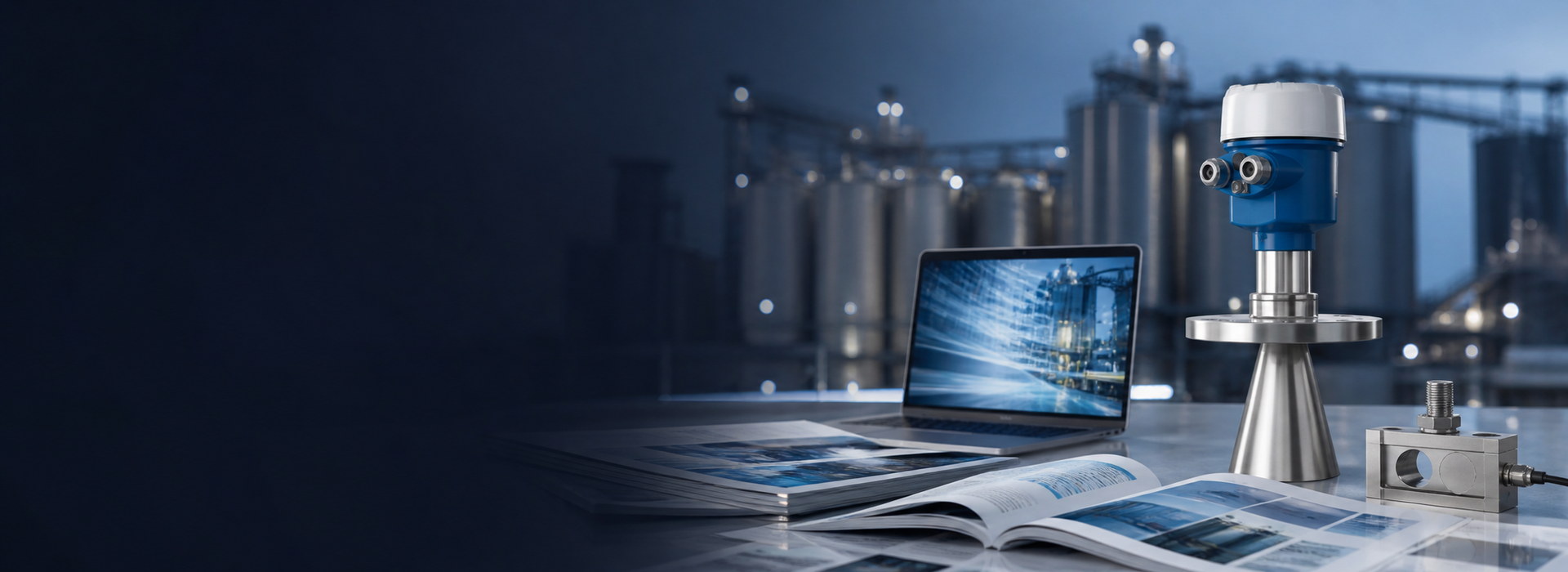
When a site standardises on one level measurement technology across dozens of tanks, the decision is not "which sensor fits" but "which method survives the worst duty in the fleet". A weighted screening matrix forces that question openly: it scores each technology against the actual constraints of the plant and rules methods out on hard criteria before anyone compares numbers. Used this way, level measurement technologies stop being a catalogue argument and become a documented selection.
Start From the Surface, Not the Sensor
The first screening question is which surface the instrument must actually detect. A continuous liquid level, a liquid–liquid interface, a solid pile surface and a single high or low point are four different duties, and no single technology is first choice for all four. A radar level transmitter reads a continuous surface well; a tuning-fork switch reads a point reliably; a hydrostatic transmitter infers level from pressure using an independently known or assumed density. Naming the surface first removes half the candidate list before any performance figure is read.
The second question is whether the value must be continuous or merely alarm. Plants often specify a continuous transmitter on every tank by habit, then discover that three of them only ever trigger a pump. Splitting the fleet into continuous and point duties is where the biggest standardisation savings appear, because a point switch is cheaper, simpler and far more fault-tolerant than a continuous loop.

The Weighted Screening Matrix
The matrix below scores six common level measurement technologies against criteria that matter for plant standardisation. Weights are expressed as a share of 100 and reflect a typical multi-tank site with mixed liquids and some solids. Scores are 0–5, where 5 means the technology fits that criterion well. Multiply weight by score and sum to rank candidates for the defined duty; change the weights for a different plant.
| Criterion (weight) | Radar | Ultrasonic | Guided wave | Hydrostatic | Magnetic / float | Clamp-on |
|---|---|---|---|---|---|---|
| Continuous liquid (25) | 5 | 4 | 5 | 5 | 2 | 4 |
| Interface duty (15) | 3 | 1 | 5 | 4 | 0 | 2 |
| Solids / pile (15) | 4 | 2 | 3 | 0 | 1 | 2 |
| Sealed / no nozzle (15) | 3 | 3 | 2 | 2 | 1 | 5 |
| Vacuum / vapour (15) | 5 | 0 | 4 | 3 | 3 | 4 |
| Maintenance access (15) | 4 | 4 | 3 | 2 | 2 | 5 |
Weights and scores are a worked example for a mixed-duty plant, not a METRAVON recommendation. Re-weight the criteria from your own duty list before using the ranking.
Point switches are scored on the same criteria when the duty is alarm-only: continuous liquid 2, interface 0, solids 3, sealed or nozzle-free 4, vacuum or vapour 5, maintenance 5, which gives 305 against radar's 410. The point is not that a switch beats a transmitter overall. It is that on an alarm-only duty none of the continuous scores apply, so a plant that scores every tank as if it needed continuous measurement builds in cost it never uses.
Hard Elimination Before Scoring
Some criteria should eliminate a technology outright rather than be scored, because a low score there is not a trade-off, it is a failure. Ultrasonic is ruled out in vacuum or heavy vapour service, where the sound path attenuates to nothing; a score of zero on that row is a stop sign, not a weakness to average away. Hydrostatic is ruled out on solids, where there is no hydrostatic head to measure. Clamp-on, meaning an ultrasonic sensor clamped to the outside of the wall with no nozzle cut, is ruled out where the wall is too thick or acoustically lossy to transmit a usable signal.
Writing these as elimination rules keeps the matrix honest. A technology that is eliminated on a hard criterion should not be rescued by a high average, because the plant will still hit that failure on the one tank where it mattered. The matrix then becomes a filter: eliminate first, score the survivors, standardise on the winner.
Treat a hard-stop condition as a gate, not a weight. If 12 of 40 tanks operate outside an ultrasonic device's documented pressure, gas-composition or acoustic-path limits, that device cannot be a common standard for those 12 tanks, regardless of its score on the remaining 28. Record pressure on an explicit absolute or gauge basis; the ambiguous phrase 0.05 bar gauge vacuum does not establish a universal ultrasonic rejection threshold.
A Worked Weighted Score for a Mixed Plant
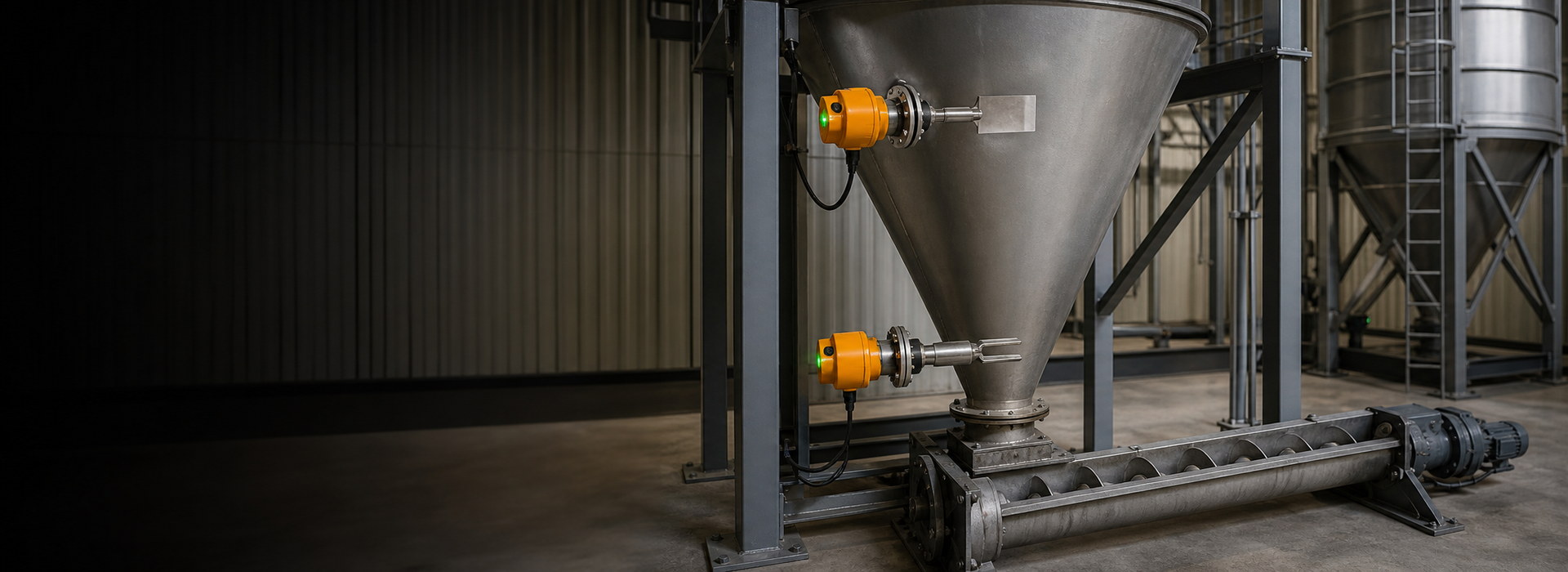
To show the method, apply the weights above to two candidate technologies for a fleet that is 60% liquid, 20% interface and 20% solids, with several sealed and vacuum tanks. Radar scores: (25×5)+(15×3)+(15×4)+(15×3)+(15×5)+(15×4) = 125+45+60+45+75+60 = 410. Guided wave scores: (25×5)+(15×5)+(15×3)+(15×2)+(15×4)+(15×3) = 125+75+45+30+60+45 = 380. Radar leads because its vacuum and continuous-liquid strengths match the weighted plant; guided wave wins the interface row but loses the sealed and vacuum rows.
This is a calculation method with assumed weights, not measured METRAVON data. The point is that the ranking moved because of the weights, not the scores: guided wave wins the interface row outright and ties on the continuous-liquid row, yet loses overall on the sealed, vacuum and maintenance rows. Re-run the arithmetic with your own weights before standardising, and the leader may change.
The same matrix also exposes a trap that pure spec comparison hides: a technology can be the highest scorer on paper and still be wrong for the plant because the weighting did not reflect reality. If the person building the matrix forgets to give vacuum service a high weight on a site that is mostly vacuum, the ranking will quietly recommend a method that fails on most tanks. The safeguard is to set the weights from the actual duty list before looking at any score, so the numbers confirm the plant rather than invent a new one.
Exceptions That Should Not Be Standardised
A plant standard should name its exceptions explicitly, or they will be quietly forced into the wrong technology. Small batch tanks with sub-1.5 m spans often need the short-range behaviour of a dedicated radar rather than the fleet ultrasonic. Tanks that must never be opened justify clamp-on despite its lower accuracy. Aggressive interfaces where a probe would foul call for non-contact radar even when guided wave scores higher on paper.
Listing exceptions in the same document as the standard prevents the most expensive failure mode of standardisation: a good rule applied to a tank it was never meant for. The matrix decides the default; the exception list decides the boundaries, and both belong in the same engineering note.
Accuracy expectations also differ by method and should be stated with the unit, not assumed equal. A non-contact radar on a 10 m liquid span typically returns within ±5 mm, a guided-wave probe within ±3 mm on a clean interface, while a clamp-on sensor through a 20 mm steel wall is more often in the ±15 mm to ±25 mm band. Listing these alongside the weights prevents a standard that quietly accepts a fivefold accuracy gap (5 mm against 25 mm) on the tanks where it mattered most, and it keeps the selection discussion on measured performance rather than on brand preference.
When a Single Technology Should Not Be Forced
The screening matrix says no to one-size-fits-all thinking when the fleet spans fundamentally different surfaces and states. Forcing hydrostatic onto solids, ultrasonic into vacuum, or clamp-on onto thick insulated walls produces readings that are stable and wrong, which is worse than an obvious fault. Where the weighted score of the highest-scoring survivor is low across the whole fleet, the honest answer is two standards, not one compromised standard.
A second signal to stop forcing a single method is when most tanks need a hard-eliminated criterion. If half the plant is vacuum service, a matrix that ranks radar first on vacuum strength is telling you the standard is really "radar with exceptions", and the document should say so plainly rather than pretending one technology serves everything.

FAQ
Q1. Why weight the criteria instead of just comparing specs?
Because the plant duty decides what matters, not the data sheet. A technology can win every spec row and still fail the one criterion your site needs most. Weighting makes that conflict visible and forces a recorded trade-off rather than an instinctive pick.
Q2. What hard criteria should eliminate a technology?
Vacuum or heavy vapour eliminates ultrasonic; solids eliminate hydrostatic; a wall too thick or lossy eliminates clamp-on; no nozzle available eliminates invasive probes. Treat these as stop signs, not low scores to be averaged away in the matrix.
Q3. Is radar always the safe default choice?
Often, but not always. Radar scores well across liquids, vacuum and vapour, yet it is a poor fit for a tank that must never be opened, where clamp-on wins, or for some interfaces where guided wave reads more directly. Let the weighted matrix decide for your specific fleet.
Q4. How many technologies should a plant standardise on?
Usually one default plus a short, named exception list. Two standards are acceptable when the fleet truly splits into different surfaces or states; one compromised standard applied everywhere is not. Write the exceptions into the same note as the rule.
Q5. Does the matrix handle point level duties?
Yes, by scoring the continuous-liquid and interface rows low for point switches and adding a point-alarm criterion if needed. Many plants over-specify continuous transmitters; the matrix highlights where a simple switch is the better standard.
Q6. When should I abandon the matrix approach?
Abandon it when the fleet is too small to benefit from standardisation, or when every tank is a unique duty where a general matrix adds nothing. For one-off or highly specialised installations, select each instrument on its own merits instead.
SUMMARY
Level measurement technologies should be chosen by a weighted screening matrix that eliminates methods on hard criteria first, then scores survivors against the plant's actual duty; in a worked mixed-fleet example radar reached 410 against guided wave's 380 because vacuum and continuous-liquid weights dominated. Build your own weights, list the exceptions, and standardise only the default.
Talk to a METRAVON engineer about this application
Share your tank list with the surfaces, pressures, wall types and maintenance access for each vessel, and our application engineers will build a weighted screening matrix for your site and mark the tanks that should stay outside the standard.
