Chinese
 Spanish
 Russian
 Portuguese
 French
 German
 Indonesian
 Thai
Thai Vietnamese
 Arabic
 Italian
 Turkish
 Polish
 Japanese
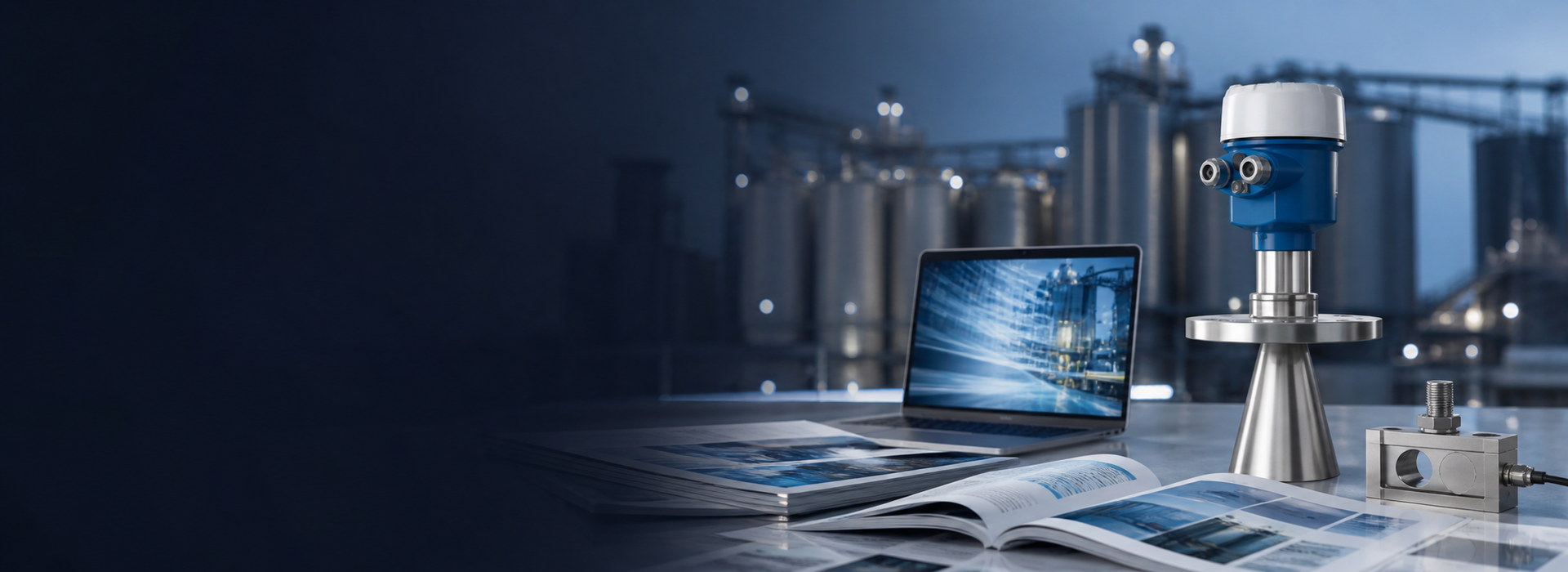
Cement clinker silos combine hot abrasive solids, dense dust, irregular lumps and severe impact at high conveying rates. A radar can avoid direct contact with the material, but successful measurement still depends on temperature at the mounting point, antenna protection, pile geometry and a high-level strategy that includes material already moving after a conveyor stop. The design basis should distinguish continuous trend, available capacity, production control and independent overfill protection. Each duty has different response, uncertainty and integrity requirements, so one displayed percentage should not be assumed to satisfy them all.
Define the material and thermal envelope
Record clinker temperature at filling, during normal storage and after kiln upset, together with lump size, fines, moisture, bulk density and angle of repose. Measure roof and nozzle temperatures rather than copying the hottest process value into every component specification.
Check radiant heat, hot gas, dust circulation and heat conducted through the flange. Confirm the permitted process and electronics temperatures and the required thermal extension or insulation boundary using the selected product documentation.
Select a representative mounting position
Plot every inlet, outlet, roof beam, wall ledge and expected pile peak. Keep the beam away from the falling stream and rebound zone, where impact can damage the antenna and a moving curtain of clinker can become the dominant echo.
Use the actual beam angle to calculate beam width at the lowest target. A narrow beam helps avoid structures but cannot make a poorly located nozzle representative of the whole silo.
Manage dust, abrasion and buildup
Non-contact measurement reduces abrasion during normal service, yet dust can collect on a recessed antenna or in a cold nozzle. Project the antenna as specified and provide safe access for inspection without placing personnel beneath stored material.
Do not add an improvised cover or purge. Any air purge must be compatible with dust control, pressure, temperature, product quality and the equipment approval, and its failure state must be understood.
Treat inventory as an estimate
Radar measures one local surface. Volume calculations need verified silo geometry and a stated pile model; mass also needs bulk density that changes with grade, temperature, fines and compaction. Report uncertainty instead of presenting false precision.
Reconcile level trends with weigh feeders, belt scales and production records at synchronized cut-off times. Include material in transit before changing density or calibration factors.
Design credible high-level protection
Set the maximum operating level below the physical limit by enough margin for instrument response, PLC delay, conveyor stopping time and clinker still on belts or in elevators. Test the entire stopping chain rather than only forcing a transmitter output.
Where overfill consequences justify it, use an independent high-high function with appropriate separation and proof testing. Two alarms derived from one continuous transmitter are not independent protection layers.
Commission and maintain safely
Capture echo curves at low, normal and high levels and during the dustiest filling condition. Verify the reference plane, empty distance, blocking distance, output scaling, alarms, lost echo and restart after power loss.
Inspect after representative operating hours for heat damage, loose mounting, gasket condition and deposits. Use as-found evidence and signal-quality trends to define maintenance intervals.
Engineering checklist
- Document clinker temperature and particle range.
- Plot the beam outside impact and rebound zones.
- Verify thermal limits and insulation boundary.
- State inventory uncertainty and reconcile weights.
- Include conveyor run-on in high-level margin.
- Retain echo curves and as-found inspections.
Frequently asked questions
Can radar measure through dense clinker dust?
Often, but performance depends on frequency, antenna, signal margin, buildup and mounting. Verify it during maximum-rate filling.
Does a temperature extension make every radar suitable?
No. Process seal, antenna, flange, electronics and installation temperatures all require verification.
Can one radar provide independent overfill protection?
Its process signal may control filling, but risk assessment may require a separate high-high device and path.
Need a project-specific review? Send process data, drawings, photographs and acceptance criteria through our contact page.
Related measurement solutions
26 GHz radar for bulk solids · 80 GHz radar for narrow-beam measurement