Chinese
 Spanish
 Russian
 Portuguese
 French
 German
 Indonesian
 Thai
Thai Vietnamese
 Arabic
 Italian
 Turkish
 Polish
 Japanese
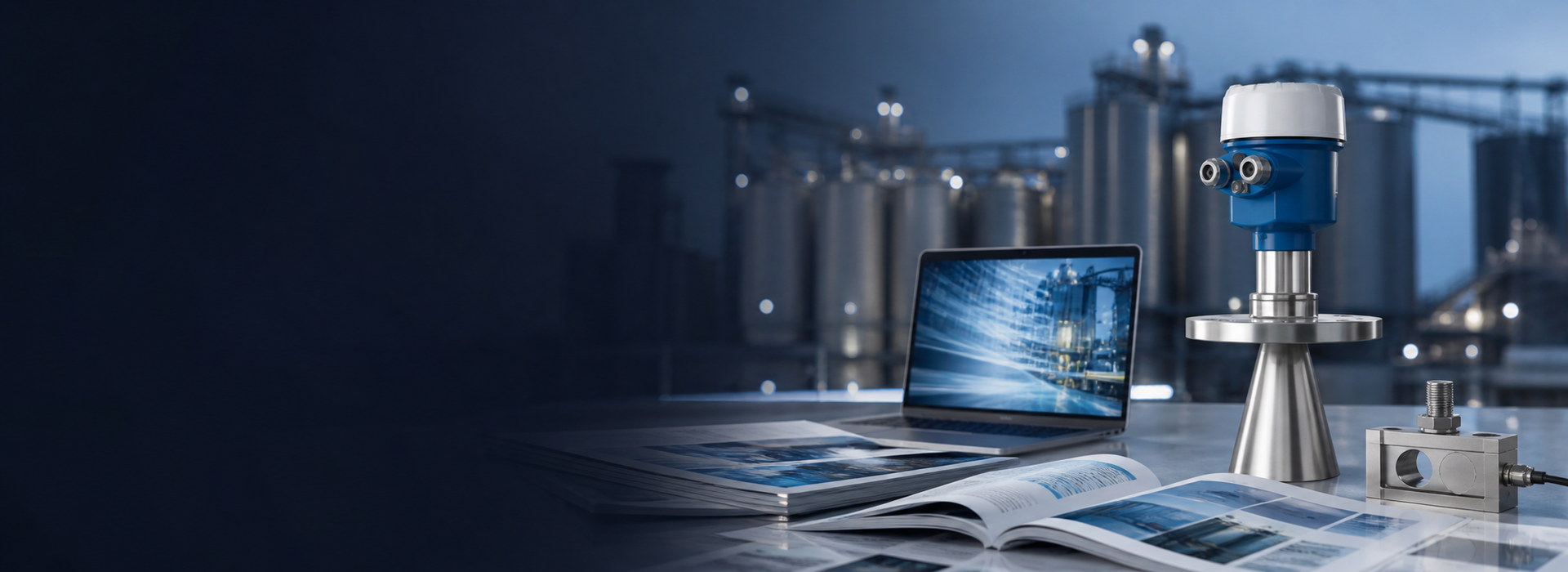
What Is the Resolution of an Industrial Radar Level Meter?
The resolution of an industrial radar level meter is generally controlled within 10–20mm, while the resolution of a custody-transfer-grade radar level meter can reach within 1mm. Resolution refers to the smallest change in liquid level that the instrument can distinguish, directly affecting control accuracy and process stability.
In actual engineering applications, resolution is jointly affected by frequency, signal-processing algorithms, antenna design, and the reflection characteristics of the medium. Because an 80GHz FMCW radar has a shorter wavelength and wider bandwidth, it generally offers higher resolution and a smaller dead zone. Under conventional operating conditions, the resolution of a 26GHz pulse radar generally falls within the range of 10–20mm. When the medium has a high dielectric constant and the surface is calm, the effective resolution is closer to the nominal value. When foam, steam, or severe fluctuations are present, the smallest change that can actually be distinguished may increase slightly.
During model selection, resolution and accuracy must be distinguished. Resolution is the smallest detectable change, while accuracy is the deviation between the measured value and the true value. Under standard liquid operating conditions, the METRAVON industrial series can achieve resolution at the 10–20mm level, while custody-transfer-grade products support 1mm-level resolution, meeting the different requirements of process control and inventory management. During procurement, the required resolution should be clearly defined according to the control-loop requirements, with allowances reserved for installation conditions and medium characteristics.
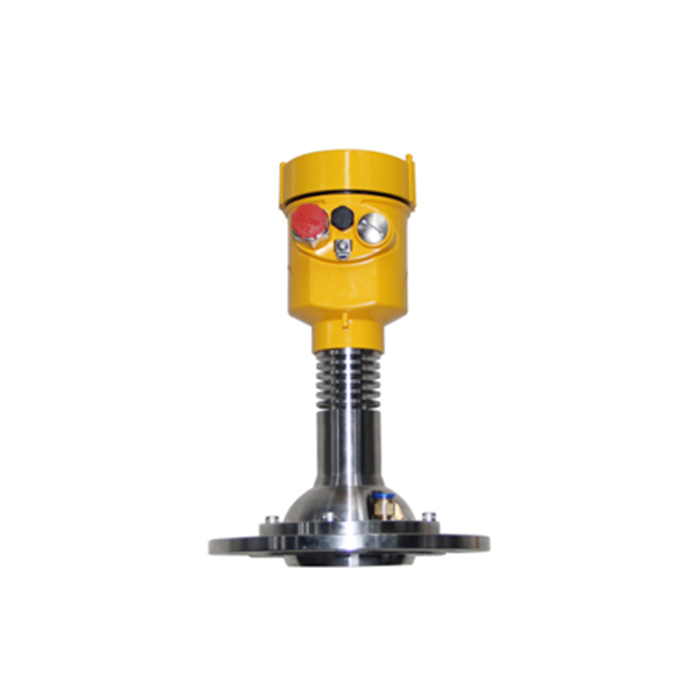
How Much Does a Radar Level Meter Cost?
The price of a radar level meter varies significantly according to its model, frequency, antenna material, measuring range, explosion-proof rating, and output protocol. There is a considerable price difference between high-frequency 80GHz models and lower-frequency 26GHz models. Corrosion-resistant, high-temperature and high-pressure, or specially certified models are more expensive. Conventional industrial radar level meters on the market generally cost several thousand RMB, while high-frequency or high-performance models cost more.
Pricing should be evaluated comprehensively according to the specific medium environment, temperature and pressure, installation conditions, and accuracy requirements. A purchasing decision should not be based solely on the quoted price. Economy-grade products are suitable for conventional storage tanks, while high-performance products can reduce maintenance and downtime costs under complex operating conditions. Products from manufacturers such as Tianjin Huatai Tianke are known for their cost-effectiveness, but the final selection should still be based on compatibility with the actual operating conditions.
METRAVON offers multiple product tiers and supports two-wire 4–20mA, HART, and RS485 outputs. Conventional models are competitively priced, while special corrosion-resistant or high-temperature models can be customized. It is recommended that you provide the medium name, tank parameters, and control requirements to obtain a targeted quotation and technical confirmation, thereby avoiding subsequent replacement costs caused by improper selection.
Applications of Corrosion-Resistant Radar Level Meters in Highly Corrosive Vessels
Highly corrosive media such as sulfuric acid and nitric acid impose strict requirements on the materials used in level meters. The key to a corrosion-resistant radar level meter lies in selecting the correct materials for the wetted components or components located close to the medium. These components must be manufactured from corrosion-resistant materials.
The current mainstream approach is to use materials such as polytetrafluoroethylene, or PTFE, for the antenna section. PTFE offers excellent resistance to acid and alkali corrosion and to dissolution by organic solvents. It can effectively protect the antenna from corrosion while maintaining microwave transmissivity. Non-contact radar further reduces the risk of direct contact with the medium, making it suitable for highly corrosive storage tanks and process vessels.
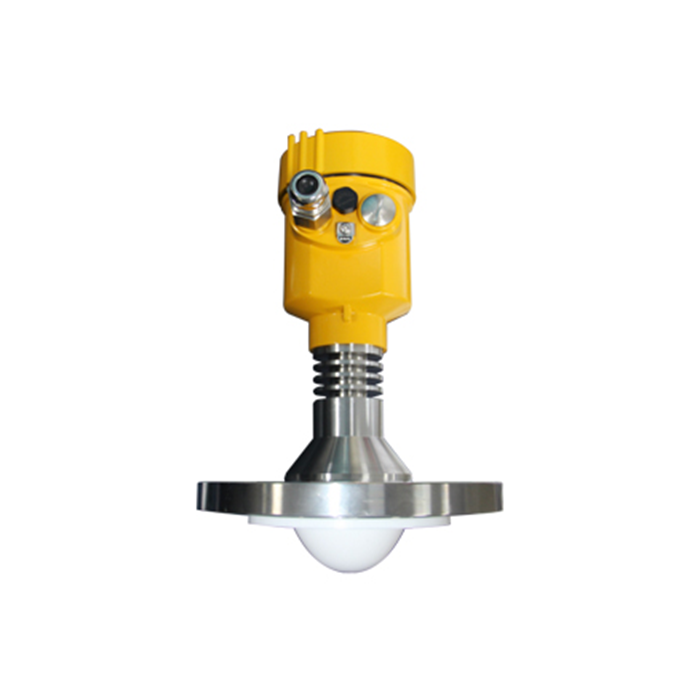
Application-condition assessment: the medium concentration, temperature, presence of solid particles, and tendency to crystallize all affect corrosion-resistant service life. Under high-temperature and highly corrosive operating conditions, the maximum temperature resistance of PTFE and the integrity of the sealing structure must be confirmed. During installation, antenna fouling or condensate accumulation should be avoided, and a purging system should be installed when necessary. The METRAVON corrosion-resistant series uses PTFE lenses or fully sealed designs and is suitable for highly corrosive applications involving sulfuric acid, nitric acid, and similar media. It supports flange or threaded connections, facilitating engineering replacement and long-term operation.
How Should Inaccurate Radar Level Meter Readings Generally Be Handled?
When a radar level meter displays inaccurate readings, troubleshoot it in the following sequence:
When the liquid level changes slowly after reaching a certain value, first check whether the power supply is normal and whether there is a normal output after the instrument is powered on. If the liquid level does not change at all, check whether the fuse has blown. If there is no current output, the instrument itself can generally be considered faulty.
An inaccurate displayed value is a common problem. Possible causes include improper initial parameter settings or an incorrect connection of the display-module plug-in unit. If adjustment does not resolve the problem, inspect the output current carefully. A current greater than 22mA generally indicates a display-module fault, while a current lower than 3.5mA generally indicates an electronic-module fault. In this case, the corresponding module must be replaced, or the instrument must be returned to the factory for repair.
Other possible factors include antenna fouling, unsuppressed false echoes, improper damping-time settings, or an installation position that causes beam interference. Recommended treatment: after disconnecting the power, clean the antenna, perform false-echo learning again, adjust the integration time, and verify the empty-tank and full-tank parameters. METRAVON instruments support echo-curve display and local push-button adjustment, facilitating rapid identification of the cause of inaccurate measurement and restoration of normal operation.
What Is the Market Price of a Radar Water Level Meter?
Radar water level meters are suitable for the non-contact continuous measurement of liquids, slurries, and granular materials. They are particularly suitable for applications involving significant temperature and pressure changes or the presence of inert gases or volatile substances. Conventional radar water level meters on the market generally cost approximately RMB 5,000, while high-frequency models cost more. Domestically manufactured products have already reached a relatively high level of accuracy and interference resistance, and their prices are generally not excessively low.
Prices vary according to the measuring range, accuracy, protection rating, and output method. Outdoor applications such as rivers and reservoirs also require consideration of mounting brackets, lightning protection, and protection ratings, so the total cost will be higher than the price of the instrument alone. During model selection, priority should be given to confirming the measuring range, dead zone, and environmental adaptability instead of simply comparing listed prices.
The METRAVON radar water level meter series covers conventional and high-frequency products. Conventional models are competitively priced, while supporting brackets and protection solutions can be configured according to site conditions. It is recommended that you request a quotation based on the actual water-level variation range and installation environment to obtain a complete system quotation.
Operating Principle of a 26GHz Radar Level Meter
A 26GHz radar level meter uses an antenna to transmit ultra-high-frequency electromagnetic waves toward the liquid surface inside the vessel being measured. When the electromagnetic waves reach the liquid surface, they are reflected back. The instrument detects the time difference between the transmitted wave and the returned echo and calculates the liquid level accordingly. When the measured medium has good electrical conductivity or a high dielectric constant, the echo signal is reflected more effectively.
The instrument mainly consists of a transmitting and receiving unit, signal processor, antenna, operating panel, and display section. Its basic operating process is transmission—reflection—reception. According to the signal-processing method, it can be divided into time-difference and frequency-difference types. A time-difference instrument transmits at a fixed frequency and calculates the liquid level through an intelligent signal processor by measuring the travel time of the transmitted and reflected waves. The relationship between travel time and distance is:
t = 2d/c
Where c is the propagation speed of the electromagnetic wave, approximately 3 × 10⁸ m/s; d is the distance from the probe to the liquid surface; and t is the round-trip travel time.
The 26GHz frequency band is a relatively mature technology. Its beam angle is comparatively wide, making it suitable for conventional storage tanks and simple operating conditions. The METRAVON 26GHz series offers stable echo-processing capability in standard liquid applications and supports two-wire output, facilitating integration with existing control systems.
Where Can You Find Rod-Type Guided Wave Radar Level Meters?
A rod-type guided wave radar level meter is based on the time-domain reflectometry principle, or TDR. Electromagnetic pulses travel at the speed of light along a steel cable or probe rod. When they reach the surface of the measured medium, part of the pulse is reflected to form an echo and returns to the transmitting device along the same path. The distance between the transmitting device and the medium surface is proportional to the pulse propagation time, from which the liquid level is calculated.
Rod-type probes are primarily used for liquid-level measurement. The signal is transmitted in a concentrated manner along the guide rod, resulting in low energy loss and good adaptability to media with low dielectric constants and to small vessels. During installation, the probe rod must remain vertical, must not touch the tank wall, and must be positioned away from the filling disturbance area.
METRAVON provides a series of rod-type guided wave radar level meters with multiple rod-length and material options, suitable for liquid storage tanks and process vessels. Engineering users can obtain product information, selection tables, and technical support through official channels or authorized distributors. A suitable model can be selected after the medium parameters and tank dimensions are provided.
FAQ
Q1: What is the difference between the resolution and accuracy of an industrial radar level meter?
A: Resolution is the smallest detectable change, typically 10–20mm for industrial models and within 1mm for custody-transfer-grade models. Accuracy is the deviation between the measured value and the true value. Both must meet the control requirements.
Q2: What are the main factors affecting the price of a radar level meter?
A: Frequency, such as 26GHz or 80GHz; antenna material, such as standard or corrosion-resistant materials; measuring range; explosion-proof requirements; and output protocol. High-frequency and special corrosion-resistant models cost more. A quotation should be obtained according to the actual operating conditions.
Q3: Must a PTFE antenna be used for highly corrosive media?
A: It is currently the mainstream reliable solution. PTFE offers excellent resistance to acids, alkalis, and organic solvents, while the non-contact design further reduces risk. The temperature-resistance rating must be confirmed for high-temperature applications.
Q4: What should be checked first when the liquid level changes slowly?
A: Check whether the power supply is normal and whether there is an output current. If the reading does not change, inspect the fuse. After confirming that the electrical system is normal, check the parameters and echo signal.
Q5: What does an output current greater than 22mA indicate?
A: It generally indicates a display-module fault. An output current lower than 3.5mA generally indicates an electronic-module fault. The corresponding module must be replaced, or the instrument must be returned to the factory.
Q6: Which operating conditions are suitable for 26GHz radar?
A: Conventional liquid storage tanks with a relatively high dielectric constant, simple internal structures, and no severe steam or dust. For applications involving complex internal obstacles, an 80GHz model should be considered first.
Q7: What does a rod-type guided wave radar primarily measure?
A: Liquid level. The signal travels along the rod, making it suitable for small vessels and media with low dielectric constants. The probe rod must remain vertical and must not touch the tank wall.
Q8: Does the approximate RMB 5,000 price of a radar water level meter include installation?
A: It generally covers only the instrument itself. Mounting brackets, lightning protection, cables, and commissioning costs must be calculated separately.
Q9: What information must be provided when purchasing a corrosion-resistant radar level meter?
A: The medium name and concentration, temperature and pressure ranges, tank material and connection specifications, and whether crystallization or solid particles are present. This information helps confirm the appropriate materials and sealing solution.
Q10: How does METRAVON support engineering model selection?
A: METRAVON provides resolution specifications, price ranges, corrosion-resistant configurations, operating-principle explanations, and rod-type guided wave product information. It can quickly match a suitable model according to the operating conditions and provide technical confirmation.
Conclusion
The resolution of an industrial radar level meter is generally 10–20mm, while custody-transfer-grade models can achieve resolution within 1mm. Prices vary considerably according to frequency and configuration, with conventional products generally starting from several thousand RMB. The core of corrosion-resistant applications is the selection of corrosion-resistant materials such as PTFE. When readings are inaccurate, troubleshoot the power supply, fuse, output current, and modules in sequence. A 26GHz radar operates according to the transmission—reflection—time-difference principle, while a rod-type guided wave radar uses TDR technology and is suitable for liquid-level measurement in confined spaces. Proper model selection, installation, and parameter configuration provide the foundation for accurate long-term operation.
METRAVON offers a complete range of industrial radar, corrosion-resistant radar, 26GHz radar, and rod-type guided wave radar products and supports engineering technical consultation and operating-condition matching. If you require detailed resolution specifications, a quotation, or rod-type guided wave radar selection support, please provide detailed information about the medium and tank conditions. We will respond promptly and assist you in achieving reliable procurement and successful application.