Chinese
 Spanish
 Russian
 Portuguese
 French
 German
 Indonesian
 Thai
Thai Vietnamese
 Arabic
 Italian
 Turkish
 Polish
 Japanese
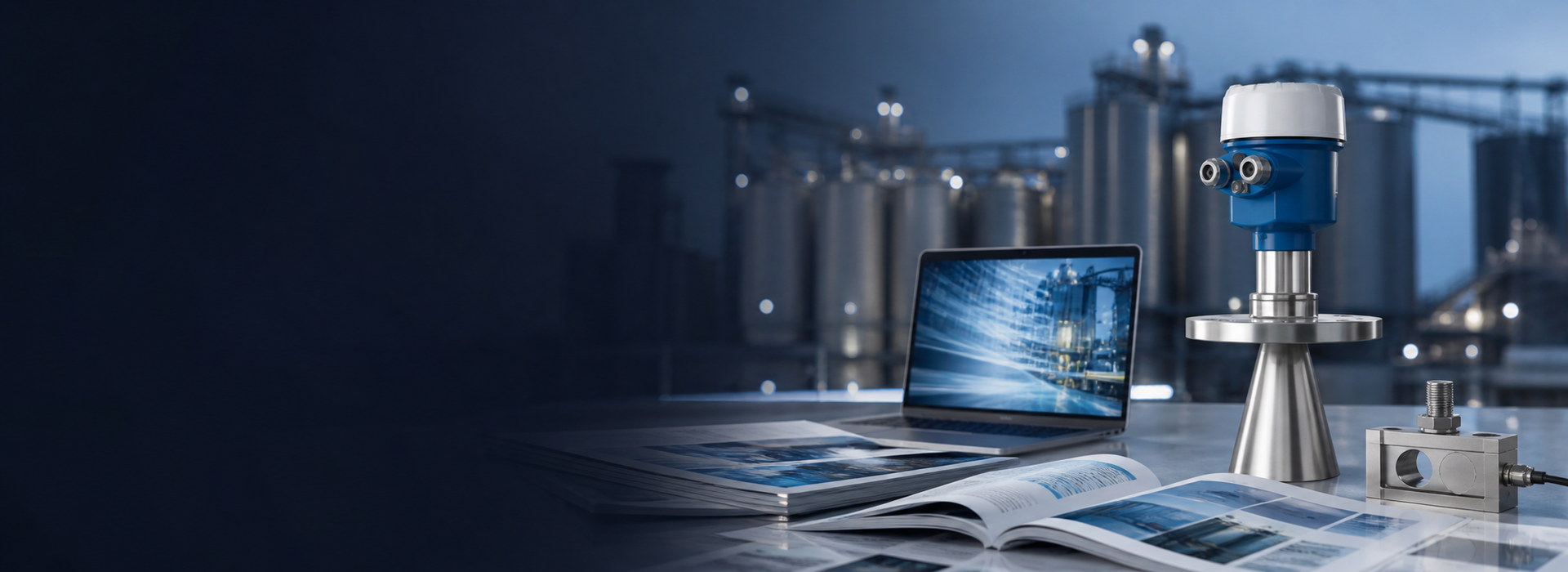
I. What Is an FMCW Radar Level Meter?
A frequency-modulated continuous-wave radar level meter is commonly referred to as an FMCW radar level meter.
Its internal circuitry generates a continuously varying radar signal and transmits it through an antenna toward the surface of the measured medium. After the signal reaches the material surface, it is reflected. The instrument analyzes the frequency difference between the transmitted signal and the returned echo to calculate the distance from the radar to the surface of the medium, and then converts this distance into liquid level or material level.
Some FMCW radar instruments use an operating frequency of 24 GHz and a sweep bandwidth of approximately 1 GHz for linear scanning. Operating frequency, sweep range, and measurement performance vary between different models, and the specific specifications should be based on the corresponding product datasheet.
FMCW radar level meters can be used for:
Coal;
Cement;
Grain;
Alumina;
Limestone;
Chemical raw materials, etc.
They are used in storage tanks, silos, and process vessels in industries such as cement, chemicals, environmental protection, power generation, and food processing.
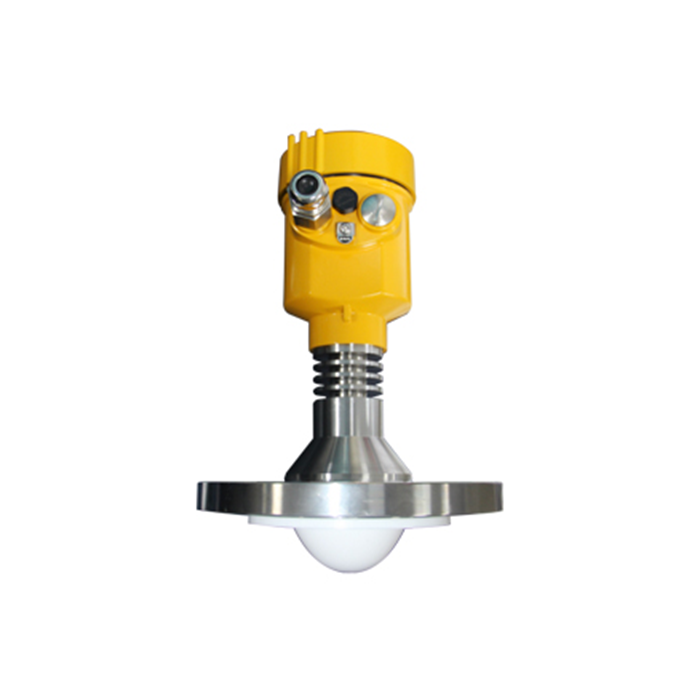
II. What Is the Working Principle of a Pulse Radar Liquid Level Meter?
A pulse radar liquid level meter uses microwave pulses for continuous level measurement.
The basic measurement process can be summarized as:
Transmit microwave pulse → reflection from the medium surface → receive echo → calculate propagation time → obtain distance → convert into level
Radar liquid level meters can be used for continuous measurement of liquids, slurries, and granular materials.
With suitable models and operating conditions, they can also be applied in industrial environments with significant temperature or pressure variations, or where inert gases or volatile gases are present.
Because non-contact microwave measurement is used, the instrument generally does not require mechanical measuring components to directly contact the surface of the medium and can be installed on various types of industrial vessels.
III. What Determines the Price of a Pulse Radar Liquid Level Meter?
There is no uniform price for pulse radar liquid level meters.
The actual price is generally related to the following factors:
Measurement range;
Operating frequency;
Antenna structure;
Process connection;
Temperature resistance requirements;
Pressure resistance requirements;
Corrosion-resistant materials;
Protection or explosion-proof requirements;
Signal output;
Specific model.
Therefore, products with the same general name of “radar liquid level meter” may have significantly different prices due to differences in product structure and application conditions.
Before purchasing, the medium and site conditions should first be confirmed, and a quotation should then be provided based on the specific model.
IV. What Are the Characteristics of Guided Wave Radar Liquid Level Meters?
Guided wave radar differs from free-space radar.
Its radar signal travels along a guide rod or steel cable. When the signal reaches the surface of the medium, it is reflected and returns to the instrument along the original path.
The guided wave structure allows radar energy to travel in a concentrated manner along the probe, providing advantages in some small vessels and applications involving media with low dielectric properties.
Common characteristics of guided wave radar liquid level meters include:
Compact instrument structure;
Relatively small installation space requirements;
Suitable for small storage tanks;
Energy is concentrated along the probe;
Relatively stable echo signals;
Parameters can be configured through a local display module;
Suitable for various complex liquid level measurement environments.
Some guided wave radar instruments use two-wire power supply, allowing both power supply and process signal transmission to be completed through a single two-core cable.
It should be noted that the specific blind zone, accuracy, repeatability, and applicable medium range should be determined according to the technical specifications of the corresponding model.
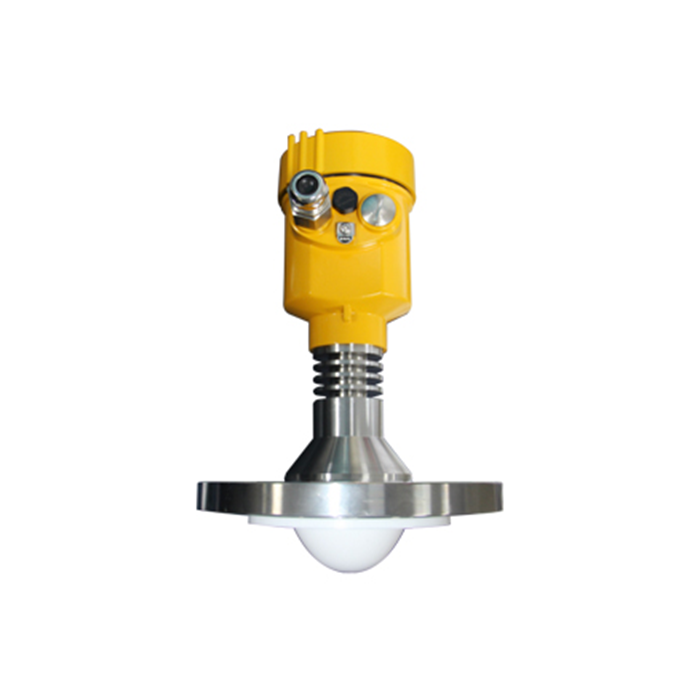
V. Why Is Guided Wave Radar Suitable for Small Storage Tanks?
Free-space radar requires a certain radar beam to form inside the vessel.
For vessels with relatively small diameters or many internal structures, the tank walls and internal components may generate additional reflections.
Guided wave radar guides the signal through a probe rod or steel cable, which can reduce the interaction between the free-space radar beam and surrounding structures.
Therefore, guided wave radar can be evaluated according to actual site conditions for:
Small storage tanks;
Narrow installation spaces;
Certain operating conditions with fluctuating liquid surfaces.
VI. What Is the Function of a Radar Liquid Level Meter Antenna?
The antenna is an important component of a radar level measurement system.
The radar sensor transmits electromagnetic waves toward the surface of the medium through the antenna, while the antenna is also responsible for receiving the echo signals reflected from the surface of the medium.
It can be understood as follows:
The antenna performs both the transmission and reception of radar signals.
The antenna structure affects:
Radar beam coverage;
Signal focusing capability;
Installation dimensions;
Process connection;
Adaptability to dust or material buildup;
Performance under different medium conditions.
Common radar antenna types include:
Rod type;
Horn type;
Integrated horn type;
Parabolic type;
Array type;
Hygienic type;
Planar type;
Drop-shaped type.
Different antennas are suitable for different site conditions and should be selected according to the medium and vessel conditions.
VII. What Is the Difference Between an Ultrasonic Level Meter and a Radar Level Meter?
The most fundamental difference between ultrasonic level meters and radar level meters is the type of measurement signal used.
Ultrasonic level meters use sound waves.
Radar level meters use electromagnetic waves.
| Comparison Item | Ultrasonic Level Meter | Radar Level Meter |
|---|---|---|
| Measurement Signal | Ultrasonic waves | Electromagnetic waves |
| Dependent on Gas for Propagation | Yes | No |
| Vacuum Applications | Generally not suitable | Can be used depending on the model |
| Foam | May affect the echo | Also requires evaluation according to foam properties |
| Measurement Range | Determined by the model | Generally available with larger measurement ranges |
| Dielectric Properties | Not a primary selection parameter | Must be considered |
| Complex Operating Conditions | Steam, dust, and other factors need to be evaluated | Generally has a broader application range |
For operating conditions where foam is present on the liquid surface, it cannot simply be assumed that all radar instruments can penetrate the foam. Foam thickness, water content, and structure can all affect the actual echo.
Therefore, specific applicability must still be confirmed according to the medium and product model.
VIII. What Is the Measurement Principle of a Radar Water Level Meter?
Some guided wave radar instruments use time-domain reflectometry for measurement.
Electromagnetic pulses travel along a steel cable or probe rod. When they encounter the surface of the measured medium, part of the signal is reflected to form an echo and returns to the instrument along the original propagation path.
The instrument calculates the distance from the probe reference point to the surface of the medium based on the round-trip propagation time of the electromagnetic pulse, and then converts this distance into the actual liquid level.
This measurement method can also be used for water level and other liquid level monitoring.
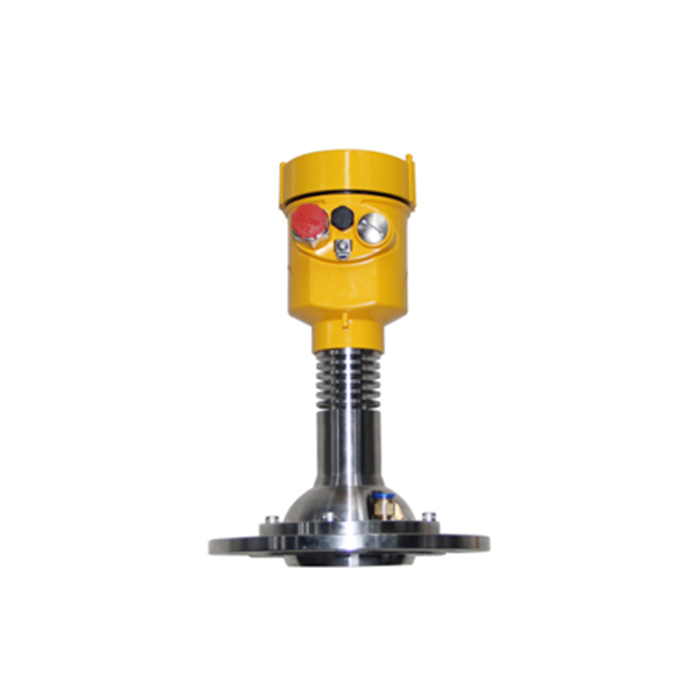
IX. Which Industries Are Intelligent Radar Level Meters Suitable For?
Intelligent radar level meters can be used for continuous level measurement of solids, granular materials, and powders.
Typical industries include:
Coal;
Power generation;
Petroleum;
Chemicals;
Metallurgy;
Food;
General industry.
Common applications include:
Coal silos;
Ash silos;
Solid granular material silos;
Slurry storage tanks;
Oil tanks;
Acid and alkali storage tanks.
Radar level measurement is a type of non-contact measurement method and can be used for various conductive and non-conductive media.
For viscous, high-temperature, pressure-varying, dusty, or corrosive media, a suitable antenna, material, and radar model should be selected according to the actual operating conditions.
X. What Is the Purpose of Standards Related to Radar Liquid Level Meters?
Standards related to radar liquid level meters are used to regulate instrument design, manufacturing, testing, and application.
For manufacturers, standards may include:
New technical requirements;
New terminology;
Test methods;
Safety requirements;
Product performance requirements.
For engineering projects, it is more important to confirm which standards are required by the project specifications and whether the specific product meets the technical requirements related to the project.
Therefore, standards should be regarded as an important basis for product design and engineering applications rather than being used simply as promotional content.
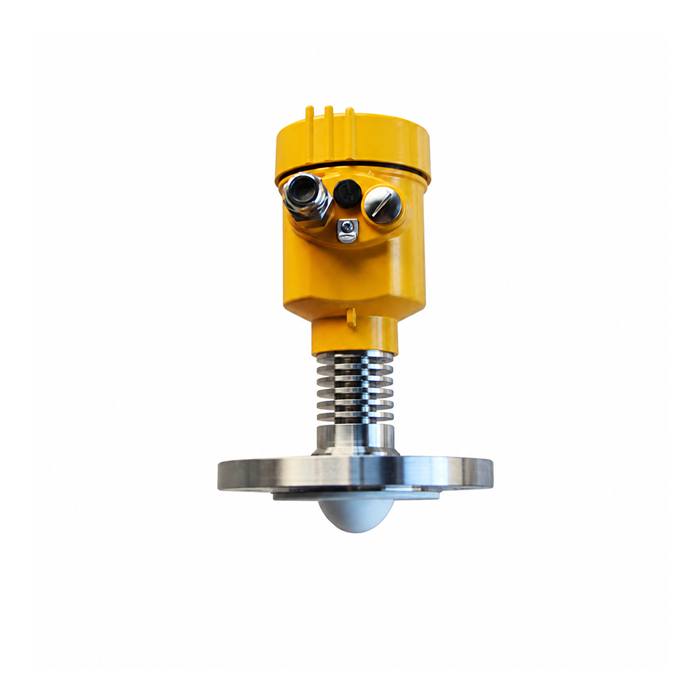
What Conditions Need to Be Confirmed When Selecting a Radar Level Meter?
| Item | Information to Confirm |
|---|---|
| Measured Material | Liquid, slurry, powder, or granular material |
| Medium Name | Coal, cement, grain, chemical raw materials, etc. |
| Maximum Measurement Range | Distance from the radar to the lowest material level |
| Dielectric Properties | Used to determine radar echo conditions |
| Temperature | Normal and maximum process temperature |
| Pressure | Atmospheric pressure or pressurized operation |
| Dust | Whether large amounts of dust are present |
| Foam | Whether extensive foam is present |
| Steam | Whether significant steam is present |
| Corrosiveness | Whether corrosion-resistant materials are required |
| Viscosity | Whether the medium is prone to adhesion or crystallization |
| Antenna | Select according to the specific operating conditions |
FAQ
Q1: What Is the Difference Between FMCW Radar and Pulse Radar?
FMCW radar calculates distance by continuously sweeping the frequency and analyzing the frequency difference between the transmitted signal and the returned echo; pulse radar mainly calculates distance by analyzing the round-trip propagation time of radar pulses. Both technologies can be used for continuous level measurement.
Q2: Can FMCW Radar Level Meters Only Be Used for Solids?
No. Depending on the model, FMCW radar can be used for both solid material level measurement and liquid level measurement. Actual application depends on the product design and site operating conditions.
Q3: Why Is Guided Wave Radar Suitable for Media with a Low Dielectric Constant?
Guided wave radar concentrates and guides electromagnetic energy along a probe rod or steel cable, allowing relatively stable echoes to be obtained in some media with low dielectric properties. However, the specific minimum dielectric requirement should still be confirmed from the product datasheet.
Q4: Is a Larger Radar Liquid Level Meter Antenna Always Better?
No. The antenna must be matched to the operating frequency, measurement range, installation space, and medium. Different antenna structures serve different purposes, and performance cannot be determined solely by antenna size.
Q5: Is a Radar Level Meter Always More Accurate Than an Ultrasonic Level Meter?
This cannot be regarded as an absolute conclusion. Actual accuracy depends on the specific model, measurement distance, condition of the medium, and installation conditions. Under complex operating conditions involving heavy dust, steam, or vacuum, radar generally has a broader application range.
Q6: Can a Radar Level Meter Measure the Actual Liquid Level Beneath Foam?
This depends on the properties of the foam. Different types of foam cause different levels of reflection and attenuation of radar waves, so it should not be assumed that radar can penetrate all types of foam.
Conclusion
FMCW radar level meters measure the distance to the surface of a medium through continuous frequency sweeping and can be used for level monitoring of coal, cement, grain, alumina, limestone, chemical raw materials, and other materials.
Although pulse radar, FMCW radar, and guided wave radar all belong to radar level measurement technologies, they differ in signal propagation and signal processing methods.
In practical selection, the following factors should be given particular consideration:
Medium type, measurement distance, dielectric properties, temperature, pressure, dust, foam, steam, corrosiveness, viscosity, and antenna structure.
Selecting the appropriate radar operating principle and antenna according to the specific operating conditions has greater practical significance than simply comparing frequency, measurement range, or price.