Chinese
 Spanish
 Russian
 Portuguese
 French
 German
 Indonesian
 Thai
Thai Vietnamese
 Arabic
 Italian
 Turkish
 Polish
 Japanese
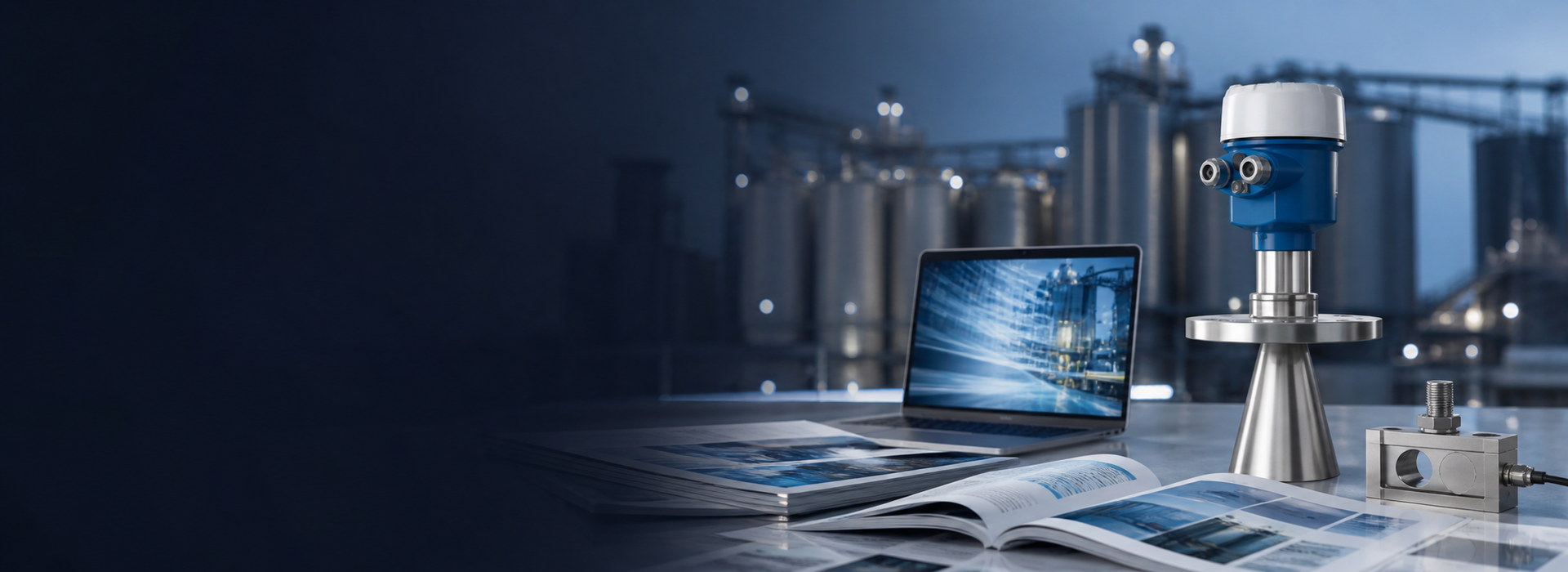
1. What Is the Difference Between an Ultrasonic Level Meter and a Radar Level Meter?
Ultrasonic level meters and radar level meters can both be used for level measurement, but they use different measurement signals.
An ultrasonic level meter emits ultrasonic waves and measures the time required for the sound waves to travel from the sensor to the liquid surface and reflect back. It then calculates the liquid level based on the propagation time.
A radar level meter uses microwave electromagnetic waves for measurement. Radar waves are transmitted from the instrument toward the liquid surface, reflected at the surface of the medium, and received by the instrument, which then calculates the distance to the liquid surface.
Therefore, the most fundamental difference between the two technologies can be summarized as follows:
Ultrasonic level meters use sound waves, while radar level meters use microwaves.
Ultrasonic waves have characteristics such as good directionality and directional propagation, and they are widely used when the measuring range is relatively small and the site environment is relatively simple.
However, ultrasonic propagation depends on a transmission medium, so ultrasonic level meters cannot operate normally in a vacuum. If there is a large amount of vapor inside the vessel, or if there is significant foam on the liquid surface, the propagation of ultrasonic waves and echo reception may also be affected, which can influence the measurement result.
Radar level meters use electromagnetic waves and do not rely on air as the propagation medium. Therefore, they can be used in vacuum environments and generally offer a wider range of applications under complex operating conditions involving gases, vapor, and similar factors.
Compared with ultrasonic level meters, radar level meters generally offer a larger measuring range and often higher measurement accuracy, but their price is relatively higher. At the same time, the dielectric constant of the measured medium also needs to be considered when using a radar level meter because the medium's ability to reflect radar waves affects measurement performance.
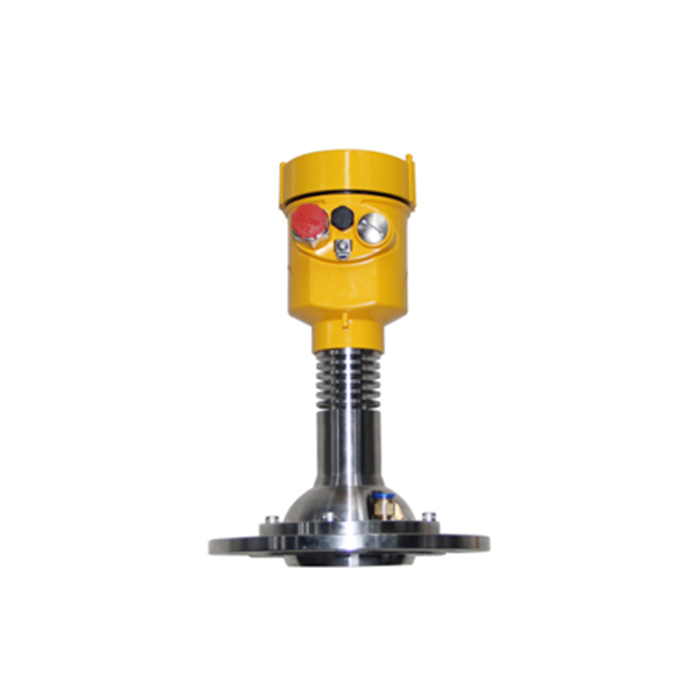
2. How Should You Choose When Foam, Vapor, or Vacuum Is Present?
Site conditions are an important basis for selecting between ultrasonic and radar level meters.
If foam is present on the liquid surface, ultrasonic waves may be reflected from the foam surface, causing a difference between the measured distance and the actual liquid level.
When a large amount of vapor is present inside the vessel, ultrasonic propagation may also be affected.
The effect is even more obvious in a vacuum environment because ultrasonic waves require a propagation medium, and sound waves cannot propagate normally in a vacuum.
Therefore, if the site involves the following conditions:
Large measuring range;
Significant vapor;
Foam;
Vacuum operating conditions;
High measurement accuracy requirements;
a radar level meter can be considered as a priority option.
If the measuring range is relatively small, the environmental conditions are simple, and there are no obvious factors such as vapor, foam, or vacuum, an ultrasonic level meter can be considered.
Comparison Between Ultrasonic and Radar Level Meters
| Comparison Item | Ultrasonic Level Meter | Radar Level Meter |
|---|---|---|
| Measurement signal | Ultrasonic waves | Microwave electromagnetic waves |
| Measurement method | Measures propagation time | Measures radar echoes |
| Measuring range | Relatively smaller | Usually larger |
| Vacuum | Not suitable | Can be applied |
| Vapor | Easily affected | Relatively better adaptability |
| Foam | May affect measurement | Relatively more suitable for complex operating conditions |
| Accuracy | Meets general measurement requirements | Usually higher |
| Price | Relatively lower | Relatively higher |
| Selection factors | Range, environment | Range, environment, dielectric constant |
3. What Is the Difference Between a Radar Level Meter and a Differential Pressure Level Meter?
Radar level meters and differential pressure level meters are both widely used for industrial level measurement, but their measurement principles are completely different.
A radar level meter determines the liquid level by measuring the distance between the instrument and the liquid surface.
A differential pressure level meter measures the pressure or pressure difference generated by the liquid column and then converts the pressure variation into liquid level.
Therefore, it can be simply understood as:
A radar level meter measures "distance," while a differential pressure level meter measures "pressure."
Differential pressure level meters have been used for a long time and are still very common in many traditional industrial applications. Their structure is relatively simple, operation is reliable, response is fast, and maintenance and operation are also relatively convenient.
However, because a differential pressure level meter first measures pressure and then converts it into liquid level, site conditions can influence the measurement result.
For example:
Pipeline leakage;
Condensation;
Low winter temperatures;
Foam;
Gas;
Viscous liquids;
may all affect the stability of differential pressure level measurement.
Especially in low-temperature environments, attention should be paid to the insulation or heating of pressure impulse lines to prevent freezing from affecting the measurement.
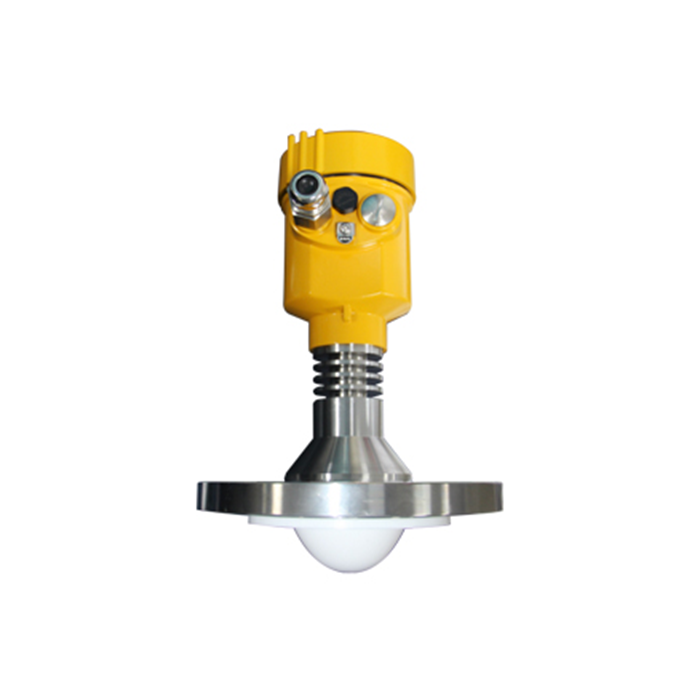
4. How Should You Choose Between a Radar Level Meter and a Differential Pressure Level Meter?
The advantage of a radar level meter is that it can measure the liquid surface using a non-contact method and generally has stronger adaptability to complex media and environmental conditions.
A differential pressure level meter is a traditional pressure-based level measurement technology and has mature applications in conventional industrial production and process control.
There is no absolute superiority or inferiority between the two.
Comparison Between Radar and Differential Pressure Level Meters
| Comparison Item | Radar Level Meter | Differential Pressure Level Meter |
|---|---|---|
| Measurement principle | Microwave distance measurement | Pressure difference measurement |
| Measurement method | Measures the distance to the liquid surface | Converts pressure into liquid level |
| Contact with medium | Non-contact measurement can be used | Requires a pressure connection |
| Complex operating conditions | Strong adaptability | Must be evaluated together with piping and medium conditions |
| Foam, gas | Selected according to site conditions | May affect measurement |
| Viscous medium | Can be selected according to operating conditions | May affect pressure tapping |
| Maintenance focus | Installation position, echoes | Piping, leakage, condensation |
| Price | Relatively higher | Depends on configuration |
If the medium is volatile or toxic, or if there is a desire to reduce direct contact and piping maintenance, a radar level meter can be considered.
If it is a traditional industrial process and the site already has a mature differential pressure measurement method, a differential pressure level meter can continue to be used.
5. How Should the Three Types of Level Meters Be Selected?
In actual projects, price should not be the only factor compared. Site conditions should be considered first.
For ordinary water tanks or storage tanks with a relatively short measuring distance and without large amounts of vapor or foam, an ultrasonic level meter can be considered.
If the measuring distance is relatively large, or if complex conditions such as vapor, foam, or vacuum are present, a radar level meter can be considered.
If the project itself uses a traditional pressure measurement method and the operating conditions are suitable for calculating liquid level using pressure or differential pressure, a differential pressure level meter can be considered.
Before purchasing, it is recommended to confirm the following information:
Measured medium;
Measuring range;
Whether foam is present;
Whether vapor or gas is present;
Whether it is a vacuum environment;
Whether the medium is viscous;
Ambient and medium temperature;
Installation method;
Measurement accuracy requirements;
Project budget.
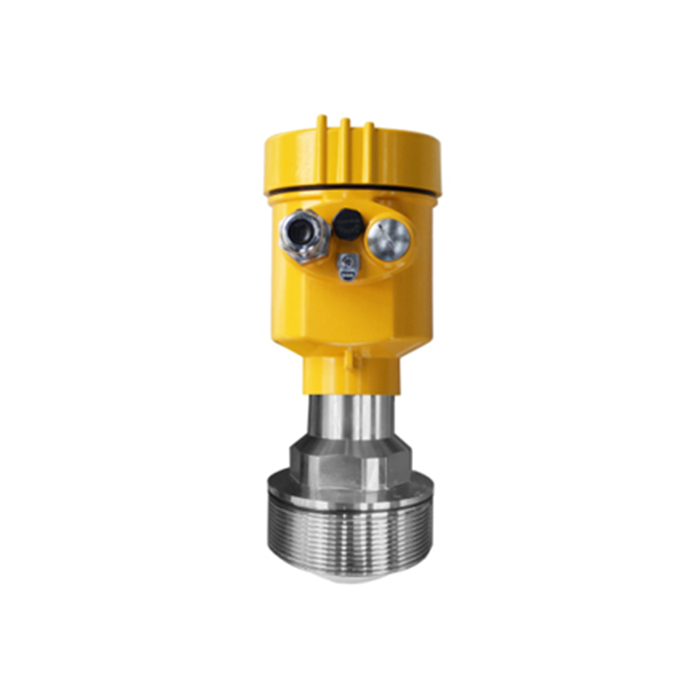
Frequently Asked Questions
Q1: Ultrasonic Level Meters and Radar Level Meters Can Both Use Non-Contact Measurement. Why Are Their Suitable Operating Conditions So Different?
Although both can be installed above the liquid surface, they use different propagation signals. Ultrasonic measurement relies on sound waves propagating through gas, so vapor, gas conditions, temperature changes, and vacuum can all affect the measurement conditions. Radar uses electromagnetic waves and does not rely on air for propagation, so it can generally adapt to more complex environments.
Q2: Should a Radar Level Meter Always Be Selected for Liquids with Foam?
Not necessarily. Foam can significantly affect ultrasonic echoes, but radar measurement can also be affected by the characteristics of the foam. During model selection, it is necessary to understand the foam thickness and stability and to clarify whether the required measurement is the foam surface or the actual liquid surface. It should not be assumed that radar can penetrate all types of foam.
Q3: Why Does Radar Level Meter Selection Need to Consider the Dielectric Constant?
Radar measurement relies on the reflection of microwaves from the surface of the medium. The dielectric properties of the medium affect echo strength. When the reflected signal is weak, the effective measuring range and measurement stability may also be affected. Therefore, when purchasing a radar level meter, information about the measured medium should be provided in addition to the required range.
Q4: Why Does a Differential Pressure Level Meter Not Measure Liquid Level Directly?
A differential pressure level meter actually detects the pressure or pressure difference generated by the liquid column and then converts the pressure signal into liquid level. Therefore, it is an indirect level measurement method. Changes in pressure impulse piping, condensation, leakage, and medium conditions may all affect the final liquid level reading.
Q5: Under What Conditions Is an Ultrasonic Level Meter Still More Suitable Than a Radar Level Meter?
If the measuring distance is relatively short, the site operates under normal temperature and pressure, there is no large amount of vapor, foam, or vacuum, and the budget is relatively sensitive, an ultrasonic level meter is usually a practical choice. It is not necessary to use radar in every simple application simply because radar has a wider range of suitable operating conditions.
Q6: How Should You Choose Between a Radar Level Meter and a Differential Pressure Level Meter?
If non-contact measurement is preferred, pressure impulse line maintenance needs to be reduced, or the site involves relatively complex media and environmental conditions, a radar level meter can be considered. If the project is part of a mature traditional industrial process with an existing stable pressure measurement and pressure tapping system, a differential pressure level meter remains a common solution. The two should be selected according to actual site conditions rather than simply comparing accuracy or price.
Q7: Why Does Low-Temperature Operation Require Special Attention When Using a Differential Pressure Level Meter?
Differential pressure level measurement usually involves pressure impulse lines. Under low winter temperatures, attention should be paid to liquid freezing inside the piping, condensation, and thermal insulation. Otherwise, abnormal pressure transmission may occur and affect level measurement. Therefore, low-temperature projects need to consider not only the transmitter itself but also the entire installation system.
Q8: What Minimum Site Information Should Be Provided Before Purchasing These Three Types of Level Meters?
At minimum, the measured medium, measuring range, temperature, pressure, whether vapor, foam, or vacuum is present, and the installation method should be confirmed. For radar level meters, medium information should also be provided to evaluate radar reflection characteristics. For differential pressure level meters, pressure tapping and piping conditions should also be specified.
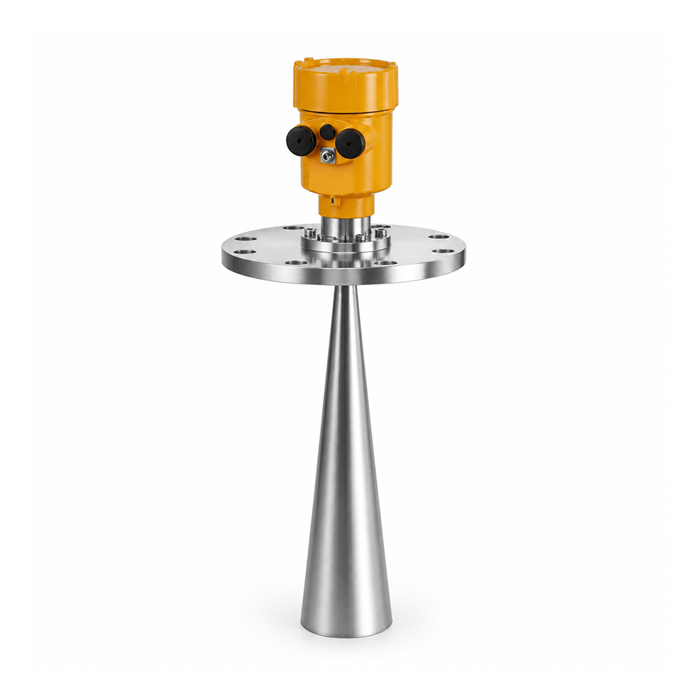
Summary
Ultrasonic level meters, radar level meters, and differential pressure level meters are all common instruments used for industrial level measurement.
Ultrasonic level meters mainly use the propagation time of sound waves for measurement and are suitable for applications with relatively short measuring ranges and relatively simple site conditions.
Radar level meters use microwaves for distance measurement, generally offer a larger measuring range, and can adapt to more complex industrial conditions such as vapor and vacuum. However, their price is usually higher, and the dielectric constant of the medium also needs to be considered.
Differential pressure level meters calculate liquid level based on pressure or pressure difference. The technology is mature and widely used in traditional industrial level measurement, but attention needs to be paid to factors such as piping, condensation, leakage, and low temperatures.
Therefore, the choice of level meter should be determined comprehensively according to the actual medium, measuring range, and site operating conditions rather than simply comparing which technology is better.