Chinese
 Spanish
 Russian
 Portuguese
 French
 German
 Indonesian
 Thai
Thai Vietnamese
 Arabic
 Italian
 Turkish
 Polish
 Japanese
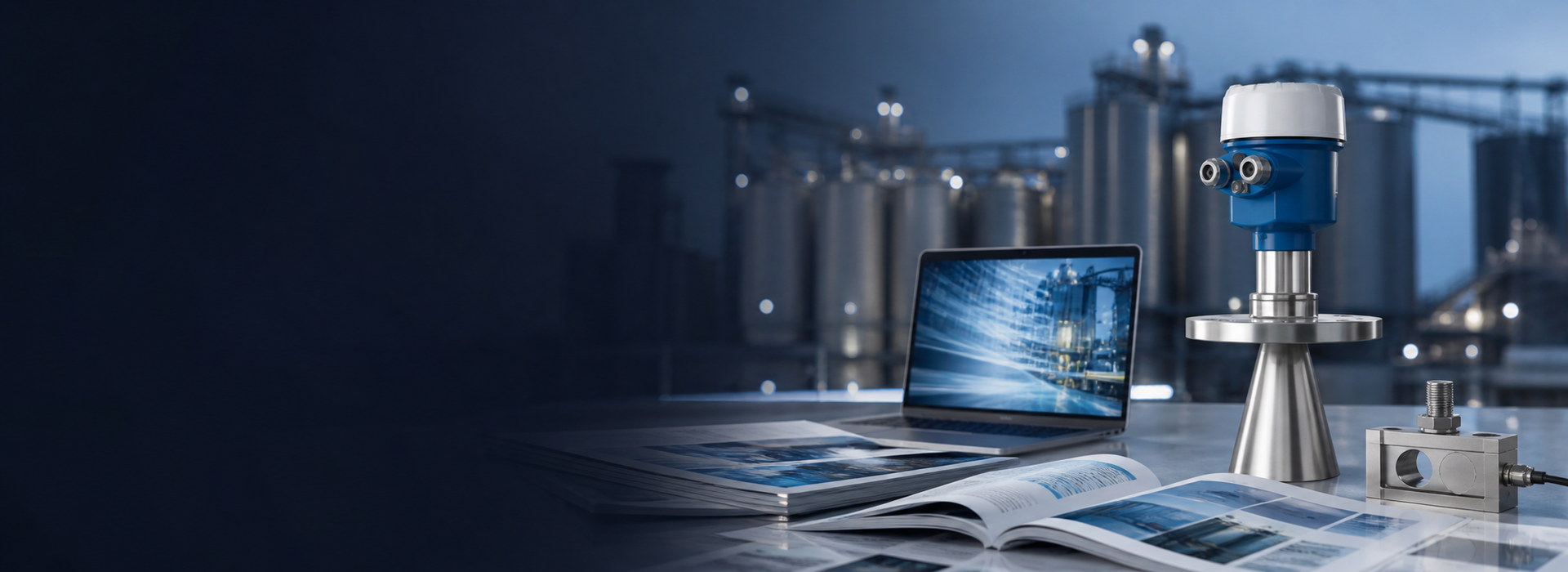
1. How Should the Measuring Range of an Ultrasonic Level Meter Be Selected?
When selecting an ultrasonic level meter, the actual measuring distance should first be determined.
If an ordinary liquid is being measured and the site environment is relatively stable, an appropriate model can be selected according to the instrument's rated measuring range.
However, if the measured object or site environment is relatively complex, selecting the measuring range based only on the actual distance may not be sufficient.
1. Measuring Solid Materials
For solid level measurement, the material surface is usually not as flat as a liquid surface and may have slopes, repose angles, and irregular surfaces. As a result, the effective echo returning to the probe may be weakened.
In this situation, the measured material and actual measuring distance should be explained to the manufacturer in advance, and an appropriate measuring range margin should be added according to the site conditions.
For soft materials with strong sound absorption, such as flour, cotton, and sponge, ultrasonic echoes may be very weak. Ordinary ultrasonic level meters may not necessarily be suitable, and actual measurability should be confirmed first.
2. Can an Ultrasonic Level Meter Still Be Used When Foam Is Present?
When foam is present on the liquid surface, it can affect the propagation and reflection of ultrasonic waves.
Foam covering a large area may:
Absorb part of the ultrasonic energy;
Scatter the sound waves;
Weaken the echo from the actual liquid surface;
Cause the instrument to measure the foam surface instead of the actual liquid surface.
Therefore, if a large area of foam is continuously present on site, a larger measuring range margin should be reserved during model selection.
According to the usage experience you provided, when the foam thickness exceeds approximately 5 cm, it is not recommended to select an ultrasonic level meter directly according to ordinary operating conditions. For this type of project, it is best to provide the foam thickness, coverage area, and stability in advance before determining whether ultrasonic measurement is suitable.
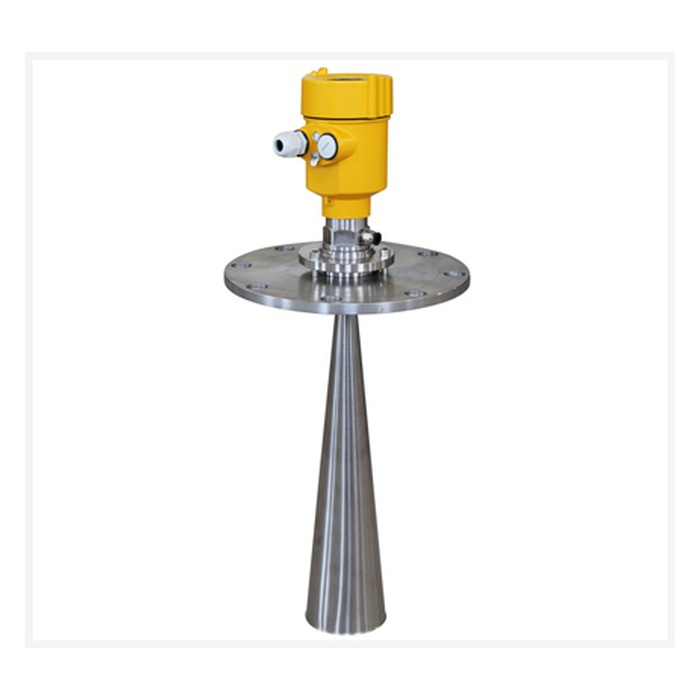
3. Why Must Dust or Vapor Be Specifically Mentioned?
Ultrasonic waves need to propagate through air or gas.
If a large amount of dust or vapor is present in the air, the sound waves may be attenuated or scattered during propagation, thereby reducing the strength of the effective echo.
Therefore, when selecting a model for the following environments, the actual operating conditions should be communicated in advance:
High dust concentration;
Obvious water vapor;
Acid mist or alkaline mist;
High-humidity environments;
Large variations in the gas-phase environment.
It is not sufficient to tell the supplier only that "the measuring distance is 5 m," because even with the same geometric distance, the actual measurement difficulty can vary significantly between different site conditions.
4. How Should the Ultrasonic Probe Material Be Selected?
The probe material mainly depends on the corrosiveness of the measured environment.
If the medium is ordinary water, wastewater, or a mildly acidic or alkaline environment, a standard probe may be used depending on the specific product.
If the site is highly corrosive, a probe with corresponding corrosion resistance should be selected.
Especially in strong acid or strong alkali environments, in addition to considering the liquid itself, attention should also be paid to whether the following may be generated:
Acid mist;
Alkaline mist;
Corrosive vapor.
Although the ultrasonic probe is usually located above the liquid surface, long-term exposure to a corrosive gas-phase environment may still affect it.
Therefore, during model selection, it is recommended to provide:
Medium name + concentration + temperature + whether corrosive mist is present
rather than simply stating "measuring acidic liquid" or "measuring alkaline liquid."
5. Why Must the Ultrasonic Beam Angle Be Considered During Installation?
The signal emitted by an ultrasonic probe is not an extremely thin straight line, but instead has a certain beam angle.
It can be understood as being similar to the beam of a flashlight:
The farther the distance from the probe, the larger the area generally covered by the sound beam.
The beam angle is not exactly the same for probes of different models and measuring ranges.
Therefore, when selecting the installation position, it is necessary not only to check whether there are obstacles directly below the probe, but also to inspect the entire area covered by the ultrasonic beam.
6. Which Obstacles Can Easily Produce False Echoes?
If other objects are located within the ultrasonic transmission area, these objects can also reflect sound waves.
Common obstacles include:
Pipes;
Ladders;
Tank supports;
Pumps and valves;
Crossbeams;
Protruding structures on tank walls;
Other process equipment.
Especially when obstacles are located relatively close to the probe, the reflections they produce may be relatively strong, and the instrument may mistakenly identify these echoes as the actual liquid surface.
This is known as a false echo.
Therefore, during installation, priority should be given to avoiding obstacles through proper installation positioning rather than relying entirely on software filtering.
If fixed structures genuinely cannot be avoided at the site, false echo suppression or parameter adjustment can then be performed according to the functions of the specific instrument.
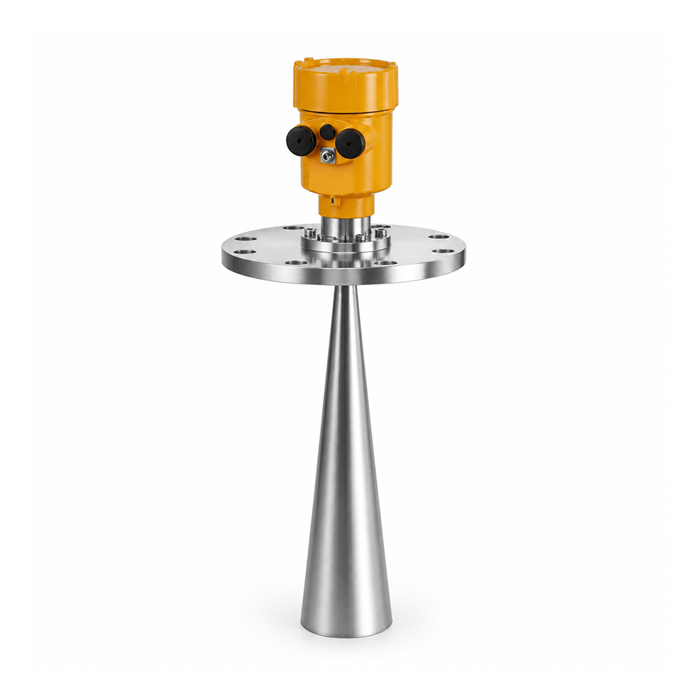
7. Why Should the Probe Be Perpendicular to the Surface of the Measured Medium?
To ensure that ultrasonic waves can effectively return to the probe, the transmitting surface of the transducer should generally be aligned with the surface of the measured medium as accurately as possible.
For a horizontal liquid surface, the probe is generally required to be installed pointing almost vertically downward.
If the probe is significantly tilted, the sound waves may be reflected in another direction after reaching the liquid surface, resulting in:
Weakened echo signals;
Unstable measurement;
Occasional loss of the liquid level signal;
Reduced actual measuring range.
Therefore, when installing the mounting bracket, it is also necessary to check whether the probe is installed level and whether the transmission direction is correct.
8. Why Must the Highest Liquid Level Not Enter the Blind Zone?
Ultrasonic level meters usually have a certain measurement blind zone.
Immediately after the probe emits an ultrasonic pulse, a certain amount of time is required to complete the switching between transmission and reception states. Therefore, the area too close to the probe may not be measurable normally.
During installation, it must be ensured that:
There is sufficient distance between the probe transmitting surface and the highest liquid level.
In other words:
The highest liquid level must not enter the blind zone specified for the instrument.
The blind zone varies between different models, so a single fixed distance cannot be applied universally.
During model selection and installation, the datasheet of the corresponding model should be checked, and sufficient space should be reserved based on the highest possible liquid level.
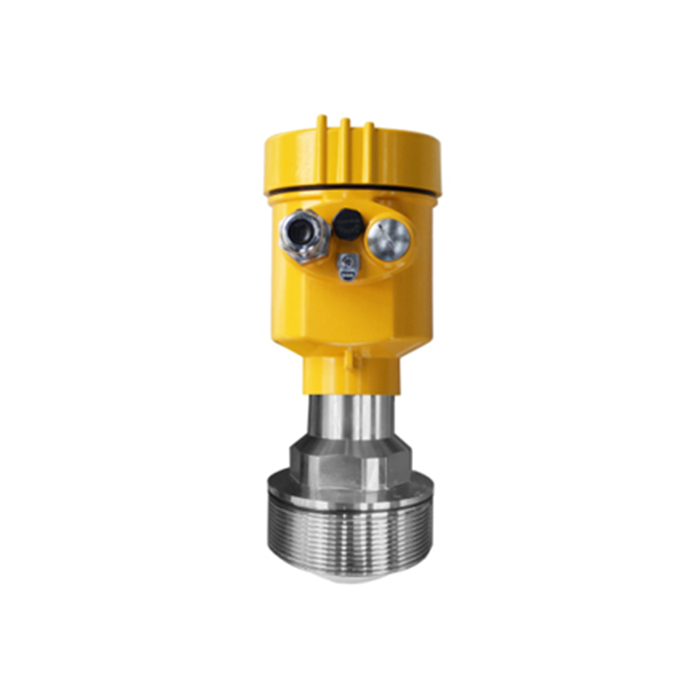
9. Ultrasonic Level Meter Installation Position Checklist
| Check Item | What Needs to Be Confirmed |
|---|---|
| Measuring distance | Whether it is within the instrument's effective measuring range |
| Measured object | Whether it is a liquid or solid |
| Solid surface | Whether it is soft, inclined, or sound-absorbing |
| Foam | Whether it covers a large area and whether the thickness is significant |
| Dust | Whether a large amount of dust is present in the air |
| Vapor | Whether obvious vapor or corrosive mist is present |
| Probe material | Whether it meets the corrosion-resistance requirements of the site |
| Beam angle | Whether obstacles are present within the beam coverage area |
| Installation direction | Whether the probe is correctly aligned with the surface of the medium |
| Highest liquid level | Whether it enters the measurement blind zone |
Frequently Asked Questions
Q1: Why Should a Larger Measuring Range Margin Be Reserved When Measuring Solids?
Solid material surfaces are usually uneven, and ultrasonic waves may be reflected in different directions. Therefore, the effective echo returning to the probe is often weaker than that from a flat liquid surface. Actual model selection should take the material properties and material surface conditions into account rather than considering only the geometric distance.
Q2: Why Are Materials Such as Flour and Cotton Difficult to Measure Using Ultrasonic Technology?
These soft materials may absorb a significant amount of sound-wave energy, resulting in an echo that is too weak and making measurement difficult. Whether ultrasonic measurement can be used should be confirmed according to the actual material and measuring range.
Q3: Does the Presence of Foam on the Liquid Surface Always Mean That an Ultrasonic Level Meter Cannot Be Used?
No. A small amount of foam does not necessarily cause measurement failure, but foam that is extensive, thick, and stable may significantly weaken the echo. According to the experience you provided, ultrasonic measurement should be selected cautiously when the foam thickness exceeds approximately 5 cm.
Q4: Why Is It Not Sufficient to Check Only the Area Directly Below the Probe During Installation?
Because ultrasonic waves have a beam angle, the actual sound beam covers an area that gradually expands with distance. Even if there is no obstacle directly below the probe, pipes or supports located at the edge of the beam may still produce false echoes.
Q5: Can Software Completely Eliminate False Echoes Caused by Obstacles?
It cannot be guaranteed. Software can suppress some fixed false echoes, but the more reliable method is still to avoid obstacles as much as possible during installation.
Q6: How Much Distance Should Be Reserved Between the Highest Liquid Level and the Probe?
There is no universal fixed value. It should be determined according to the measurement blind zone of the specific model, and the highest possible liquid level must be prevented from entering this area.
Summary
For stable operation of an ultrasonic level meter, both site conditions and installation requirements must be considered during model selection and installation.
During model selection, the following should be confirmed as priorities:
Measuring range, measured object, foam, dust, vapor, and the corrosiveness of the medium.
During installation, the following should be confirmed as priorities:
Beam angle, obstacles, probe direction, and measurement blind zone.
Compared with repeatedly adjusting software parameters after installation, correctly selecting the probe position before construction, avoiding objects that can cause false reflections, and reserving sufficient measuring range and blind-zone clearance are generally more beneficial for long-term stable measurement.