Chinese
 Spanish
 Russian
 Portuguese
 French
 German
 Indonesian
 Thai
Thai Vietnamese
 Arabic
 Italian
 Turkish
 Polish
 Japanese
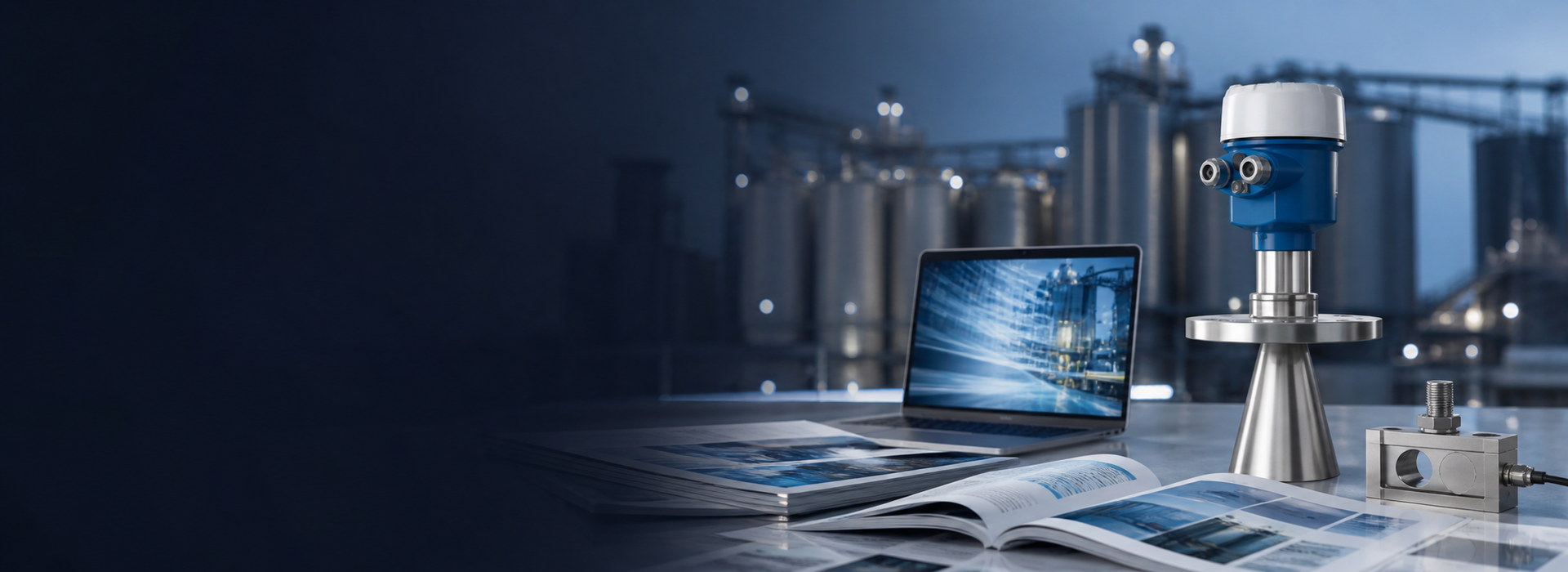
In industrial level measurement, radar level gauges are mainly divided into high-frequency (usually 24GHz~26GHz) and low-frequency (usually 6GHz) based on operating frequency. High-frequency radar level gauges have advantages such as high energy, small beam angle, and high accuracy, with a wider application range; low-frequency radar level gauges still have irreplaceable value in certain liquid working conditions. Correctly understanding the advantages and disadvantages of both is the key to avoiding selection errors and improving measurement stability.
This article systematically compares the advantages and disadvantages of high-frequency and low-frequency radar level gauges, and provides selection recommendations based on actual working conditions to help customers make more appropriate choices.
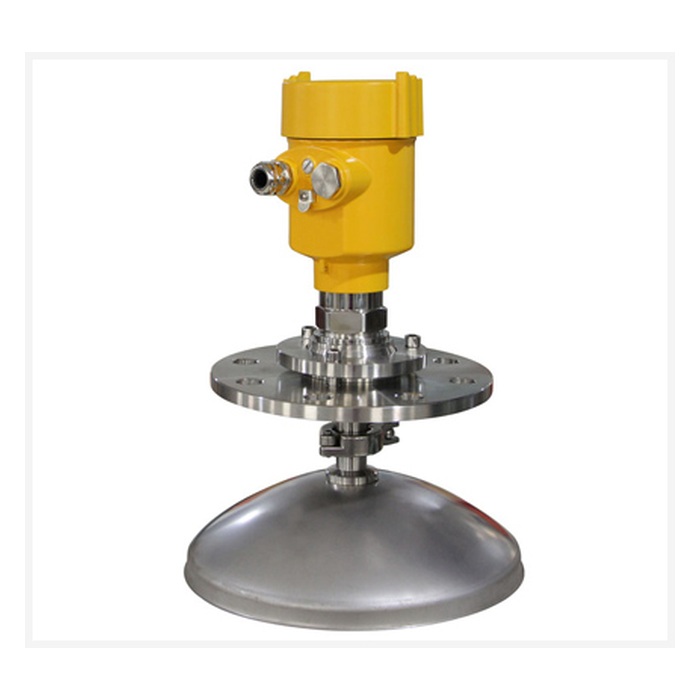
I. Main Advantages and Disadvantages of High-Frequency Radar Level Gauges
Main advantages:
1. High transmission energy, small beam angle, high accuracy
Energy is more concentrated, better directivity, higher measurement accuracy, suitable for occasions with high accuracy requirements.
2. Preferred solution for measuring bulk solid materials
Radar waves mainly produce diffuse reflection on the material surface. The intensity of diffuse reflection is proportional to the particle size of the material and inversely proportional to the wavelength. Most bulk materials have diameters much smaller than 50mm, so high-frequency radar (shorter wavelength) has better reflection effect on solid bulk materials and is the first choice for solid level measurement.
3. Short antenna, good directivity, especially suitable for small storage tanks
Antenna size is small, low installation space requirements; antenna cover can be easily added to effectively reduce the impact of dirt and moisture on measurement. In contrast, low-frequency radar antennas are larger and heavier, difficult to add antenna covers, and more inconvenient to clean.
4. Supports isolated external installation
Due to excellent directivity, in many working conditions, the instrument can be installed outside the container for measurement through simple isolation measures, making installation more flexible and maintenance safer.
5. Strong environmental adaptability
High accuracy, and not affected by vacuum, dust, steam, inert gases, pressure and temperature changes, etc., wider working condition adaptability.
6. Simple structure, good high-temperature applicability
Overall structure is relatively simple, measurement performance is stable, suitable for high-temperature occasions.
Relative disadvantages:
When the liquid surface fluctuates violently or there is a thick foam layer, the measurement stability may not be as good as low-frequency radar.
II. Main Advantages and Disadvantages of Low-Frequency Radar Level Gauges
Main advantages:
1. Better measurement accuracy for fluctuating liquid surfaces
In occasions with large liquid surface fluctuations, low-frequency radar can often obtain more stable measurement results.
2. Strong foam penetration ability
Suitable for measuring liquid media with foam and scum. High-frequency radar may be more affected when there is a thick foam layer.
3. Certain adaptability to some irregular or inclined solid surfaces
On some rough and inclined solid material surfaces, low-frequency radar can still form effective reflection (but in most bulk solid scenarios, high-frequency performs better).
Relative disadvantages:
Large antenna size, heavy weight, inconvenient installation and maintenance; weaker measurement effect for solid bulk materials; larger beam angle, less adaptable to small tanks and dusty environments than high-frequency.
III. High-Frequency vs. Low-Frequency Radar Level Gauge Comparison Overview
| Comparison Item | High-Frequency Radar Level Gauge (24-26GHz) | Low-Frequency Radar Level Gauge (6GHz) |
|---|---|---|
| Energy and Beam Angle | High energy, small beam angle | Lower energy, larger beam angle |
| Accuracy | Higher | Relatively lower |
| Solid Bulk Material Measurement | Excellent (preferred) | Average |
| Small Storage Tank Applicability | Excellent | Poor |
| Antenna Size and Maintenance | Small antenna, easy to add cover, convenient maintenance | Large antenna, difficult to add cover, inconvenient cleaning |
| External Isolated Installation | Easy to implement | More difficult |
| Fluctuating Liquid Surface | Average | Better |
| Foam Penetration Ability | Average | Stronger |
| Environmental Adaptability (Dust/Steam/Temperature) | Strong | Relatively weaker |
| High-Temperature Occasions | Better applicability | Average |
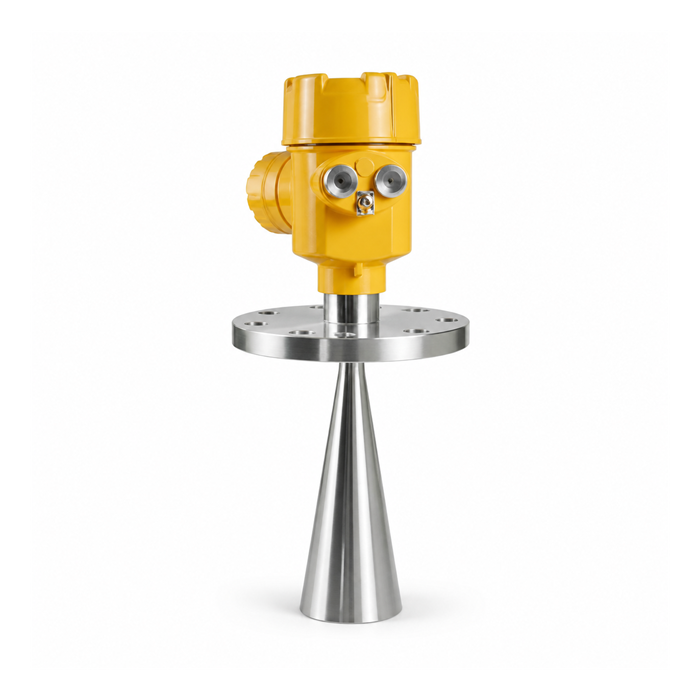
IV. Practical Selection Recommendations and Quick Judgment
- Priority for high-frequency radar:
Solid bulk material silos, small storage tanks, high dust, high steam, occasions requiring high accuracy or hoping for external installation.
- Consider low-frequency radar:
Liquid storage tanks with obvious liquid surface fluctuations, liquid media with thicker foam layers.
- Quick judgment formula:
Solid / small tank / high dust → prioritize high-frequency
Thick foam / violent liquid surface fluctuation → consider low-frequency
Extremely low dielectric constant → prioritize guided wave radar as a supplementary solution
In actual selection, it is recommended to provide detailed information such as medium name, whether there is foam/dust, storage tank size, temperature and pressure, etc., to obtain more accurate recommendations.
V. After-sales Service Guarantee
Regular manufacturers promise to ensure the normal use of products and open a 24-hour instrument service hotline to promptly solve customers' questions during use and ensure stable production operation.
Our company specializes in the production and sales of industrial automation detection instruments. Products cover level instruments, material level instruments, flow instruments, temperature instruments, pressure instruments, display instruments, valves, pneumatic/electric actuators, intelligent instruments and programmable controllers, etc., and can provide customers with one-stop selection and technical support.
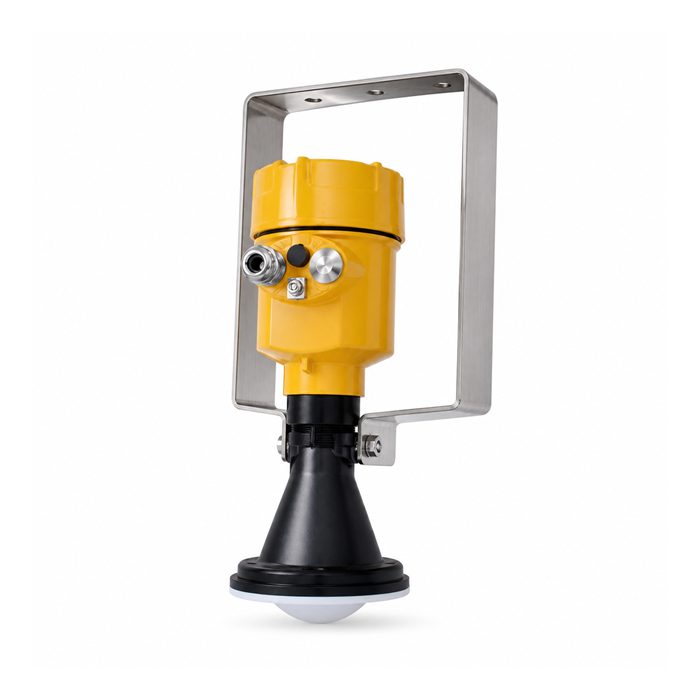
FAQ
Q1. Which is better, high-frequency radar or low-frequency radar?
There is no absolute better or worse, the key is the working condition. Prioritize high-frequency for solids, small tanks, and dusty environments; consider low-frequency for fluctuating liquid surfaces or thick foam liquids.
Q2. Why is high-frequency radar more suitable for measuring solids?
Because the high-frequency wavelength is shorter, the diffuse reflection on the surface of bulk materials is stronger, and the measurement effect is better.
Q3. Should small storage tanks choose high-frequency or low-frequency?
Prioritize high-frequency. The antenna is shorter, the directivity is better, and it is more suitable for small storage tanks.
Q4. Which radar should be used for liquids with foam?
Low-frequency radar has stronger foam penetration ability and is suitable for liquids with foam or scum; high-frequency can also be used when the foam is not thick.
Q5. Can high-frequency radar be installed outside the container?
Yes. Due to its good directivity, many working conditions can achieve external measurement through simple isolation.
Q6. Is it still necessary to choose low-frequency radar?
It still has value in specific liquid working conditions (violent fluctuating liquid surfaces, thick foam), but the overall application range is not as wide as high-frequency.
Q7. What information is most needed for selection?
Medium name and state (solid/liquid, presence of foam/dust), storage tank size and shape, temperature and pressure, installation position restrictions, etc.
Correctly understanding the advantages and disadvantages of high-frequency and low-frequency radar level gauges, and selecting based on actual working conditions, can truly give full play to the instrument performance, reduce maintenance costs, and improve measurement reliability. If targeted selection recommendations are needed, please provide detailed working condition information.