Chinese
 Spanish
 Russian
 Portuguese
 French
 German
 Indonesian
 Thai
Thai Vietnamese
 Arabic
 Italian
 Turkish
 Polish
 Japanese
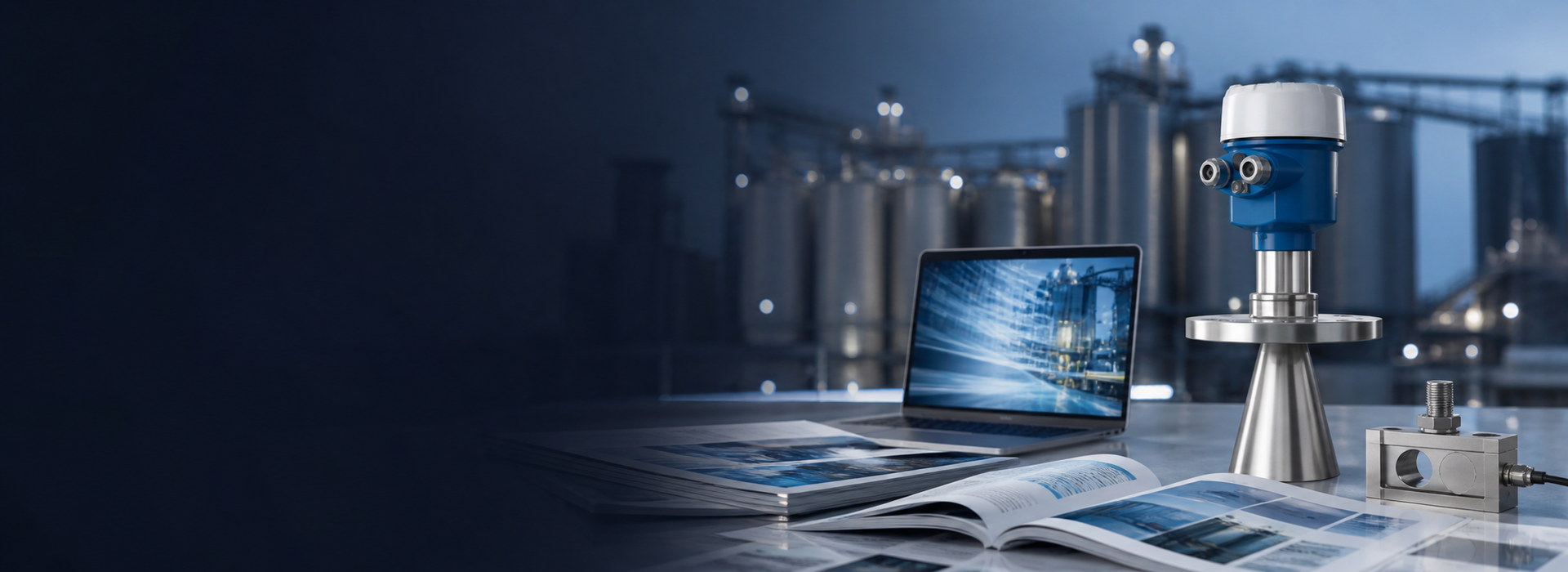
I. What Is a High-Frequency Radar Level Meter?
A high-frequency radar level meter is an industrial instrument that uses high-frequency microwaves for continuous level measurement. Depending on the measured medium, it can be classified as a high-frequency radar liquid level meter or a high-frequency radar material level meter.
Some high-frequency radar products use a transmission frequency of approximately 25 GHz, while industrial products operating at 24 GHz, 26 GHz, and other frequency bands are also commonly available. The specific operating frequency should be confirmed according to the datasheet of the corresponding model.
High-frequency radar level meters can use:
Threaded installation;
Flange installation;
They can be used for level measurement in reactors, storage tanks, solid material silos, and other vessels.
Some models can provide a measuring range of approximately 30 m. The actual measuring range depends on the radar model, antenna, medium, and installation conditions.
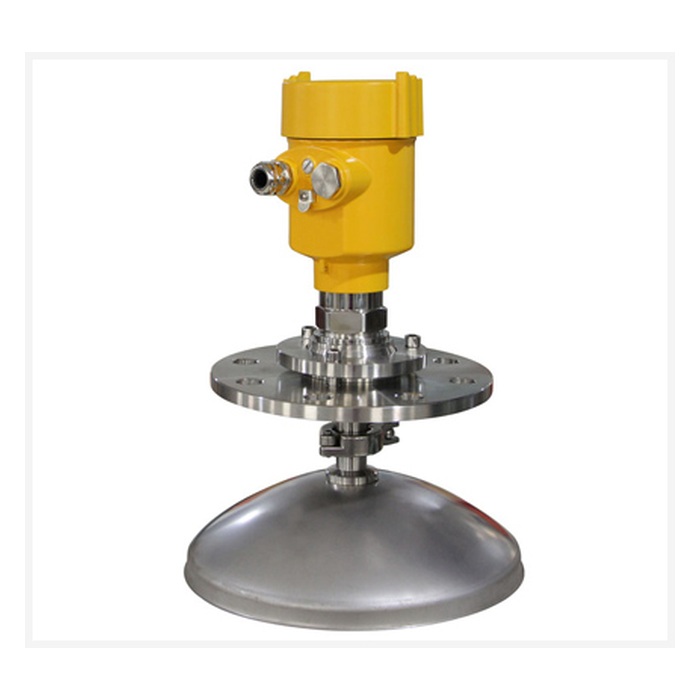
II. Working Principle of a High-Frequency Radar Level Meter
A high-frequency radar level meter generates high-frequency microwave pulse signals through an electronic circuit and then transmits them toward the surface of the measured medium through an antenna.
The basic measurement process can be summarized as:
Generate microwave pulse → Antenna transmission → Reflection from medium surface → Antenna receives echo → Calculate propagation time → Determine level
Some high-frequency radar instruments use high-frequency microstrip lines and waveguide structures, with microwave pulses transmitted through PTFE and other antenna structures.
When the radar pulse reaches the surface of the measured liquid or solid material, part of the energy is reflected and received by the same antenna.
The instrument analyzes the time interval between the transmitted signal and the returned signal to calculate the distance from the antenna to the surface of the measured medium, and then further converts this distance into liquid level or material level.
Therefore, what a high-frequency radar level meter fundamentally measures first is:
The distance from the radar to the surface of the medium.
III. What Media Are Suitable for High-Frequency Radar Level Meters?
High-frequency radar level meters can be used for continuous measurement of liquids and solid materials.
Especially in solid material applications, they can be used for:
Solid particles;
Bulk materials;
Powder materials;
Solid material silos;
Industrial process vessels.
High-frequency radar also has a broad range of applications in sites where dust, condensation, water vapor, or complex medium surface conditions are present.
During actual product selection, the following factors should still be confirmed:
Type of medium;
Maximum measuring distance;
Silo dimensions;
Dust conditions;
Water vapor and condensation conditions;
Installation position;
Antenna type.
IV. What Are the Main Advantages of High-Frequency Radar Level Meters?
Compared with lower-frequency pulse radar, high-frequency radar level meters have their own characteristics in terms of antenna size, directionality, and applications in small vessels.
1. Relatively Concentrated Beam
24 GHz, 25 GHz, and 26 GHz high-frequency radar systems have relatively short wavelengths.
With a properly designed antenna, a relatively concentrated radar beam can be formed, allowing the signal to illuminate the target area more precisely.
This has practical advantages in vessels where certain internal structural interferences are present.
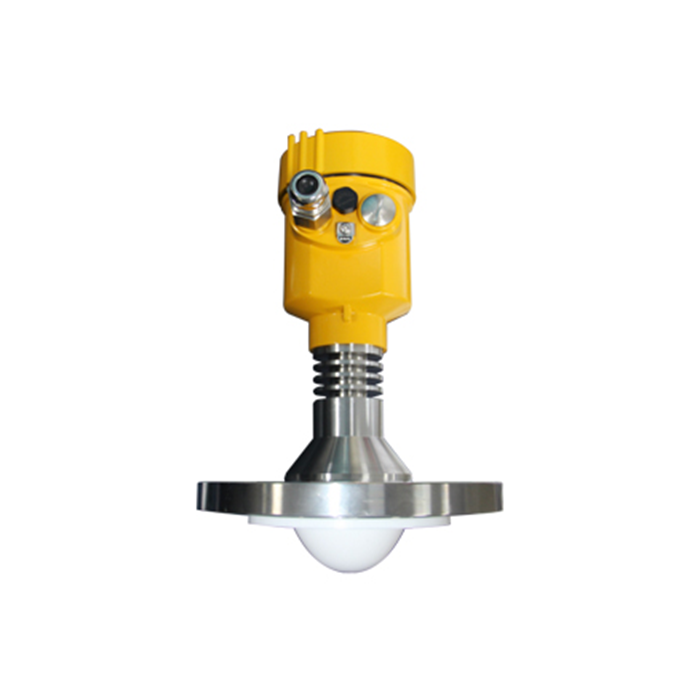
2. Smaller Antenna Size
As the operating frequency increases, a more compact antenna structure can be used under comparable design conditions.
Therefore, high-frequency radar is particularly suitable for:
Vessels with small installation openings;
Small storage tanks;
Equipment with limited installation space;
Small process vessels.
A smaller antenna size can also simplify mechanical installation in some field applications.
3. Suitable for Certain Bulk Solid Material Measurements
The wavelength of 26 GHz radar is approximately 11 mm.
In bulk solid level measurement, high-frequency radar can be used for continuous level monitoring of granular materials and other solid materials.
Because the surface of solid materials is usually not as flat as a liquid surface, radar selection should also take the following factors into consideration:
Inclined material surfaces;
Dust;
Particle size;
Internal silo structures;
Filling position.
High frequency is only one factor that affects measurement performance and cannot independently determine the final measurement result.
V. Why Is High-Frequency Radar Suitable for Small Storage Tanks?
In vessels with a small diameter and relatively low overall height, if the radar beam is too wide, it is more likely to illuminate the tank wall or internal structures.
Because high-frequency radar can use smaller antennas and generally provides better directionality, it can reduce some interference caused by tank walls and surrounding structures.
Therefore, high-frequency radar provides favorable installation conditions in small storage tanks and small process vessels.
However, the following requirements should still be observed during installation:
Correctly align the antenna with the surface of the medium;
Avoid the filling inlet;
Avoid obvious obstacles;
Avoid installing the antenna too close to the tank wall.
VI. Do Dust, Water Vapor, and Antenna Contamination Affect High-Frequency Radar?
After long-term operation in industrial environments, the radar antenna surface may gradually accumulate:
Dust;
Water vapor;
Contaminants;
Condensation.
These deposits may affect the transmission and reception of radar signals.
High-frequency radar antennas are generally relatively compact and can be equipped with appropriate antenna protection structures or antenna covers according to the actual application to reduce some of the effects caused by water vapor and contamination.
However, an antenna cover cannot replace normal maintenance.
For applications with heavy dust, frequent condensation, or long-term contamination, the following should still be checked regularly:
Antenna surface;
Protective structure;
Sealing condition;
Echo status.
VII. What Is the Difference Between High-Frequency Radar and Low-Frequency Radar?
Both types of radar use electromagnetic waves for level measurement, but their operating frequencies and antenna structures are different.
| Comparison Item | High-Frequency Radar Level Meter | Lower-Frequency Radar Level Meter |
|---|---|---|
| Operating Frequency | 24/25/26 GHz, etc. | Lower frequency bands |
| Antenna Size | Usually smaller | Usually larger |
| Beam Directionality | Relatively concentrated | Relatively wider |
| Small Storage Tanks | Provides certain advantages | Beam coverage needs to be considered |
| Solid Material Level | Can be used for bulk solid measurement | Can also be applied according to operating conditions |
| Installation Space | More suitable for compact installation | May require more installation space |
It should be noted that there is no absolute superiority or inferiority between high-frequency and low-frequency radar.
The actual measurement performance still depends on:
Medium + Antenna + Measuring Range + Installation Structure + Site Environment.
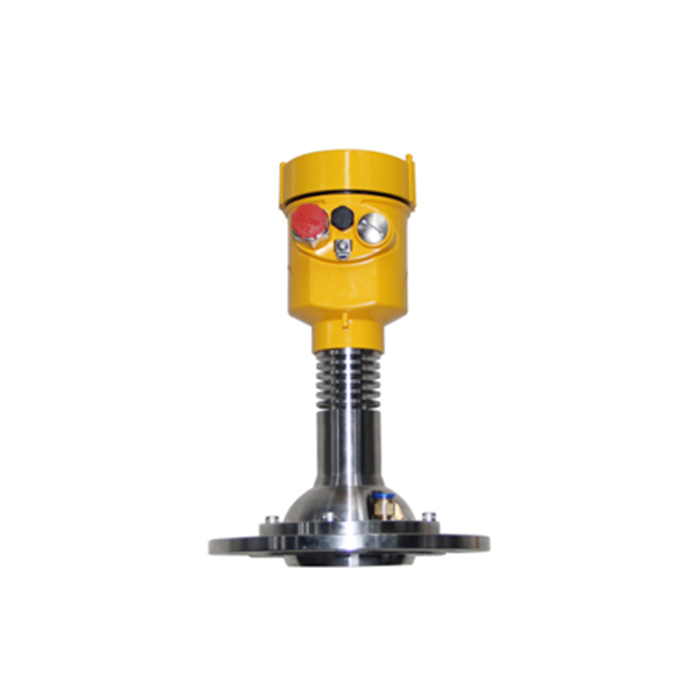
VIII. What Are the Typical Applications of High-Frequency Radar Level Meters?
High-frequency radar level meters can be used in a wide variety of industrial processes.
Typical applications include:
Solid Material Silos
Used for continuous level monitoring of granular materials, powder materials, and bulk solids.
Reactors
Used for liquid level or material level measurement in process vessels.
Small Storage Tanks
When installation space is limited and the vessel diameter is relatively small, measurement can be performed using a smaller antenna and a relatively concentrated beam.
Dusty Environments
During the transportation and storage of solid materials, significant dust may exist inside the silo. Depending on the specific model, high-frequency radar can be used under these operating conditions.
Vessels with Water Vapor or Condensation
Appropriate antenna structures and protective designs can reduce some of the effects caused by water vapor and contamination.
IX. What Parameters Should Be Confirmed When Selecting a High-Frequency Radar Level Meter?
| Item | Information to Confirm |
|---|---|
| Measured Medium | Liquid, granules, or powder |
| Measuring Range | Maximum level measuring distance |
| Operating Frequency | Confirm according to the specific model |
| Vessel Dimensions | Height and diameter |
| Installation Method | Threaded or flange installation |
| Dust | Whether heavy dust is present |
| Water Vapor | Whether significant steam or condensation is present |
| Condensation | Whether deposits are likely to form on the antenna |
| Internal Structures | Whether pipes, supports, or other obstacles are present |
| Antenna Type | Select according to the medium and vessel |
Frequently Asked Questions
Q1: What Is the Typical Operating Frequency of a High-Frequency Radar Level Meter?
Some high-frequency radar products operate at 24 GHz, 25 GHz, or 26 GHz. The specific operating frequency varies by model and should be confirmed according to the product datasheet.
Q2: Why Is 26 GHz Radar Suitable for Small Storage Tanks?
A higher operating frequency allows the use of a more compact antenna design and can produce a relatively concentrated beam. Therefore, in small-diameter vessels, it is easier to avoid tank walls and internal structures.
Q3: Can High-Frequency Radar Measure Solid Materials?
Yes. High-frequency radar level meters can be used for continuous level measurement of granular materials, powder materials, and other bulk solids.
Q4: What Is the Wavelength of 26 GHz Radar?
The wavelength of 26 GHz radar is approximately 11 mm.
Q5: Will Dust on the Antenna Surface Affect Measurement?
Possibly. Heavy dust, water vapor, or contamination accumulating on the antenna surface can affect the normal transmission and reception of radar signals. Inspection and maintenance should therefore be performed according to site conditions.
Q6: Is High-Frequency Radar Always More Accurate Than Low-Frequency Radar?
No. Measurement accuracy cannot be determined solely by operating frequency. Frequency affects beam characteristics and antenna design, but actual measurement accuracy also depends on the specific model, medium, measuring range, installation conditions, and signal-processing capability.
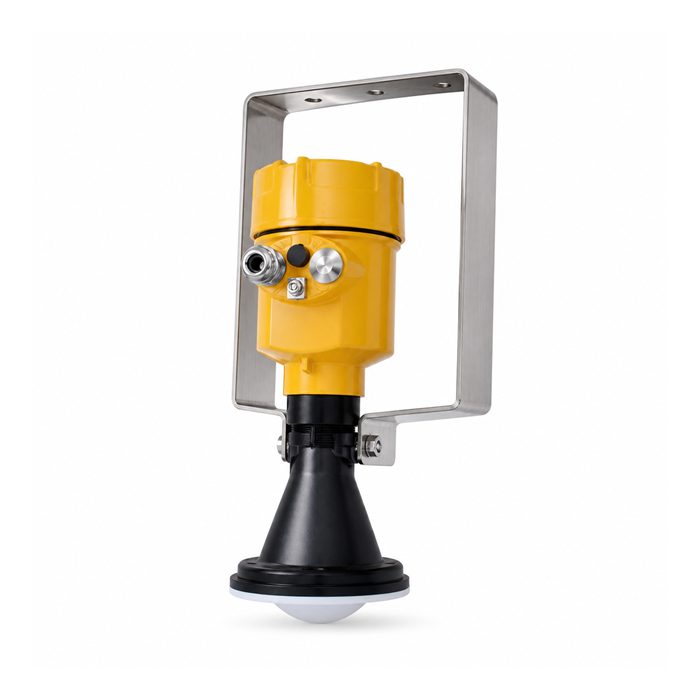
Summary
High-frequency radar level meters use high-frequency microwave pulses for non-contact level measurement. Some products operate in frequency bands such as 24 GHz, 25 GHz, or 26 GHz.
Their main characteristics include:
Smaller antenna size, good directionality, relatively concentrated beam, and suitability for solid material silos, small storage tanks, and certain dusty or condensation-prone operating conditions.
However, a higher operating frequency does not mean that the instrument will perform better under all site conditions.
For actual projects, the appropriate radar level meter model should still be selected based on a comprehensive assessment of:
Medium type, measuring range, vessel dimensions, dust, water vapor, condensation, internal structures, and installation method.