Chinese
 Spanish
 Russian
 Portuguese
 French
 German
 Indonesian
 Thai
Thai Vietnamese
 Arabic
 Italian
 Turkish
 Polish
 Japanese

Sulfur is widely used in chemical processing, rubber production, pesticides, and other industrial applications. In sulfur powder or granule storage silos, continuous level measurement is important for production continuity, overfill prevention, and inventory management.
Sulfur materials often involve high dust levels, uneven particle size, irregular material surfaces, and combustible dust risks. For this reason, radar level meter selection must consider not only signal stability, but also installation geometry, antenna buildup, and hazardous-area requirements.
1. Typical Process Conditions in Sulfur Silos
Uneven Particle Size
Fine powder and larger granules may coexist, creating peaks, valleys, and changing angles of repose that affect echo position and signal strength.
High Dust Levels
Loading and unloading can generate heavy suspended dust, while dust may also accumulate on the antenna surface over time.
Limited Reflectivity
Sulfur is not a highly reflective bulk solid. Actual radar reflection also depends on bulk density, particle size, moisture, and surface condition.
Combustible Dust Risk
Fine sulfur dust can create an explosive atmosphere under suitable concentration and ignition conditions, so hazardous-area certification must be considered.
Published reference data for solid sulfur shows a relative dielectric constant of around 3.4, while powder values can vary with bulk density and test conditions. For radar selection, it is therefore better to use the actual process condition rather than rely on a single fixed dielectric constant.
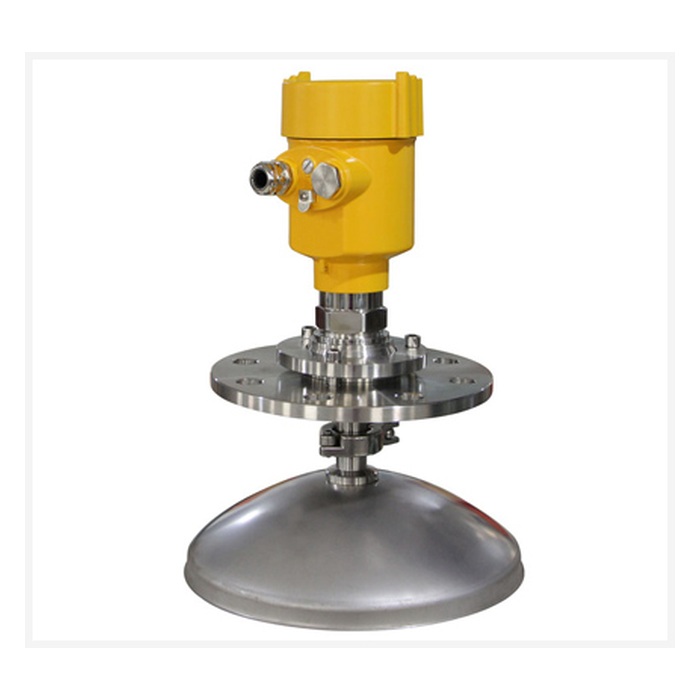
2. Why Is 80GHz Radar Often Preferred for Sulfur Silos?
For powders and granular solids, the main benefit of 80GHz radar is not simply the higher frequency itself, but the combination of narrow beam focusing, compact antenna size, and improved target separation.
| Comparison | 26GHz Radar | 80GHz Radar |
|---|---|---|
| Beam Focusing | Usually wider | Usually narrower |
| Tank Wall and Obstructions | More likely to cover a wider area | Easier to avoid fixed internal structures |
| Antenna Size | Usually larger | Can be more compact |
| Tall Narrow Silos | Beam coverage requires careful evaluation | Usually better installation flexibility |
| Powder and Granular Solids | Mature and usable technology | Often preferred for complex silos |
Industrial 80GHz solid-level radar is widely used for powders, granules, narrow silos, and vessels with complex internal structures. Some specialized models provide measuring ranges above 100 m, although the actual usable range still depends on material reflectivity, dust, surface angle, and installation conditions.
3. How to Select the Antenna for a Sulfur Silo
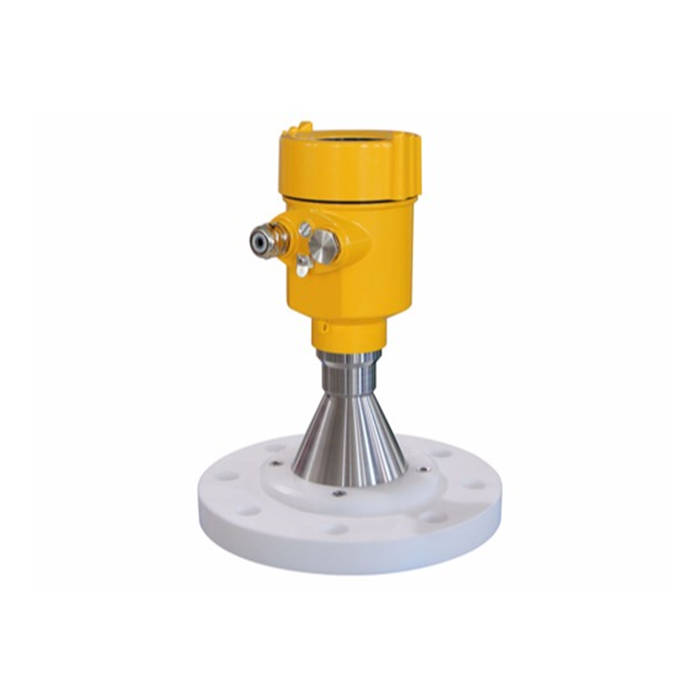
Lens Antenna
A smooth lens surface and compact design make this antenna type suitable for dusty environments and high-frequency solid-level radar.
Air Purge Connection
For heavy-dust applications, an air purge option can help reduce long-term dust accumulation on the antenna.
Material and Temperature
Antenna, process connection, and sealing materials must be suitable for the actual process temperature and environment.
Explosion Protection
Select an instrument with the appropriate certification and Ex marking according to the dust hazardous-area classification.
4. Installation Requirements for Sulfur Silo Radar
Avoid the Filling Stream
Do not position the radar beam directly through a continuous material stream, which can cause unstable echoes and heavy dust interference.
Avoid Walls and Internal Structures
Keep beams, supports, pipes, and other fixed structures outside the main radar beam whenever possible.
Select the Correct Measuring Area
Bulk solids form angles of repose, so the filling point, discharge point, and typical material surface shape should be considered.
Confirm Maximum Level
The highest material level must remain outside the instrument's specified near-field or blocking zone.
Commissioning Note:If fixed structures inside the silo cannot be avoided, false-echo suppression can be configured based on the actual echo curve. False-echo mapping should be used when necessary rather than treated as a mandatory step for every installation.
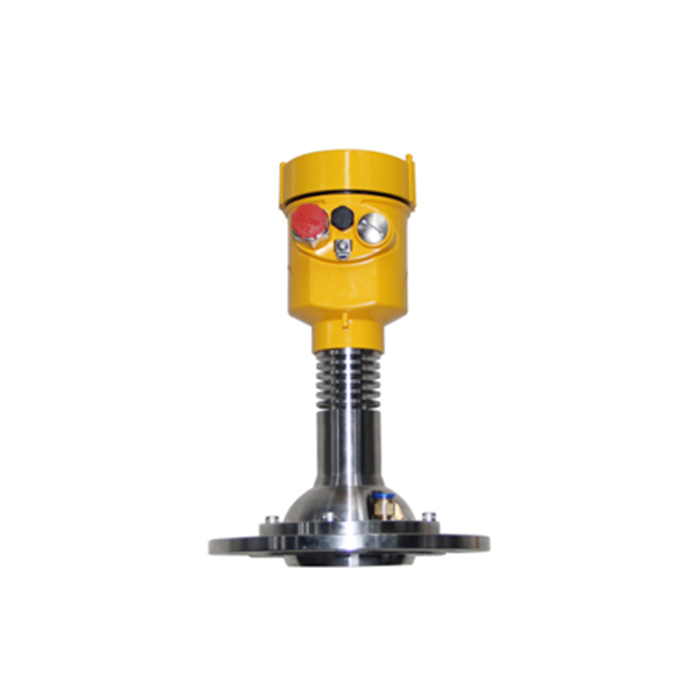
5. Why Must Dust Explosion Protection Be Confirmed Separately?
Sulfur dust is a combustible dust that requires careful hazardous-area assessment. If fine sulfur particles become suspended in air at a suitable concentration and an effective ignition source is present, an explosive atmosphere can develop.
For this reason, sulfur silo level measurement should not focus only on range and accuracy. The following should also be confirmed:
Hazardous-area classification;
Dust group or category;
Equipment protection level;
Maximum permitted surface temperature;
ATEX, IECEx, or local certification requirements;
Grounding and equipotential bonding requirements.
Suitability should always be confirmed from the complete explosion-protection certificate and project safety requirements rather than from a generic “explosion-proof” description.
6. Common Measurement Problems and Troubleshooting
| Problem | Check First | Recommended Action |
|---|---|---|
| Weak or lost echo | Antenna buildup, dust, material surface condition | Clean the antenna, check the purge system, and review the echo curve |
| Fluctuation during filling | Whether the filling stream enters the radar beam | Optimize the installation position and adjust damping if required |
| Unstable low-level reading | Bottom structure and fixed false echoes | Review echo curves and false-echo suppression settings |
| Sudden level jump | Whether the true material echo has been lost | Check installation, dust conditions, settings, and fault output behavior |
Short-term fluctuation during filling may occur, but continuous jumping or repeated signal loss should not simply be considered normal. The filling position, radar beam path, and valid echo should be checked.
7. What Information Is Required for Sulfur Silo Radar Selection?
Material
Sulfur form
Particle size
Dust level
Bulk condition
Moisture condition
Silo
Height
Diameter
Roof structure
Bottom shape
Internal obstructions
Process
Maximum temperature
Filling position
Discharge method
Maximum and minimum level
Dust condition
Safety and Electrical
Hazardous area
Certification requirements
Power supply
4–20 mA/HART
RS485 or other interface
8. Sulfur Silo Radar Selection Checklist
| 1 | Confirm silo height, diameter, maximum level, and minimum level. |
| 2 | Confirm whether the sulfur is powder, granules, or a mixed material. |
| 3 | Evaluate dust severity and whether an air purge is required. |
| 4 | For complex silos, evaluate an 80GHz narrow-beam radar first. |
| 5 | Confirm explosion-protection certification according to the dust hazardous area. |
| 6 | Check the relationship between the filling point, silo wall, internal structures, and radar beam. |
| 7 | For difficult applications, verify feasibility with echo-curve analysis or a field trial. |
FAQ: Radar Level Measurement for Sulfur Silos
Q1: Is 80GHz radar mandatory for sulfur silos?
A: No. 26GHz radar can also work in suitable silos. However, 80GHz radar is often preferred for narrow silos, complex internal structures, or applications requiring a narrower beam.
Q2: Why does sulfur dust require explosion protection?
A: Fine combustible dust can create an explosive atmosphere when suspended in air at a suitable concentration and exposed to an ignition source. The instrument must therefore comply with the site's hazardous-area requirements.
Q3: What should be done if sulfur dust covers the antenna?
A: Inspect the buildup and clean the antenna when necessary. For heavy-dust applications, a smooth lens antenna and an air-purge connection can be considered.
Q4: Can radar measure sulfur with relatively weak reflectivity?
A: Usually yes, but actual echo strength also depends on bulk density, particle size, moisture, measuring range, and material surface angle. Difficult applications can be verified through echo analysis or field testing.
Q5: What are the most common installation mistakes?
A: Common issues include installing too close to the filling point, allowing the radar beam to hit silo walls or internal structures, and ignoring the actual material surface profile.
Q6: What measuring range can an 80GHz radar cover?
A: It depends on the model and process conditions. Industrial 80GHz solid-level radar is available for measuring ranges from several meters to well above 100 m, but actual selection should not be based only on the maximum rated range.
Q7: Is fluctuation during filling normal?
A: Short-term fluctuation may occur, but repeated jumping or signal loss should be investigated. Check whether the filling stream enters the radar beam and review the dust condition and echo-tracking parameters.
Q8: Is false-echo mapping always required before commissioning?
A: No. It is useful when fixed internal structures create strong interference. If the real material echo is already clear and stable, unnecessary false-echo mapping should be avoided.
Q9: What information does METRAVON need for sulfur silo radar selection?
A: Please provide the silo height and diameter, sulfur form, particle size, dust level, temperature, filling and discharge positions, internal structures, hazardous-area classification, process connection, and required output signal.
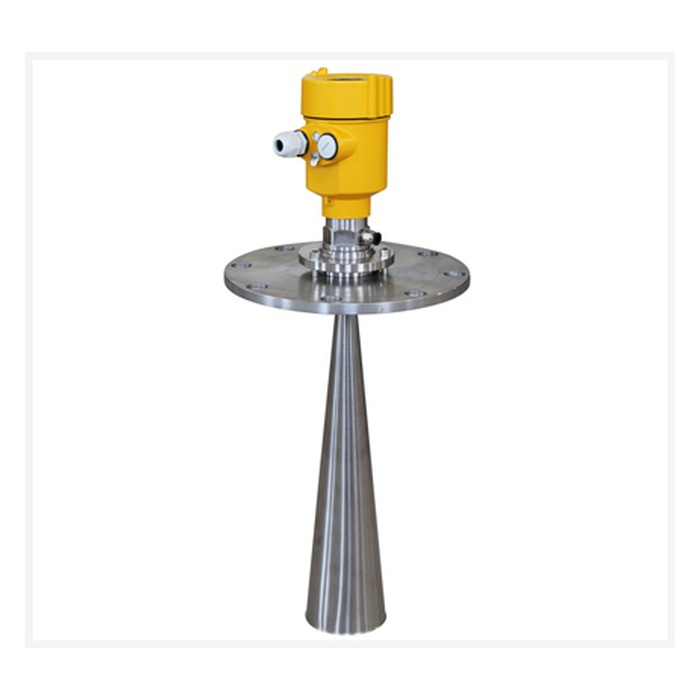
Conclusion
Sulfur silos combine high dust levels, irregular material surfaces, limited reflectivity, and combustible dust hazards. Reliable level measurement therefore requires both stable radar performance and correct hazardous-area selection.
For complex sulfur powder or granule silos, 80GHz radar offers useful advantages through its narrow beam, compact antenna, and improved target separation. Final selection should still consider measuring range, dust, material surface condition, antenna buildup, silo internals, and explosion-protection requirements.
METRAVON can support radar level meter selection for sulfur silos based on silo dimensions, material condition, process requirements, and hazardous-area specifications, including installation and commissioning guidance.