Chinese
 Spanish
 Russian
 Portuguese
 French
 German
 Indonesian
 Thai
Thai Vietnamese
 Arabic
 Italian
 Turkish
 Polish
 Japanese
Pitfall Guide for Buying Radar Level Gauges
Radar level gauges are used in industrial production for continuous measurement of liquid, slurry or granular material levels, providing accurate data in a timely manner to support safe production and process control. Improper selection can lead to unstable measurement, frequent maintenance or even safety hazards. With an increasing number of models and specifications on the market, selection must be based on measurement principles and systematically evaluated in combination with actual working conditions to avoid common pitfalls.
1. Prioritize Measurement Medium Characteristics
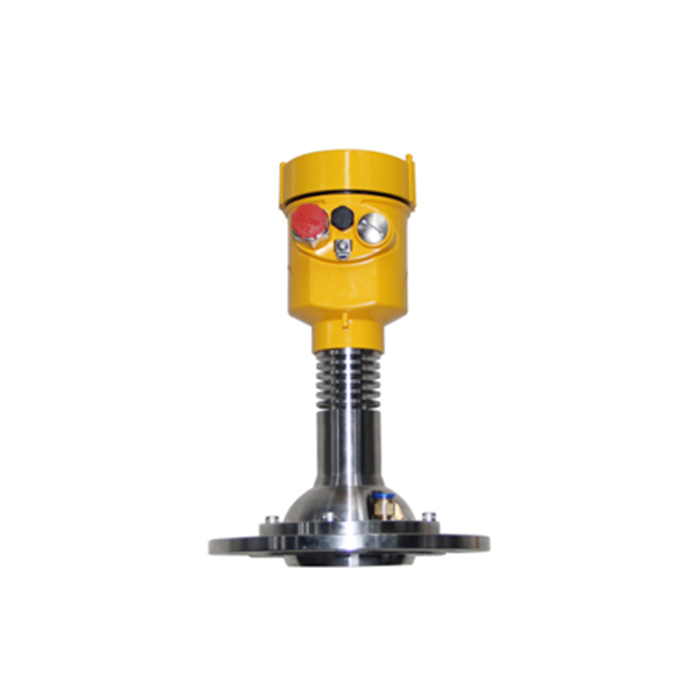
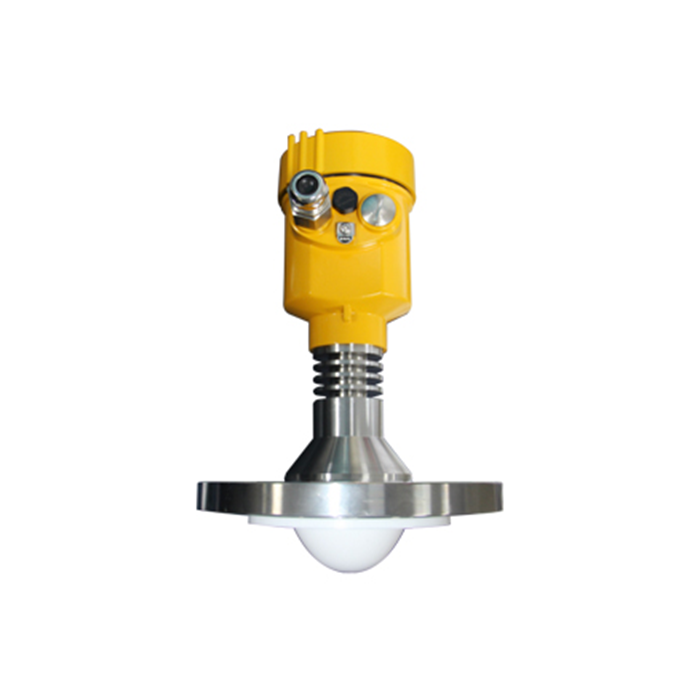
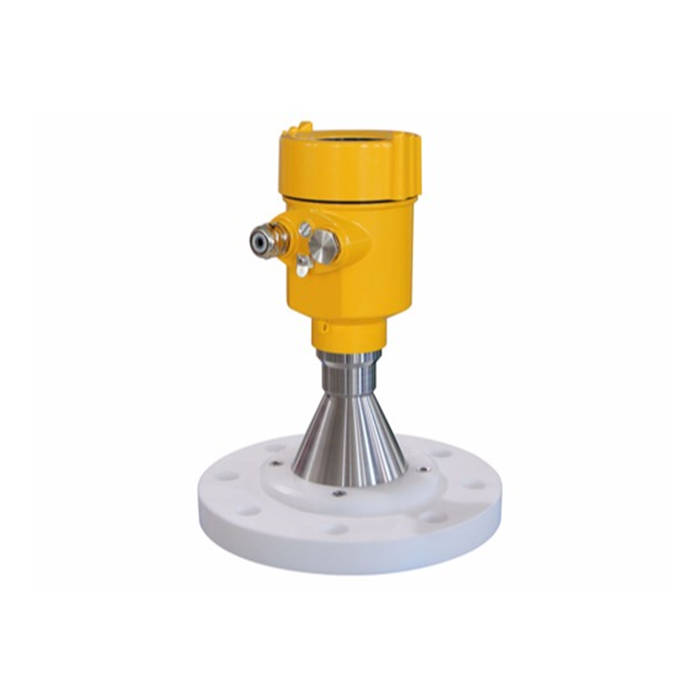
The inherent characteristics of the medium directly determine the radar type and antenna selection. Media with high viscosity tend to adhere to the guided wave rod, causing signal attenuation or false echoes. Such conditions are not suitable for guided wave radar; non-contact radar should be prioritized, and anti-adhesion antenna designs should be considered. Media prone to self-polymerization or crystallization tend to accumulate on the surface of horn antennas, affecting echo quality. Ordinary horn structures should be avoided, and lens antennas or configurations with cleaning/purging conditions should be used instead.
Dielectric constant is a core parameter. When the dielectric constant is too low, the echo of non-contact radar is weak and measurement stability decreases; guided wave radar has better adaptability to low dielectric constant media because the signal is transmitted along the probe. At the same time, it is necessary to evaluate whether the medium contains steam, foam, dust or corrosive components. These factors will affect frequency selection (26G or 80G), antenna material (PTFE anti-corrosion, etc.) and signal processing algorithms. Before selection, complete information on medium name, dielectric constant, viscosity, temperature and pressure, and whether it is prone to crystallization/adhesion must be provided in order to match the appropriate model.
2. Strictly Standardize Installation Methods
Improper installation location is one of the main reasons for on-site measurement failure. When installing a radar level gauge, inlet and outlet ports should be avoided to prevent material flow from directly impacting the beam or generating severe fluctuations and foam. The antenna must extend into the tank by a certain distance (commonly required to be about 10 mm or more) to ensure effective beam emission and avoid interference from short pipes or nozzle edges.
The installation position should be more than 200 mm from the tank wall, and installation at the exact center of an arched tank top must be avoided. The center of an arched top is prone to multiple reflections, which enhance false echoes; the optimal position is usually at about 1/2 of the tank top radius or an appropriate outer position. When measuring solid materials, the direction of the horn or antenna should be adjusted via a universal flange to aim as far as possible at the highest point of the material or the center of the accumulation surface to reduce the influence of slopes and dead zones.
Other engineering requirements include: ensuring the antenna is perpendicular to the medium surface with the tilt angle controlled within the allowable range; no fixed obstacles (agitators, heating coils, ladders, etc.) in the beam path; outdoor installation must consider sunshade, rain protection and lightning protection. After installation, false echo learning and parameter verification must be performed to confirm that the highest level does not enter the blind zone.
3. Attach Importance to Manufacturer After-sales Service Capability
Product performance itself is important, but after-sales service often determines long-term use cost and reliability. When the instrument fails or parameters are abnormal, whether technical support, remote diagnosis or on-site service can be obtained in the first place directly affects downtime losses. Relatively speaking, manufacturers with complete technical teams and response mechanisms can better ensure problem-solving efficiency. Simply pursuing low prices and choosing suppliers with weak service capabilities may face problems such as long maintenance cycles and difficult-to-obtain spare parts after failures.
During selection, it is recommended to examine the completeness of the manufacturer's technical materials, echo curve analysis capability, spare parts supply cycle, and whether installation and commissioning guidance is provided. In engineering procurement, after-sales response speed and professional support should be regarded as evaluation dimensions equally important as price.
Engineering Procurement Suggestions
A complete selection process should include: collecting medium and tank parameters → confirming frequency and antenna type → evaluating installation feasibility → verifying output and explosion-proof requirements → confirming after-sales and training support. Avoid making decisions based solely on price or a single parameter. Providing a detailed working condition table can significantly reduce selection risks.
METRAVON industrial radar level gauges cover non-contact and guided wave series, support a variety of antenna materials and process connections, can provide matching solutions for viscosity, crystallization, corrosion and complex installation conditions, and are equipped with technical support and after-sales response mechanisms to facilitate engineering implementation and long-term maintenance.
FAQ
Q1: Can high-viscosity media use guided wave radar?
A: Generally not recommended. High-viscosity media tend to adhere to the guided wave rod, causing signal abnormalities. Prioritize non-contact radar and evaluate the anti-adhesion design of the antenna.
Q2: Are horn antennas suitable for media prone to crystallization?
A: Not suitable. Crystallization tends to accumulate at the horn mouth and affects the echo. Lens antennas or configurations with cleaning conditions should be selected.
Q3: How deep does the antenna need to extend into the tank during installation?
A: Usually at least 10 mm. The specific value is subject to the product manual to ensure effective beam emission and avoid nozzle interference.
Q4: Why cannot it be installed at the exact center of an arched tank top?
A: The center position is prone to multiple reflections, which enhance false echoes and lead to unstable measurement. An appropriate position offset from the center should be selected.
Q5: How to adjust the antenna direction when measuring solids?
A: Adjust via a universal flange to aim as far as possible at the highest point of the material or the accumulation surface to reduce the influence of slope reflections.
Q6: What are the requirements for the installation distance from the tank wall?
A: Generally greater than 200 mm to avoid tank wall reflection interference. The specific distance needs to be confirmed in combination with the beam angle and tank size.
Q7: Why is after-sales service more important than price?
A: Rapid response in case of failure can reduce downtime losses. Suppliers with weak service capabilities may lead to long maintenance cycles and difficulty in problem solving.
Q8: What medium information must be provided before selection?
A: Name, dielectric constant, viscosity, temperature and pressure range, whether prone to adhesion/crystallization/corrosion, and the internal structure of the tank.
Q9: What impact do inlet and outlet ports have on measurement?
A: Material flow impact will generate fluctuations, foam or directly block the beam, leading to unstable signals. Installation must avoid them.
Q10: How does METRAVON help avoid selection pitfalls?
A: Provides frequency, antenna and installation suggestions based on complete working conditions, and supports commissioning guidance and after-sales response to reduce on-site failure risks.
Summary
The core pitfall avoidance points for purchasing radar level gauges are: select the type and antenna based on medium characteristics, strictly comply with installation location and depth requirements, and include the manufacturer's after-sales service capability in the evaluation. Special media such as high viscosity, easy crystallization and low dielectric constant require targeted matching; installation must avoid inlet and outlet ports, ensure antenna immersion and reasonable wall distance, and avoid the center of arched tops. Standardized selection and installation can significantly improve measurement reliability and system availability.
METRAVON focuses on industrial radar level solutions. Its products cover conventional and complex working condition configurations, and provide selection support and after-sales guarantee. If you need pitfall avoidance suggestions or product matching for specific media and tanks, please provide detailed working condition parameters, and we will assist in completing reliable selection and application implementation.