Chinese
 Spanish
 Russian
 Portuguese
 French
 German
 Indonesian
 Thai
Thai Vietnamese
 Arabic
 Italian
 Turkish
 Polish
 Japanese
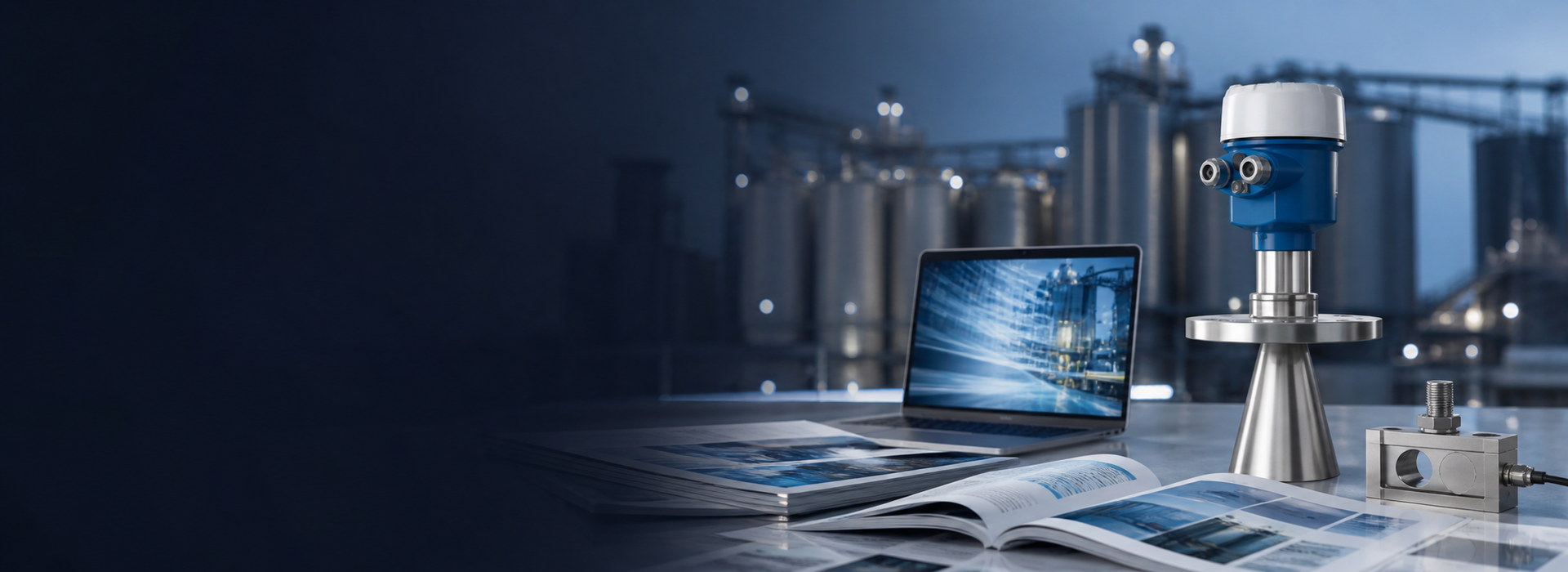
1. What Is a 26 GHz Radar Level Transmitter?
A 26 GHz radar level transmitter generally refers to an industrial radar level instrument operating in the K-band at a frequency of approximately 26 GHz.
It can be used for:
Liquid storage tanks;
Chemical process vessels;
Oil tanks;
Water tanks;
Cement silos;
Mineral powder silos;
Grain silos;
Coal bunkers;
Fly ash silos;
Granular material silos.
26 GHz was one of the mainstream frequency bands for industrial radar level measurement for many years. Today, the market includes radar products operating at different frequency bands such as 6 GHz, 26 GHz, and approximately 80 GHz.
Different frequencies should not be understood simply as “new technology must replace old technology.”
Engineering selection should still be based on:
Operating conditions + installation structure + measuring range + medium + antenna.
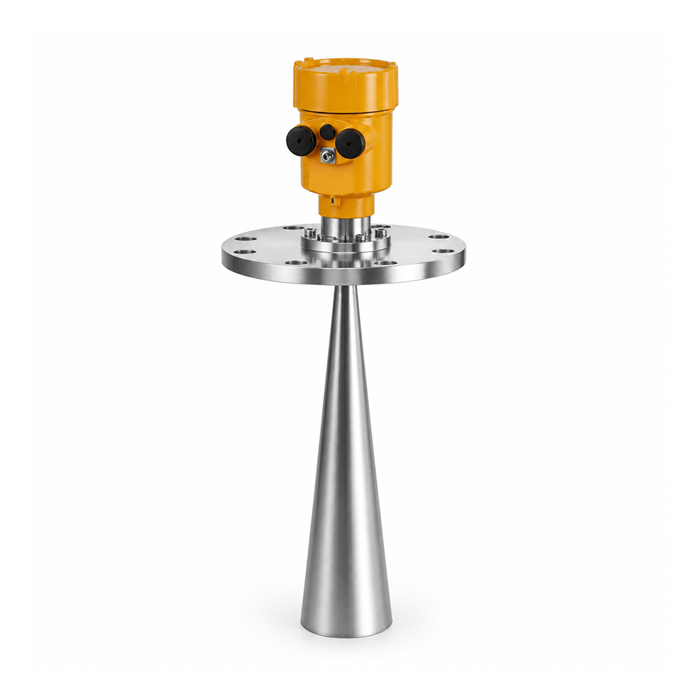
2. How Does a 26 GHz Radar Level Transmitter Work?
The radar transmits electromagnetic waves toward the surface of the measured medium.
When the electromagnetic waves reach the surface, part of the energy is reflected and received by the antenna.
The instrument analyzes the relationship between the transmitted and returned signals to calculate the distance between the antenna and the material surface.
For a typical time-of-flight measurement, the relationship can be expressed as:
D = c × t / 2
where:
D = distance;
c = propagation velocity of the electromagnetic wave;
t = round-trip signal travel time.
The instrument then converts the measured distance into a liquid level or bulk-solid level according to the configured empty-tank reference distance.
However, one point should be noted:
26 GHz describes the operating frequency band. It does not represent one single signal-processing method.
Different 26 GHz radar products may use different radar measurement and signal-processing technologies. Therefore, all performance characteristics should not be judged solely from the term “26 GHz.”
Basic 26 GHz Radar Measurement Process
Step 1 – Transmission: The radar antenna transmits electromagnetic waves toward the liquid or bulk-solid surface.
Step 2 – Propagation: The electromagnetic waves travel through the measurement space toward the target surface.
Step 3 – Reflection: Part of the microwave energy is reflected from the surface of the measured medium.
Step 4 – Reception: The radar antenna receives the reflected echo signal.
Step 5 – Level Calculation: The electronics calculate the distance and convert it into the corresponding liquid or material level according to the configured tank geometry.
3. Why Has 26 GHz Radar Been Widely Used for Industrial Level Measurement?
26 GHz radar has been widely used in industrial applications for many years, mainly because it offers:
Non-contact measurement;
Suitability for both liquids and bulk solids;
Relatively long measuring ranges;
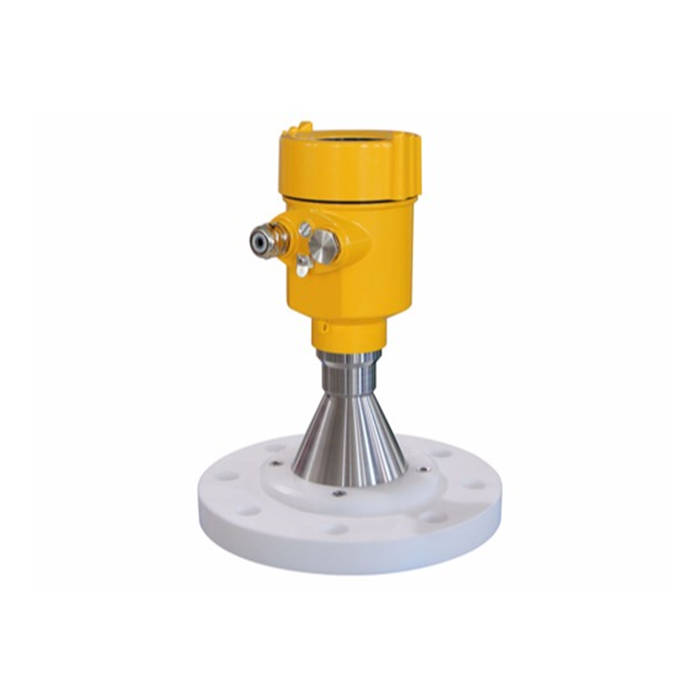
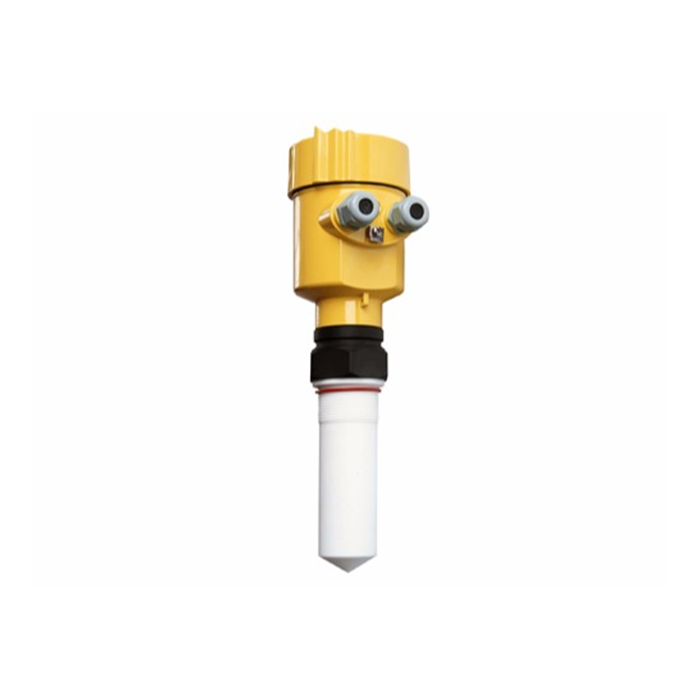
Multiple antenna configurations;
Capability to handle relatively complex industrial vessels;
Explosion-proof, high-temperature, and high-pressure versions;
Mature 4–20 mA/HART and other industrial interfaces.
For example, publicly available information for the Endress+Hauser FMR51 shows that this approximately 26 GHz K-band liquid radar can be used in high-temperature and high-pressure applications and is available with horn antennas. The FMR57 is designed for powder and granular bulk-solid materials.
Therefore, 26 GHz radar is not limited to liquid measurement.
4. How Far Can a 26 GHz Radar Measure?
There is no single answer to the question, “How many meters can a 26 GHz radar measure?”
The maximum measuring range depends on:
Transmitter and receiver design;
Antenna gain;
Reflectivity of the measured medium;
Material surface angle;
Dust conditions;
Material buildup on the antenna;
Installation position;
Signal-processing algorithms.
Industrial 26 GHz radar products on the market include models with measuring ranges around 20 m as well as versions rated for approximately 40 m or 70 m.
For example, some publicly available specifications for 26 GHz bulk-solid radar products indicate maximum measuring distances of up to approximately 70 m. However, actual application performance can still be affected by low dielectric constants, loose material surfaces, angle of repose, and material buildup.
Therefore, procurement should not focus only on the question:
“Is this a 70-meter radar?”
The more meaningful engineering question is:
“Can this radar reliably measure 70 meters under my actual medium and installation conditions?”
5. What Is the Beam Angle of a 26 GHz Radar?
The beam angle is strongly related to antenna aperture.
For example, with some 26 GHz horn antennas:
Small-aperture antennas may have beam angles greater than 20°;
Larger horn antennas may reduce the beam angle to approximately 8°–10°;
Large parabolic antennas may reduce the beam angle even further.
According to publicly available Endress+Hauser information, some 26 GHz radar products with a 100 mm horn antenna have a typical beam angle of approximately 8°. Large parabolic antennas used for bulk-solid measurement can achieve beam angles of approximately 3.5°–4°.
Therefore, antenna size is particularly important when applying 26 GHz radar to tall silos.
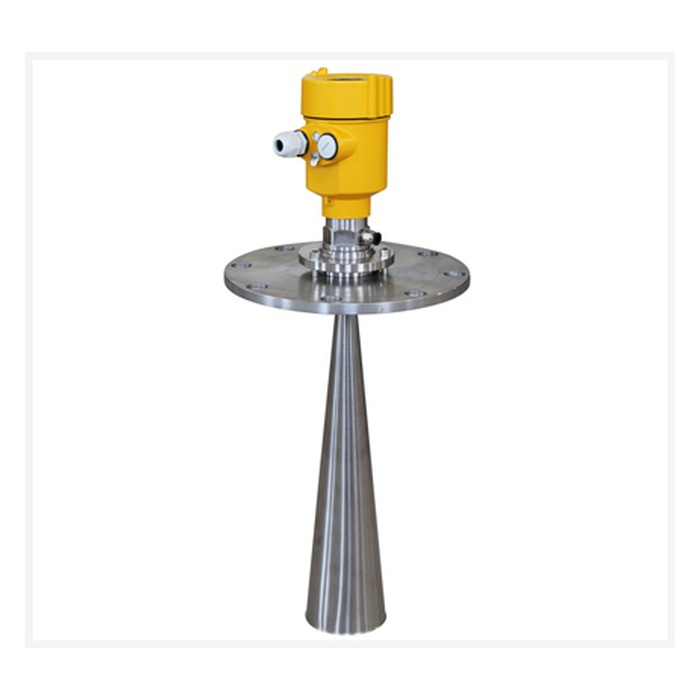
6. How Should the Antenna Be Selected for a 26 GHz Radar Level Transmitter?
Conventional Liquid Storage Tanks
Horn antennas or other conventional free-space antenna structures can be considered first.
Tall Silos
Key options to evaluate include:
Large-aperture horn antennas;
Parabolic antennas;
Narrow-beam antenna structures.
Corrosive Media
Pay particular attention to the compatibility of:
PTFE;
PEEK;
316 L;
Alloy materials;
Sealing materials;
Other wetted or exposed materials.
High-Dust Silos
In addition to beam angle, consider:
Dust accumulation on the antenna;
Whether an air-purge connection is available;
Installation angle;
Dust concentration.
7. How Does Dielectric Constant Affect 26 GHz Radar?
Radar measurement depends on electromagnetic-wave reflection from the surface of the measured medium.
In general, the stronger the radar reflectivity of the medium, the easier it is for the instrument to identify the return echo.
For low-dielectric-constant media, greater attention should be paid to:
Measuring distance;
Antenna gain;
Material surface geometry;
Installation angle;
Signal-processing capability.
For bulk-solid materials, the degree of compaction should also be considered.
The same material may provide different echo conditions when it is:
Highly compacted;
Being pneumatically conveyed;
Surrounded by heavy dust;
Very loose or aerated.
8. Is 26 GHz Radar Affected by Dust?
Compared with ultrasonic technology, radar uses electromagnetic waves and does not depend on the propagation velocity of sound through air. It therefore provides significant engineering advantages in many dusty applications.
26 GHz industrial radar has been widely used for:
Cement;
Raw meal;
Animal feed;
Coal;
Mineral particles.
Technical information for relevant industrial radar products also identifies high-dust silos as typical 26 GHz radar applications.
However, the statement “radar can measure through dust” does not mean that an unlimited amount of dust can never affect measurement.
If severe dust conditions also result in heavy antenna buildup, air purging and regular maintenance may still be required.
9. Can 26 GHz Radar Measure Under High-Temperature and High-Pressure Conditions?
Yes, but a model specifically designed for the required temperature and pressure ratings must be selected.
The radar measurement principle itself does not automatically make the complete instrument suitable for high-temperature or high-pressure applications.
The actual temperature and pressure limits are determined by components such as:
Antenna structure;
Process seals;
Flanges;
Thermal isolation structure;
O-rings;
Electronic-unit isolation design.
26 GHz radar products designed for high-temperature and high-pressure service are available on the market. Some industrial models publish process-temperature ratings reaching several hundred degrees Celsius and pressure ratings suitable for high-pressure service.
However, these values are capabilities of specific models and should not be applied to all 26 GHz radar instruments.
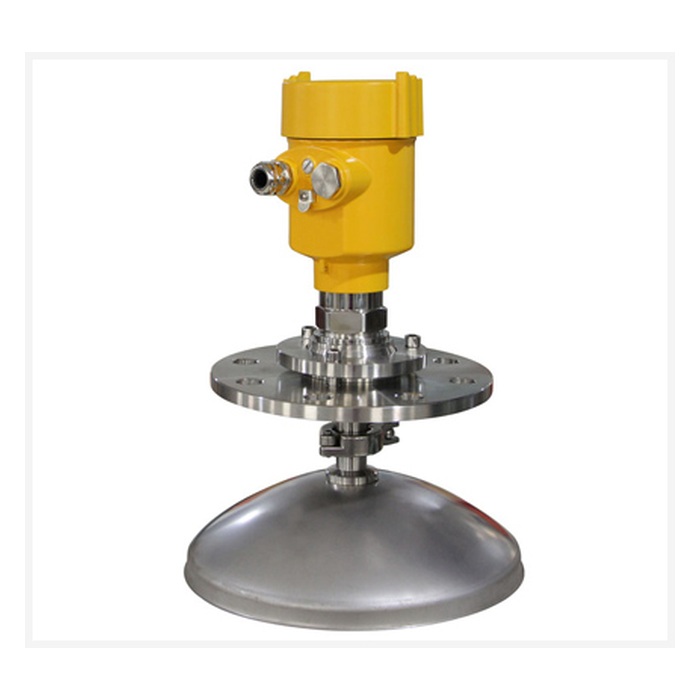
10. What Parameters Should Be Provided When Purchasing a 26 GHz Radar Level Transmitter?
When requesting a quotation, it is recommended to provide the following information at one time:
| Parameter | Selection Purpose |
|---|---|
| Measured Medium | Determines reflectivity, dielectric characteristics, corrosion, and antenna requirements |
| Liquid or Solid | Determines the appropriate radar configuration and signal-processing strategy |
| Maximum Measuring Distance | Determines required signal margin and antenna gain |
| Total Tank Height | Defines the basic geometric measurement range |
| Tank Diameter | Used to evaluate available beam space and wall interference |
| Normal Temperature | Confirms standard process compatibility |
| Maximum Temperature | Determines antenna, seal, and thermal-isolation requirements |
| Normal Pressure | Confirms normal process pressure requirements |
| Maximum Pressure | Determines flange, sealing, and mechanical pressure ratings |
| Vacuum Conditions | Confirms process connection and seal suitability |
| Vapor | Helps evaluate condensation and signal conditions |
| Foam | Helps evaluate surface-reflection quality |
| Dust | Determines whether a dust-resistant antenna or air purge should be considered |
| Condensation | Helps determine antenna structure and cleaning requirements |
| Agitator | Used to evaluate possible false echoes and installation position |
| Internal Pipes or Structures | Determines beam-angle and installation requirements |
| Process Connection Size | Determines the available antenna size |
| Threaded or Flanged Connection | Determines the required mechanical process connection |
| Mounting Nozzle Height | Helps prevent antenna obstruction and nozzle-related false echoes |
| Power Supply | Confirms electrical compatibility |
| 4–20 mA/HART or Other Output | Confirms integration with PLC, DCS, RTU, or other control systems |
| Explosion-Proof Requirement | Determines whether a certified hazardous-area version is required |
| Hazardous-Area Classification | Determines the required Ex certification and protection level |
| Site Photos or Tank Drawings | Helps confirm installation position, obstacles, nozzle dimensions, and antenna selection |
These parameters provide far more engineering value than simply asking, “How much does a 26 GHz radar cost?”
11. How Should 26 GHz and 80 GHz Radar Be Understood?
80 GHz radar has a shorter wavelength and can generally produce a narrower beam with a smaller antenna.
This provides advantages in applications such as:
Narrow storage tanks;
Small process connections;
Tanks with complex internal structures.
However, this does not mean that every 26 GHz application must be upgraded to 80 GHz.
Mature existing 26 GHz installations, larger process connections, high-temperature and high-pressure structures, or certain bulk-solid applications may still be well suited to 26 GHz radar depending on the actual operating conditions.
Frequency is only one parameter in the overall selection process.
FAQ
Q1: Does “26 GHz radar level transmitter” mean the radar operates at 26 GHz?
A: Usually yes. In industrial applications, it generally refers to a K-band radar operating at approximately 26 GHz.
Q2: Can a 26 GHz radar measure bulk solids?
A: Yes. 26 GHz radar has long been used for powdered and granular materials such as cement, mineral powder, coal, and grain.
Q3: What is the maximum measuring range of a 26 GHz radar?
A: There is no universal value. Industrial products are available in different measuring-range classes, and some bulk-solid models can reach approximately 70 m. Actual usable range still depends on operating conditions.
Q4: Which is better, 26 GHz radar or 80 GHz radar?
A: The selection should be based on tank structure, process connection size, medium, measuring range, temperature, and pressure conditions. Frequency alone does not determine which option is better.
Q5: Can a 26 GHz radar measure oil?
A: Yes. However, the dielectric properties of the oil, vapor conditions, temperature, pressure, and explosion-proof requirements should be confirmed.
Q6: Does a 26 GHz radar have a blind zone?
A: The near-field measurement limitation depends on the specific model and antenna structure. The selected product datasheet should be checked rather than assuming a universal fixed value such as 8 cm or 40 cm.
Q7: Does a 26 GHz radar require maintenance?
A: Radar has no moving parts that need to contact the measured medium directly, but the antenna should still be checked for dust accumulation, condensation, sealing condition, and wiring condition.
Q8: What information does METRAVON use for radar selection?
A: METRAVON recommends providing complete tank parameters and field photos. Measuring distance, medium characteristics, and installation conditions should be evaluated together to determine the appropriate frequency, antenna, and process connection.
Conclusion
A 26 GHz radar level transmitter is a mature industrial non-contact level measurement instrument.
For project procurement, the parameters that truly need to be evaluated include:
Measuring range, antenna, beam angle, medium reflectivity, temperature, pressure, dust, installation structure, and explosion-proof requirements.
Individual specifications such as “26 GHz,” “70 m,” or “high accuracy” should not be compared independently from the actual operating conditions.
For chemical storage tanks, water treatment systems, petroleum-product applications, and large bulk-solid silos, METRAVON recommends confirming the basic process and installation conditions before quotation and then determining whether 26 GHz radar, 80 GHz radar, and the corresponding antenna structure provide the most suitable solution.
Related resources
Radar level meters · Level measurement
Author: Arvin · Source: METRAVON Instruments