


 Chinese
 Spanish
 Russian
 Portuguese
 French
 German
 Indonesian
 Thai
 Vietnamese
 Arabic
 Italian
 Turkish
 Polish
 Japanese



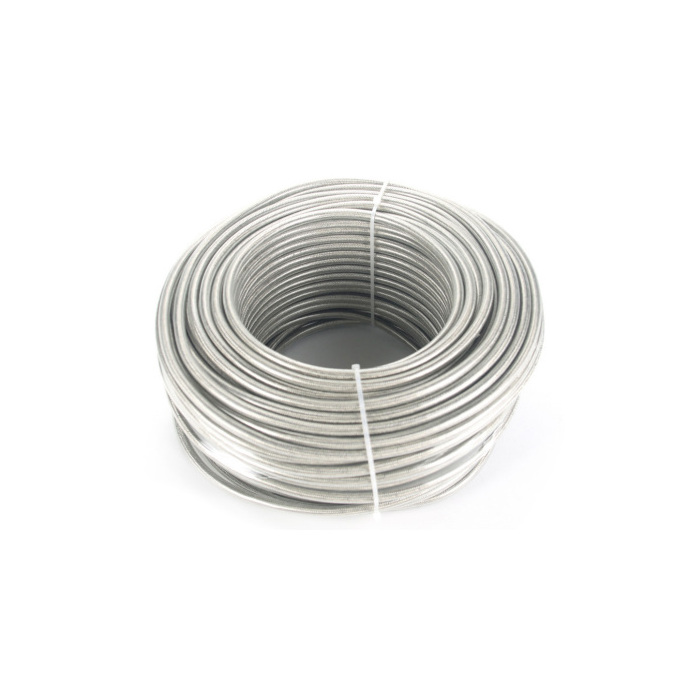
METRAVON MV-WA0012 is a sheathed double-shielded weighing signal cable. It is an option to review when a load-cell installation calls for that cable construction, especially where the signal route is exposed to electrical interference. The required shielding arrangement and terminations should be specified with the measurement circuit rather than selected by appearance.
Check whether the disturbance comes through the cable
A weight reading that changes when a drive runs may involve electrical interference, but it can also reflect real machine vibration. Compare the reading with the drive state, mechanical movement and cable position. Inspect loose terminals and moisture damage before assuming that a second shield will solve the problem.
MV-WA0012 is distinguished from single-shielded MV-WA0011 by its sheathed double-shielded construction. No numerical noise attenuation or guaranteed accuracy improvement is specified. A substitution should be assessed using the same loading conditions and operating cycle, with the wiring changes recorded.
Specify more than the number of shields
| Detail to request | Selection consequence |
|---|---|
| Shield construction | Obtain the arrangement of the shielding layers and any drain conductors. Do not assume individual pair screens. |
| Core specification | Match conductor count and cross-section to the signal, excitation and sense connections. |
| Sheath properties | Confirm suitability for the actual temperature, cleaning agents, abrasion and movement. |
| Finished diameter | Check connector and gland fit, routing space and the specified bend requirements. |
A sheath does not automatically provide chemical resistance, continuous-flex capability or a sealed cable assembly. Those are separate requirements. Likewise, the shield connection must follow the equipment's EMC and bonding instructions; there is no universal rule to connect both shields at one end, both ends or together.
Plan an observable installation check
Before replacement, record the wiring and the reading under the operating condition that produces the fault. After installation, inspect terminations and strain relief, then repeat the same test and verify zero and load response. Keep the process conditions comparable so that a change in loading or filtering is not mistaken for a cable improvement.
Do not disconnect protective earth to investigate a noisy measurement. For detailed fault separation and shield-routing checks, use the weighing cable troubleshooting guide alongside the equipment instructions.
Double-shielded cable questions
Q1. Is this an automatic upgrade for every single-shielded installation?
No. The proposed construction must fit the circuit, glands and routing space, and it must address the diagnosed problem. An existing cable that already meets the installation requirements need not be replaced solely because another model has two shields.
Q2. Does double shielding allow the cable to share any power-cable route?
No unrestricted routing permission follows from the product name. Apply the equipment manufacturer's cable-separation and bonding requirements. Where the route cannot be changed, have the interference exposure and proposed installation reviewed rather than assigning an unsupported separation distance.
For an MV-WA0012 cable quotation, describe the route, nearby drives, instrument and load-cell models, required length and terminations. Include the observed fault if this is a retrofit, or the specified EMC and mechanical requirements for a new machine.
