Chinese
 Spanish
 Russian
 Portuguese
 French
 German
 Indonesian
 Thai
Thai Vietnamese
 Arabic
 Italian
 Turkish
 Polish
 Japanese

A weighbridge load cell replacement affects structural support, electrical balance and legal or quality status. Similar capacity and appearance do not prove interchangeability. Height, loading interfaces, output, resistance, cable, sealing and approval scope can differ, while a damaged cable, junction box or binding deck may mimic cell failure. Replacement should preserve as-found evidence, confirm the root cause and approve the exact substitute before the deck is lifted or wiring is changed.
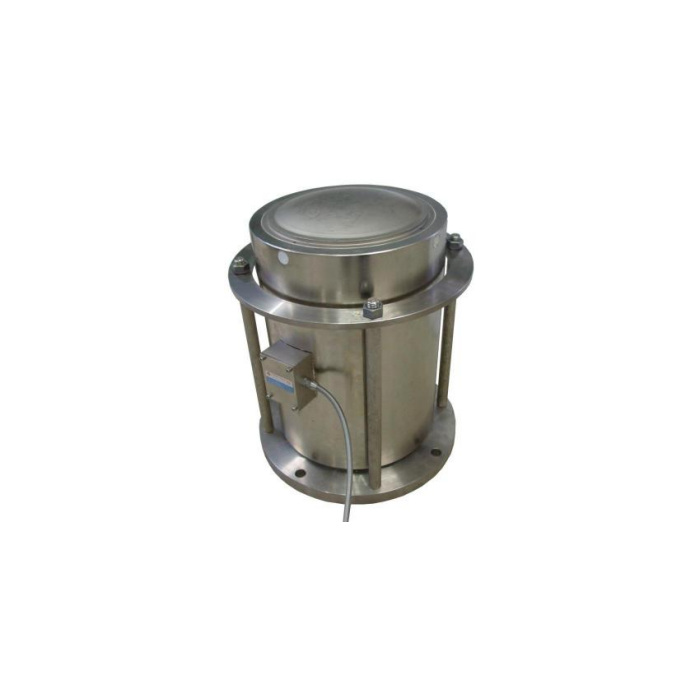
Prove the failed component
Record zero, individual signal, excitation, bridge resistance, insulation and response to controlled loading. Inspect cable, connectors, junction box, lightning damage, debris and deck movement. Compare other supports. Do not discard the removed cell before the failure mechanism and warranty evidence are documented.
Match mechanical characteristics
Confirm compression or rocker design, capacity, height, diameter, loading surfaces, anti-rotation features, mount and allowable lateral movement. Check foundation and bearing plates for wear or corrosion. A height difference redistributes load and may overload adjacent cells.
Match electrical characteristics
Compare rated output, input and output resistance, excitation, cable conductors, sense wiring, color code and temperature compensation. Check compatibility with remaining cells and junction-box trim range. Never assume wire colors have the same function across manufacturers or revisions.
Verify approval and traceability
For legal-for-trade or regulated use, confirm exact cell model, class, capacity, certificate and assembly conditions. Preserve serial number, material and calibration documents. Replacement may require resealing, reverification or notification under local rules. A general calibration certificate is not a type approval.
Plan safe replacement
Use approved lifting points, blocking and isolation. Verify the resolved target cell and support before lifting. Protect cables and neighboring modules. Clean and inspect mounting surfaces, install the correct orientation and torque, restore restraints and ensure transport or service blocks are removed.
Balance before calibration
Measure individual zero and loaded outputs with the deck free. Correct binding, height and connection issues before trimming. Use junction-box adjustment only within its intended range. Recheck all channels after sealing the enclosure. Record raw and trimmed values by position.
Calibrate the complete weighbridge
Use traceable test loads and required procedures over suitable positions and range. Verify zero, span, repeatability, eccentric loading, indication, ticketing and overload alarms. Retain as-found and as-left results and any legal verification. A factory cell certificate does not replace system calibration.
Prevent recurrence
Correct water ingress, surge, grounding, deck contact, worn bearings or overload that contributed to failure. Inspect early after return to service. Trend zero and corner performance. Revalidate after structural, junction-box, indicator or software changes.
Engineering checklist
- Preserve failed-cell evidence.
- Match height and loading interfaces.
- Verify wiring and trim compatibility.
- Confirm approval and sealing requirements.
- Lift and block the deck safely.
- Recalibrate position and full system.
Frequently asked questions
Can one cell be replaced in a multi-cell weighbridge?
Yes when the replacement is mechanically and electrically compatible and the complete scale is recalibrated.
Do matching wire colors prove compatibility?
No. Use the documented pinout and measured electrical characteristics.
Why test eccentric loading?
It reveals support, trim and mechanical differences hidden by a centre-load span test.
Decision record
Record the selected architecture, operating cases, assumptions, accepted limits and responsible approver. Attach drawings, calculations, calibration evidence and unresolved deviations. Include inspection interval, spare strategy, fault response and recoverable configuration location. Assign an owner and closure date to each conditional acceptance. Review actual drift, faults and maintenance findings after representative service, and revise the engineering basis when evidence contradicts an assumption. Make the record available to operations and maintenance, with revision history and asset identity, so later adjustments can be compared with the accepted baseline rather than treated as undocumented tuning.
Need a project-specific review? Send load cases, drawings, environment, signal requirements and acceptance criteria through our contact page.