Chinese
 Spanish
 Russian
 Portuguese
 French
 German
 Indonesian
 Thai
Thai Vietnamese
 Arabic
 Italian
 Turkish
 Polish
 Japanese

A weighbridge indicator is the measurement processor, operator interface and often the legal record source for a truck scale. Replacing it can change excitation, filtering, calibration, motion detection, rounding, communications and printed tickets even when the load cells remain untouched. The project must capture the existing configuration and business workflow, verify electrical compatibility and complete an approved recalibration. Copying only capacity and decimal point is not enough to reproduce the original weighing system.
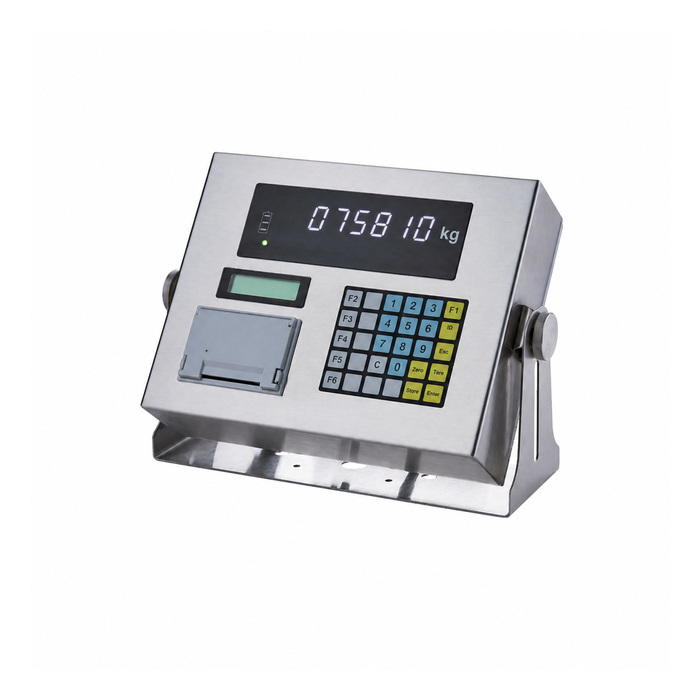
Capture the existing baseline
Export or photograph capacity, divisions, units, zero range, filtering, motion, calibration points, passwords, communications and ticket formats. Record indicator model, firmware, serial and approval seals. Test current zero, span and corner performance before removal so old faults are not attributed to the new terminal.
Check load-cell compatibility
Calculate total bridge resistance and required excitation current for all cells. Confirm excitation voltage, sense wiring, input sensitivity, signal range and connector pinout. Verify junction-box and cable condition. Too many cells or wrong resistance can overload the excitation supply or reduce stable resolution.
Review metrological requirements
Identify legal-for-trade, quality and customer requirements, including approved model, division count, sealing, audit trail and reverification. Confirm the exact firmware and options are within approval scope. Do not break seals or change protected parameters outside the authorized process.
Map interfaces and data
List printers, remote displays, barriers, traffic lights, gates, RFID, cameras, PLCs, software and network services. Define serial or Ethernet protocol, data format, baud rate, parity, addresses and handshakes. Preserve vehicle, tare and transaction data according to retention and migration requirements.
Control operational behavior
Recreate stable-weight rules, zero tracking, tare modes, overload indication and ticket logic only after reviewing whether they remain appropriate. Test operator roles and error messages. Ensure a communication or load-cell fault cannot produce a normal-looking transaction or release a vehicle incorrectly.
Install with electrical discipline
Isolate power and document every conductor before disconnection. Use the approved shield and grounding arrangement and protect against surge. Avoid joining incompatible cable metals or routing signal cable near drives. Verify excitation and raw signal before applying calibration loads.
Calibrate and verify end to end
Use traceable test loads and applicable procedures to verify zero, span, linearity, repeatability and eccentric positions. Test tickets, totals, interfaces, barriers and power recovery. Compare displayed and transmitted values and confirm timestamps. Retain as-found/as-left evidence and authorization.
Plan rollback and support
Keep the old configuration and serviceable hardware until acceptance is complete. Record new backups, passwords, firmware and spare strategy in a controlled location. Define support contacts and recovery steps. Revalidate after later software, protocol or peripheral changes.
Engineering checklist
- Export every protected and operational setting.
- Calculate bridge load on excitation.
- Confirm approval and sealing scope.
- Map all peripherals and transactions.
- Test failed-signal behavior.
- Recalibrate and verify complete workflows.
Frequently asked questions
Can old calibration values be copied?
They may assist setup but do not replace calibration of the new measurement chain.
Why does excitation capacity matter?
The indicator must supply all parallel load-cell bridges without voltage loss or overload.
Must ticketing be tested?
Yes. Correct weight without correct identity, time and transaction logic is not an accepted weighbridge system.
Decision record
Record the selected architecture, operating cases, assumptions, accepted limits and responsible approver. Attach drawings, calculations, calibration evidence and unresolved deviations. Include inspection interval, spare strategy, fault response and recoverable configuration location. Assign an owner and closure date to each conditional acceptance. Review actual drift, faults and maintenance findings after representative service, and revise the engineering basis when evidence contradicts an assumption. Make the record available to operations and maintenance, with revision history and asset identity, so later adjustments can be compared with the accepted baseline rather than treated as undocumented tuning.
Need a project-specific review? Send load cases, drawings, environment, signal requirements and acceptance criteria through our contact page.