Chinese
 Spanish
 Russian
 Portuguese
 French
 German
 Indonesian
 Thai
Thai Vietnamese
 Arabic
 Italian
 Turkish
 Polish
 Japanese
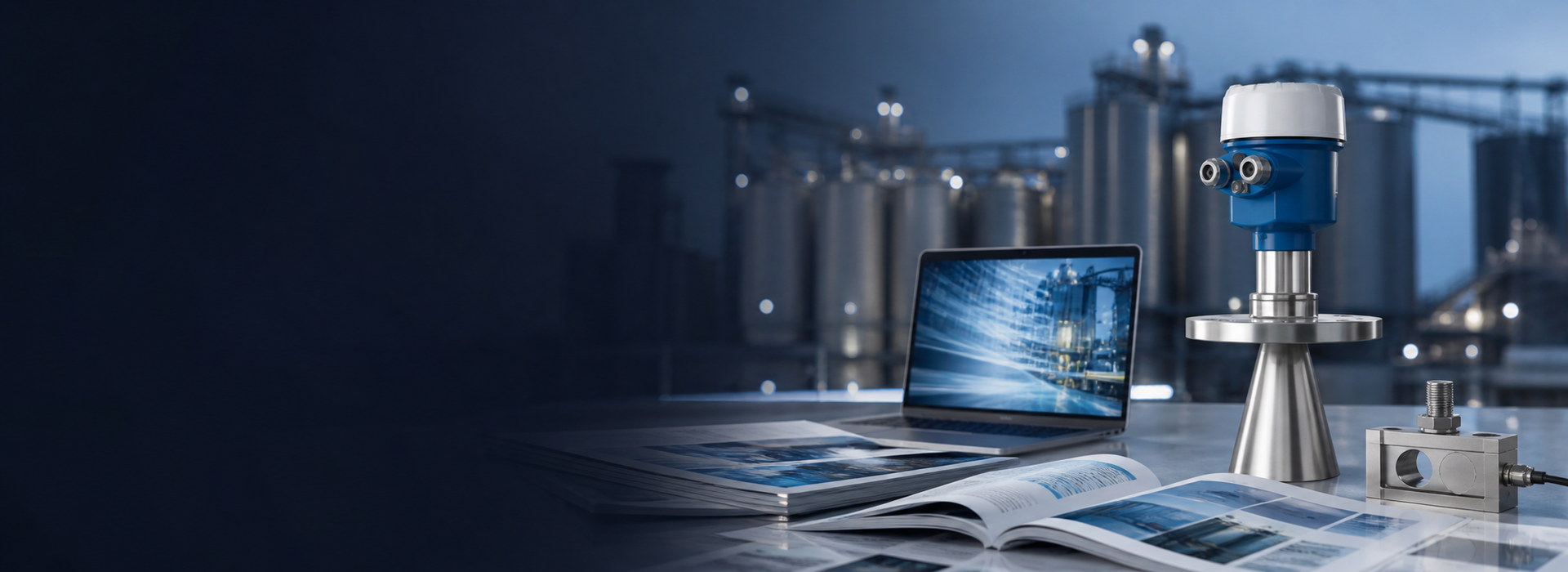
A failed or unreliable level signal does not automatically justify replacing the radar. Many apparent device faults come from buildup, a changed process, moved geometry, damaged wiring, insufficient loop voltage, wrong PLC scaling or communication problems. Conversely, repeated repair can be poor value when electronics are obsolete, seals are compromised or the installed technology no longer fits the duty. The decision should preserve as-found evidence, identify root cause, compare technically complete options and define how either repair or replacement will be recommissioned and monitored.
Capture the as-found condition
Before reset, cleaning or removal, record symptoms, time, process state, local distance, diagnostics, echo curve, output, system tag, quality, alarm history and configuration. Photograph the antenna, nozzle, enclosure and wiring. Preserve serial and firmware information. Intermittent evidence lost during an early reset may be impossible to reproduce and can lead to unnecessary hardware replacement.
Separate the fault layers
Check process and surface changes, mechanical geometry and buildup, power and wiring, configuration and echo selection, analog or digital interface, PLC scaling and control logic. Trace the point at which field and downstream values diverge. Change one variable at a time. A known-good replacement head cannot correct a false echo from a modified nozzle or a reversed software range.
Verify current application fit
Update medium, temperature, pressure, vapour, foam, dust, range, fill rate, hazardous requirements and control duty. Compare them with the installed model and assembly. A unit may be healthy but no longer suitable after process change. Identify whether an independent protection function or certification boundary affects the decision.
Assess repair feasibility
Identify the proven failed part, authorized repair method, compatible spares, seal and pressure-boundary implications, firmware and required tests. Confirm that opening or mixing assemblies does not invalidate approvals. Include downtime, access, specialist tools and likelihood of recurrence. A low-cost board repair is not acceptable if the root cause remains moisture ingress or thermal overload.
Assess replacement scope
Compare process connection, reference plane, antenna or probe, materials, rating, output, fault current, protocol, configuration tools and approvals. Include adapters, cabling, control-system changes, documentation and training. Treat the replacement as a retrofit and define rollback. Similar appearance or range is not evidence of interchangeability.
Compare risk and lifecycle cost
Evaluate outage consequence, repair lead time, spare availability, obsolescence, repeat-failure probability, maintenance demand and residual uncertainty. Use a decision record that states why the chosen option addresses root cause and what would invalidate the decision. If action is deferred, define monitoring, spares and response controls.
Recommission and follow up
After repair or replacement, verify identity, pressure and materials, geometry, wiring, configuration, known levels, output, PLC or DCS value, alarms, faults and recovery. Retain before-and-after evidence and restore bypasses. Review performance after representative service and reopen the root-cause analysis if expected improvement is not achieved.
Use a repair-versus-replace scorecard
Summarize root-cause confidence, application fit, pressure and certification impact, spare support, downtime, recurrence risk, total installed cost and recommissioning effort for each option. Weight safety and availability above purchase price where appropriate. Record the evidence behind each score and the approver. The scorecard does not replace engineering judgment; it exposes the assumptions and prevents a familiar replacement model or a low repair quote from becoming the decision without considering the full measurement and lifecycle boundary.
Engineering checklist
- Preserve diagnostics before intervention.
- Locate the fault across process-to-system layers.
- Revalidate the current application.
- Confirm authorized repair and compatible spares.
- Treat replacement as a full retrofit.
- Verify performance after representative service.
Frequently asked questions
When should hardware be replaced immediately?
When a proven unsafe, incompatible or unrepairable condition requires it under the site's risk and authorization process.
Can replacement close an unknown root cause?
No. Without evidence, the same process, installation or system fault may recur.
What belongs in the decision record?
Fault evidence, duty, options, cost, downtime, risk, residual uncertainty, approval and follow-up test.
Need a project-specific review? Send process data, drawings, photographs and acceptance criteria through our contact page.