Chinese
 Spanish
 Russian
 Portuguese
 French
 German
 Indonesian
 Thai
Thai Vietnamese
 Arabic
 Italian
 Turkish
 Polish
 Japanese
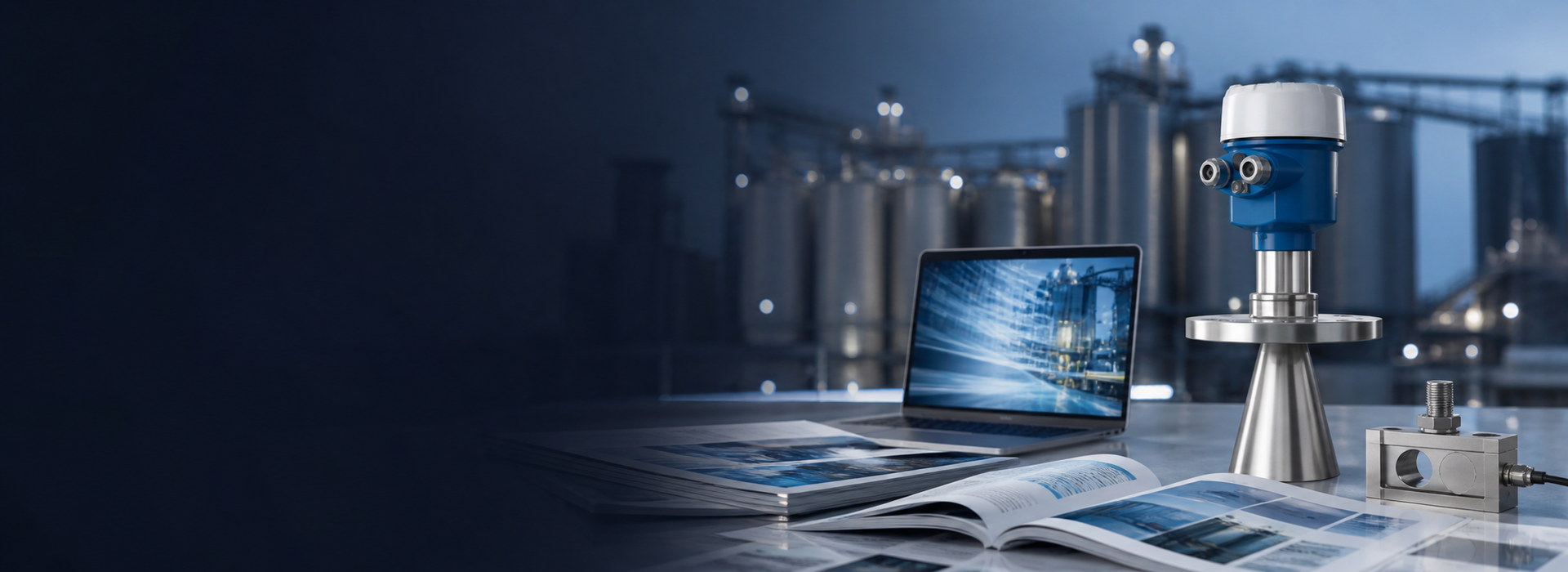
Water and wastewater level monitoring connects a difficult process environment to pump control, overflow alarms, remote telemetry and operating records. Wet wells may contain foam, grease, ragging, turbulent inflow and corrosive gas; clean-water tanks may be remote and exposed to lightning, flooding and power loss. Radar, ultrasonic and hydrostatic sensors each have useful applications and different failure modes. The system specification should define not only level range and accuracy, but also sensor faults, stale communications, local fallback, independent alarms and safe maintenance. A reliable value is one that operators can trust through normal and abnormal conditions.
Characterize each monitoring point
Record tank or wet-well geometry, minimum and maximum levels, inlets, pumps, ladders, covers and access. Describe water quality, solids, foam, grease, chemicals, temperature and gas exposure.
State whether the value controls pumps, reports storage, triggers overflow response or supports regulation. Consequence determines redundancy, independence and testing.
Compare level technologies
Non-contact radar avoids submerged fouling and is often robust in vapour, but geometry, condensation and obstructions matter. Ultrasonic sensors need a clear acoustic path and temperature compensation.
Hydrostatic probes suit deep or narrow wells but depend on density, venting, cable integrity and sediment position. A float switch may remain useful as independent high-high or low-low protection.
Design pump control deliberately
Define start, stop, duty rotation, standby start, high and low alarms, minimum run time and anti-cycle delay. Check the sequence against inflow and pump capacities.
Specify response to sensor fault, contradictory switches and implausible rate of change. Manual mode should be controlled and visible, not a hidden permanent bypass.
Engineer remote telemetry
Select power, gateway, cellular or wired communications, antenna, protocol and cybersecurity responsibilities. Provide local timestamping and buffering when links are unreliable.
Display communication loss and data age. A stale level must not look like a live safe condition, and critical local control should not depend solely on a remote cloud connection.
Protect installation and access
Use suitable materials, enclosures, glands, surge protection, grounding and cable routes. Consider flooding elevation, condensation, corrosive gas and confined-space restrictions.
Provide safe cleaning, removal and reference-check methods. Avoid maintenance tasks that require unnecessary entry or exposure to untreated wastewater.
Commission the full response
Verify sensor, PLC and remote values against a known datum at representative levels. Test pump sequences, alarms, power failure, communication loss and sensor faults.
Record configurations, alarm setpoints, data latency and final actions. Revalidate after geometry, pump, sensor, telemetry or logic changes.
Define operating and maintenance ownership
Assign responsibility for sensor cleaning, pump-control settings, telemetry, alarm response and data review. Set escalation rules for repeated high levels, long pump runs or inconsistent redundant signals.
Use maintenance records to distinguish process problems from instrument problems. Foam, blocked pumps, ragging and changed inflow can all produce abnormal trends even when the sensor remains healthy. Review those trends jointly before changing sensor configuration or alarm logic in service.
Engineering checklist
- Characterize every tank or wet well.
- Compare radar, ultrasonic and hydrostatic limits.
- Define pump and independent alarm logic.
- Flag stale and lost communications.
- Protect against flooding and lightning.
- Test local and remote behavior end to end.
Frequently asked questions
Which sensor is best for a wastewater wet well?
Radar or hydrostatic sensing is common, but foam, solids, geometry, maintenance and required protection determine the choice.
Should pumps stop when telemetry fails?
Local control should follow a documented safe strategy and normally should not depend only on the remote link.
How is stale data prevented?
Transmit timestamps, monitor heartbeat or update age, and alarm when data exceeds the permitted age.
Need a project-specific review? Send process data, drawings, photographs and acceptance criteria through our contact page.