Chinese
 Spanish
 Russian
 Portuguese
 French
 German
 Indonesian
 Thai
Thai Vietnamese
 Arabic
 Italian
 Turkish
 Polish
 Japanese
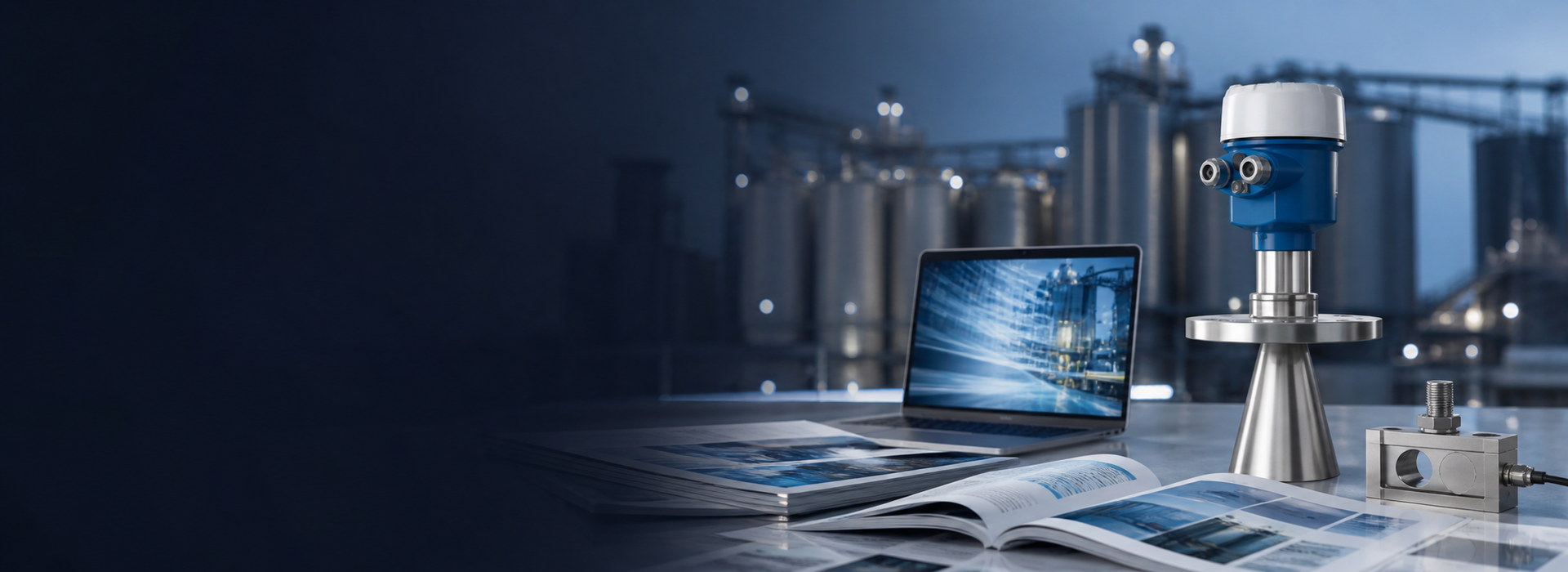
Liquid level can be measured by non-contact radar or ultrasonic instruments, guided-wave radar, hydrostatic pressure, differential pressure, capacitance, magnetostrictive or magnetic-float gauges, displacers and point-level switches. These are not equivalent ways to produce the same number. Each responds to different physical properties and installation constraints. Selection begins with the decision the measurement supports: inventory, process control, pump protection, overfill alarm, custody indication or interface measurement. Then define liquid composition, density, dielectric constant, conductivity, viscosity, foam, vapour, temperature, pressure, agitation, solids and coating. Geometry, nozzles, internals, dead zones, reference datum and maintenance access can eliminate an otherwise attractive technology. A reliable specification states both normal performance and credible failure behavior.
Compare non-contact technologies
Radar measures electromagnetic echo and is generally less affected by vapour temperature and pressure than acoustic methods. Antenna, frequency, dielectric response, condensation, nozzle and false echoes still require review.
Ultrasonic sensors can be economical for open tanks and water service, but vapour composition, temperature gradients, foam, turbulence and obstructions influence the sound path. Both methods need a clear measuring geometry.
Assess contact and pressure-based methods
Guided-wave radar follows a probe and can handle narrow spaces or interface duties when probe mechanics and buildup are acceptable. Capacitance responds to dielectric change and needs stable electrical conditions and controlled coating.
Hydrostatic and differential-pressure methods infer level from pressure, so density, vapour pressure, impulse lines, capillaries and reference elevation enter the result. They remain useful when these variables are understood.
Separate continuous measurement from point protection
A transmitter provides a changing value for control and trending. Float, tuning-fork, capacitance, conductive or other point switches provide discrete high or low states with different proof-test needs.
Consequential overfill or dry-run protection may justify an independent switch rather than relying only on the control transmitter, PLC channel and shared power source. Architecture should follow the risk assessment.
Use process and geometry data
Provide vessel drawings, minimum and maximum level, nozzle size and length, inlets, agitators, coils, ladders and access. State the measurement datum and required blocking or dead zone.
Describe startup, cleaning, vacuum, pressure cycles and abnormal conditions. Technology that works during steady production may lose validity during filling, steam cleaning or an empty-vessel condition.
Specify outputs and diagnostics
Define 4–20 mA, HART, fieldbus, relay or digital communications, along with scaling, update rate, fault current and local indication. Confirm hazardous-area and functional-safety requirements where applicable.
Require useful diagnostics such as echo quality, probe condition, input fault or out-of-range status. The control system must distinguish invalid data from a legitimate process level.
Validate installation and maintenance
Review application data with the supplier, document assumptions and verify the installed reference dimensions. Commission at known points and test alarms and final actions through the receiving system.
Plan cleaning, inspection, proof testing and safe removal. Reassess the technology after product, density, temperature, pressure, nozzle, internals or control-duty changes. Retain the original selection assumptions so later engineers can distinguish configuration drift from a genuine instrument fault.
Engineering checklist
- Define the control or protection duty.
- Document liquid properties and abnormal conditions.
- Compare measurement physics, not product names.
- Provide vessel geometry and one datum.
- Specify diagnostics and fault handling.
- Commission and maintain the complete loop.
Frequently asked questions
Which sensor type is most accurate?
Accuracy depends on process variables, geometry, installation and calibration; no technology is universally best.
Is radar suitable for every liquid?
No. Low dielectric response, difficult nozzles, buildup and obstructions can still limit performance.
Do I need both a transmitter and a switch?
Possibly, when independent high or low protection is required by the process risk.
Need a project-specific review? Send process data, drawings, photographs and acceptance criteria through our contact page.