


 Chinese
 Spanish
 Russian
 Portuguese
 French
 German
 Indonesian
 Thai
 Vietnamese
 Arabic
 Italian
 Turkish
 Polish
 Japanese

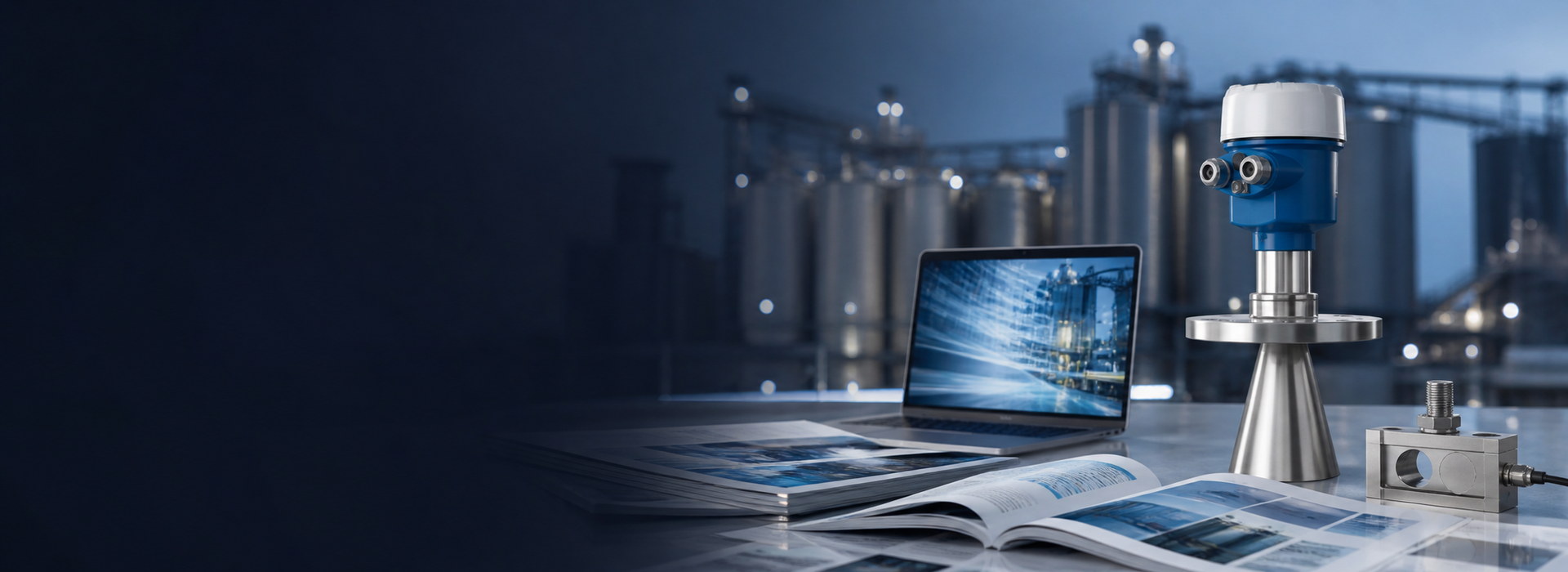
Pharmaceutical tank level measurement begins with an equipment requirement, not a radar range. The process owner must establish whether the signal is used for stock visibility, a transfer permissive or a batch record, and which construction and verification documents are required. A general-purpose liquid radar specification does not demonstrate suitability for a hygienic or aseptic process.
Resolve the Documentation Gaps Before Ordering
List the fluids and every exposure that reaches the process interface, including cleaning and any sterilisation cycle. Ask for the exact offered assembly rather than reviewing a family brochure. The drawing should identify the antenna, seal, connection, any adaptor and the areas exposed to the process.
| Review | Evidence | Hold point |
|---|---|---|
| Construction | Assembly drawing and specified process-facing materials. | Do not approve an unidentified seal or an unreviewed adaptor. |
| Cleaning | Compatibility and geometry review for the actual cleaning sequence. | A temperature rating alone does not establish cleanability. |
| Measurement | Defined target, operating range and agreed comparison method. | Do not treat a catalogue accuracy as completed site verification. |
| Records | Defined tags, units, timestamps, status and change records. | A transmitted number alone is not a complete batch record. |
The plant's quality and engineering teams should define the required approvals and acceptance evidence. If the supplier cannot provide an essential construction detail or document, leave the application unapproved and review another arrangement. Do not replace missing evidence with a statement that non-contact measurement is inherently suitable.
Pharmaceutical Tank Level Measurement: Assess the Radar as a Component
The METRAVON MV-RD12 product page documents a 32 mm PTFE lens, a 0.1-30 m liquid measuring interval and threaded or flanged connection choices. Those are component selection facts. They do not establish a hygienic connection, a surface-finish requirement, sterilisation compatibility or qualification of the installed system.
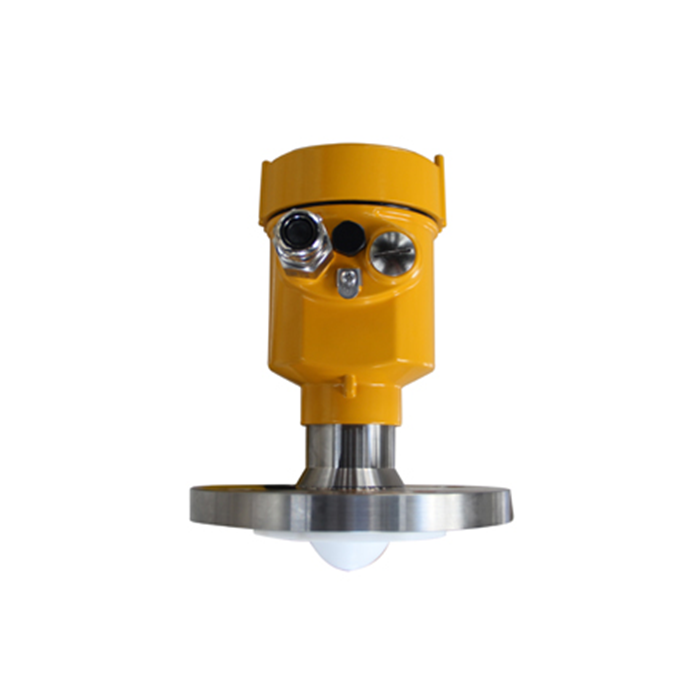
The high-temperature MV-RD12G is not a shortcut around those requirements. Its different thermal assembly may address a temperature constraint, but it cannot establish the acceptability of a process connection or cleaning cycle by itself. Request the permissible pressure-temperature combination and chemical compatibility for the proposed configuration.
For the measurement path, show spray devices, agitators, baffles and the smallest air gap above the liquid. Include operating modes that create foam or condensation. An instrument that agrees with a reference in a stationary water test still needs its intended process states assessed.
Define the Data Before Connecting the Batch System
Identify whether the receiving system stores distance, level, percentage or calculated volume. Keep the reference datum and conversion version with the configuration. For a two-wire 4-20 mA/HART installation, check the receiver scaling and fault-current handling. If RS485/Modbus RTU is selected, confirm the supplied register definitions, units and invalid-data indications rather than assuming they match an existing device.
Specify where timestamps originate and how unavailable measurements are represented. A held value must be distinguishable from a fresh observation. If level is converted to quantity, validate the vessel relationship separately; do not report more confidence in batch quantity than the complete calculation supports.
Agree on an Acceptance Sequence
- Match the delivered identification and assembly to the approved order and drawings before installation.
- Establish the measurement datum and compare known surface positions within the intended operating interval.
- Verify the same values, units and invalid states at the receiving system, including a controlled signal interruption.
- Observe the approved process and cleaning transitions. Record any conditions excluded from valid measurement and the criteria for returning to service.
Keep parameter backups and the results with the installed configuration. Changes to seals, nozzle adaptors, firmware, scaling or cleaning exposure should be assessed against that baseline, rather than treated as equivalent solely because the model name is unchanged.
Specification Questions
Q1. Does a PTFE lens establish pharmaceutical compliance?
No. Lens material is only one construction detail. The intended duty may require evidence about the complete process interface, manufacturing details, cleaning and records. Obtain the documents identified by the project quality team for the actual supplied assembly.
Q2. Can the transmitter alone provide a qualified batch record?
No. The record also depends on the receiving software, tag assignment, conversions, timestamps, access controls and the project's verification requirements. Agree on that system scope separately from the instrument supply.
Summary
A technically plausible radar remains a candidate until construction, process behaviour and data use are supported by evidence. Submit the tank measurement requirements and required document list for a feasibility review. Confirm unresolved requirements before procurement rather than trying to close them after installation.
