Chinese
 Spanish
 Russian
 Portuguese
 French
 German
 Indonesian
 Thai
Thai Vietnamese
 Arabic
 Italian
 Turkish
 Polish
 Japanese
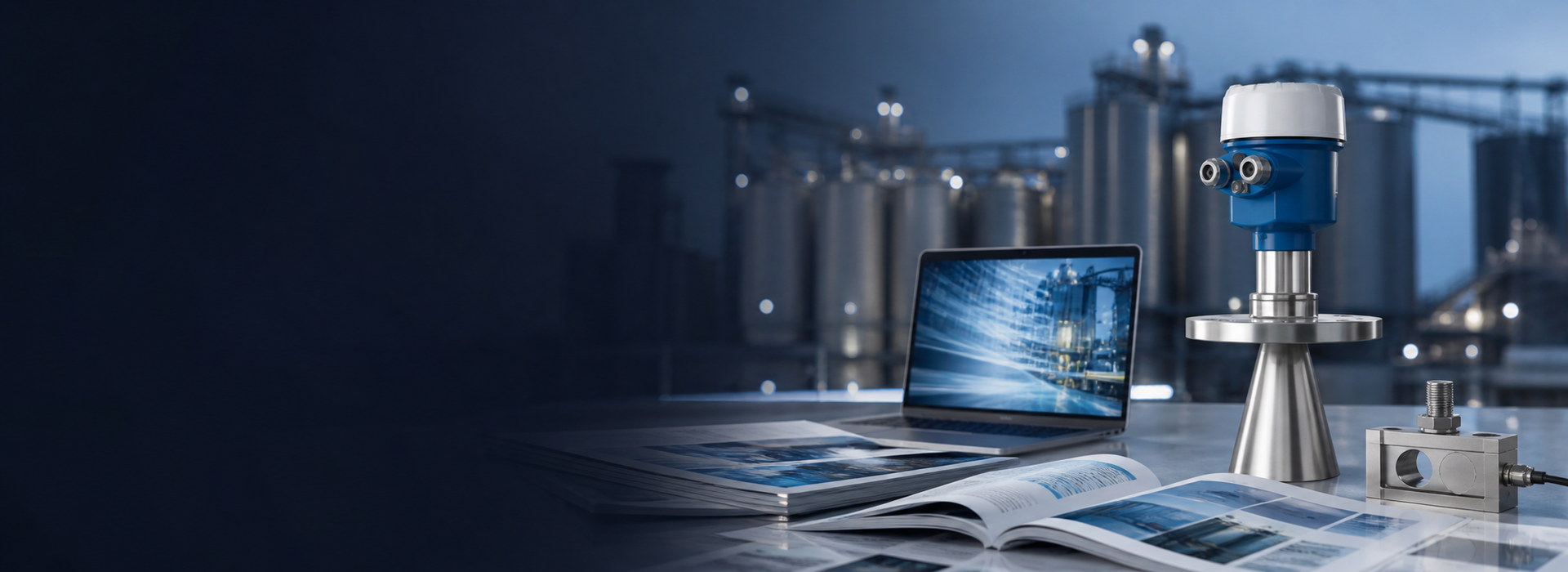
Load cell type should be selected from the mechanical force path and installation constraints, not from capacity alone. Single-point cells compensate platform eccentricity within a stated size and suit compact scales. Shear-beam cells support floor scales, hoppers and process vessels when mounts control side load and thermal movement. Compression and column cells cover high-capacity vertical loads but require aligned, stiff structures and suitable restraint. S-type cells measure tension or compression inline, while load pins replace structural pins in clevises or sheaves. Button and pancake designs fit restricted spaces but are sensitive to surface alignment and parasitic loads. Multi-axis sensors are appropriate only when several force and moment components must be separated. Before choosing, define tension, compression, bending, shear and torque components for normal and fault cases. Include dead load, eccentricity, impact, fatigue, uplift and side force. State minimum useful load and system uncertainty so an unnecessarily large capacity does not reduce resolution. Review temperature, washdown, corrosion, hazardous areas, cable routing and calibration access. The selected family then needs an engineered mount; a high-accuracy certificate cannot compensate for an uncontrolled load path.
Single-point load cells
Use them for one-cell platforms within the approved platform size and eccentric-load envelope. Provide rigid top and base plates.
They simplify small scales but are not automatically suitable for large hoppers, strong side loads or platforms outside the compensated geometry.
Shear-beam and bending-beam cells
Use beam cells for medium-capacity platforms, vessels and conveyors with mounts that introduce vertical load and permit controlled movement.
Check fixed and live ends, base flatness, bearing or foot alignment, side restraint and overload-stop clearance.
Compression and column cells
Use compression cells for high-capacity silos, tanks, presses and test machines. Keep load concentric and provide uplift or lateral restraint separately.
Structure stiffness and support elevation determine distribution. Dome, rocker or mounting accessories must match the approved load introduction.
S-type, tension and load-pin cells
Use S-type cells in inline tension or compression with aligned rod ends; prevent cable twist and bending moments.
Load pins fit existing pivots but require exact bearing geometry, shear-plane alignment, anti-rotation and representative calibration.
Low-profile and multi-axis designs
Button, pancake and force-washer sensors solve height constraints but need hard, flat interfaces and control of parallel load paths.
Choose multi-axis cells only with defined coordinates, combined-load envelopes, synchronized electronics and calibration matrices.
Complete the system selection
Match mV/V output, excitation, bridge resistance, junction boxes, amplifiers and communications. Protect cables and define fault diagnostics.
Plan traceable calibration of the installed system, including repeatability and corner checks. Reassess after structural, mounting, piping or electronics changes.
Engineering checklist
- Start from the actual force path.
- Compare single-point, shear beam, compression and S-type load cells against the real structure and required direction of force.
- Include side load, uplift, impact and fatigue.
- Protect resolution at minimum useful load.
- Use mounting hardware designed for the cell type.
- Match environment and signal conditioning.
- Calibrate the complete installed structure.
- Document why rejected load-cell families were excluded, especially platform size, alignment, lateral restraint, fatigue, washdown and safe replacement constraints.
- Verify the selected electronics can excite the total bridge resistance, preserve resolution and report a distinguishable sensor or cable fault.
- Include the mounting assembly, junction box, cable protection, calibration method and replacement access in the comparison, not just the sensing element price.
Frequently asked questions
Which load cell type is most accurate?
No type is universally best; installed accuracy depends on matching the force path, mount, environment and electronics.
Can a compression cell measure tension?
Not unless specifically designed and mounted for bidirectional force; ordinary compression cells must remain in compression.
Why does platform size matter for a single-point cell?
Its eccentric-load compensation is validated only within a defined platform geometry.
Need a project-specific review? Send process data, drawings, photographs and acceptance criteria through our contact page.