Chinese
 Spanish
 Russian
 Portuguese
 French
 German
 Indonesian
 Thai
Thai Vietnamese
 Arabic
 Italian
 Turkish
 Polish
 Japanese
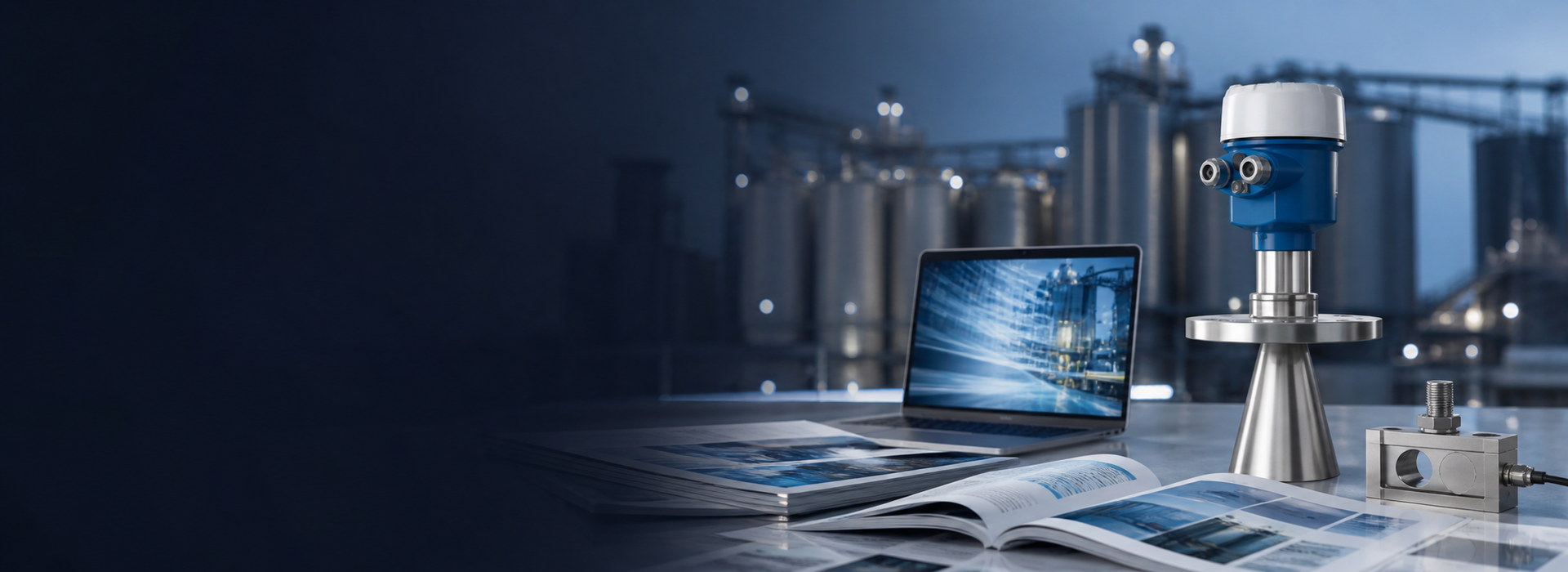
Industrial water level measurement may support pump sequencing, overflow prevention, dry-run protection, reservoir operations, well monitoring or regulatory records. The correct sensor depends on the installation and required decision, not on the word water alone. Begin with the vessel or channel geometry, level range, reference datum, temperature, pressure, vapour, foam, turbulence, sediment, flooding and access. Non-contact radar avoids wetting and density effects; hydrostatic sensors fit wells and submerged points but depend on density and atmospheric reference; ultrasonic instruments can be economical when the acoustic path is clear. A float or point switch may remain valuable as independent protection. Define how the receiving PLC or telemetry system handles faults, stale data and communications loss before selecting output and power.
Define the water and measurement duty
State clean, potable, wastewater, process water, brine or floodwater service and identify solids, oil, foam, chemicals and temperature variation. These conditions affect materials and measurement physics.
Specify continuous level, inventory, pump control, trend or alarm. Give the allowable error, response time and consequence of a missed high or low condition.
Compare suitable technologies
Radar measures distance without contact and is usually robust against temperature and pressure changes, but mounting, nozzle, condensation and obstructions still matter.
Hydrostatic measurement suits wells and sumps when density is stable and the vent or absolute-pressure compensation is controlled. Ultrasonic performance depends on vapour, temperature and a clear sound path.
Control geometry and datum
Draw the tank, well or reservoir, sensor position, highest level, dead zone, inlets, pumps, ladders and structural obstructions. Use one reference datum in drawings, scaling and alarms.
For open water, tie elevation to a durable surveyed benchmark. For tanks, document nozzle height and sensor reference plane so replacement settings can be reconstructed.
Design for environment and maintenance
Check outdoor temperature, sunlight, lightning, flooding, condensation, corrosion, washdown and cable exposure. Submersible cables and seals need controlled terminations and strain relief.
Provide safe access for cleaning, removal and reference checks. A sensor installed over a confined space requires an inspection method that does not create unnecessary entry risk.
Integrate pumps, alarms and telemetry
Define 4–20 mA or digital scaling, fault current, filtering, local indication and alarm hysteresis. Keep independent high-high or low-low protection where risk requires it.
For remote sites, specify timestamping, local buffering, battery or backup power, communication-loss alarms and stale-data indication. Old data must not appear current.
Set diagnostic and revalidation rules
Define the response to an out-of-range signal, lost echo, blocked pressure port, damaged cable or flat-lined value. Operators need a distinguishable instrument fault rather than a believable but invalid level.
Set comparison checks against a sight gauge, surveyed mark or manual dip where safe. Repeat them after sensor replacement, datum changes, severe flooding, lightning damage or unexplained control events, and retain the results with configuration records.
Commission across representative levels
Verify sensor reading, PLC value, engineering units and alarms at known points. Record raw distance or pressure, reference level and environmental conditions.
Test pump starts, stops, duty rotation, overflow and failure responses through the final action. Revalidate after geometry, datum, sensor or control-logic changes.
Engineering checklist
- Define water quality and control purpose.
- Compare radar, hydrostatic and ultrasonic limitations.
- Use one controlled level datum.
- Design for weather, flooding and maintenance.
- Flag sensor and communication faults.
- Test the complete pump and alarm sequence.
Frequently asked questions
Which sensor is best for a water tank?
Radar or hydrostatic methods are common, but geometry, maintenance, accuracy and alarm architecture determine the best fit.
Can a pressure sensor report water elevation?
Yes when density, atmospheric reference, sensor elevation and conversion are controlled.
Should one transmitter provide the overfill trip?
Only when the risk assessment accepts that architecture; independent protection is often appropriate for consequential overfill.
Need a project-specific review? Send process data, drawings, photographs and acceptance criteria through our contact page.