


 Chinese
 Spanish
 Russian
 Portuguese
 French
 German
 Indonesian
 Thai
 Vietnamese
 Arabic
 Italian
 Turkish
 Polish
 Japanese


Industrial Tank Level Gauge Buying Guide: Radar, Ultrasonic, Clamp-On, Magnetic and Float
There is no universal best tank level gauge. Free-space radar suits many continuous non-contact duties; top-down ultrasound works in suitable gas environments; clamp-on ultrasound requires a viable acoustic path; magnetic indicators offer direct local indication; and float devices may be switches or continuous transmitters.
This purchasing guide evaluates measurand, medium, vessel interface, safety duty, automation and lifetime cost. It is a selection framework, not a repetition of each technology’s entire physics lesson.
First choose continuous measurement or point detection
Continuous level is for trends, inventory or process regulation. A point switch confirms a high/low/wet state. Magnetic indicators may offer transmitter options and some float devices measure continuously, but an ordinary float contact cannot report full-tank level from one state.
| Purchasing objective | Required function |
|---|---|
| Live level trend | Continuous level transmitter and compatible acquisition |
| Direct local indication | Magnetic indicator or on-instrument display |
| Full/empty alarm | Appropriate point detector and controller |
| Custody transfer | Standards-compliant complete tank gauging system, not a generic sensor claim |
Comparison of five measuring structures
| Technology | Strength | Key limitation |
|---|---|---|
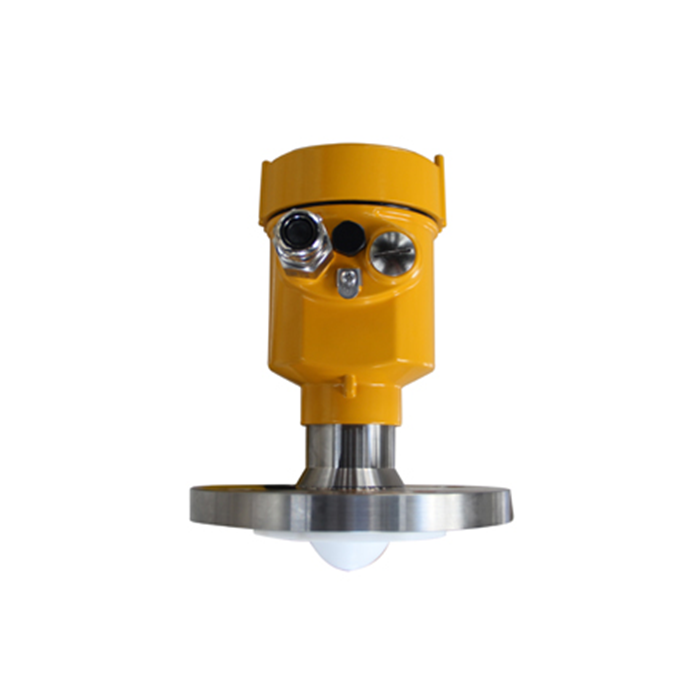
| Free-space radar | Continuous non-contact measurement; narrow-beam options | Foam, antenna buildup, low-dielectric returns, vessel echoes |
| Top-down ultrasound | Economical in suitable tanks and easy to install | Sound speed, vapor, gas gradients and blocking distance |
| External ultrasound | Can avoid a new nozzle on compatible vessels | Wall/lining, coupling, liquid sound speed; point vs continuous differs |
| Magnetic indicator | Direct indication, some versions passive | Needs bypass ports; plugging, density and float sticking |
| Float | Simple common point alarm mechanism | Moving parts, deposits, compatibility; some only switch |
Magnetic indicators are not universally resistant to viscous fouling, and float devices are not categorically excluded from corrosive service—verify actual materials and construction.
Choose candidates by actual duty
| Application | Candidates to examine | Key checks |
|---|---|---|
| Oil tank continuous level | Qualified free-space radar or tank-gauging system | Dielectric, foam, zoning, inventory vs custody transfer |
| Atmospheric water tank | Ultrasound or radar; float for simple points | Blocking distance, cost, output and servicing |
| Sealed solvent tank without spare nozzle | External acoustic feasibility study | Wall, lining, zoning, point vs continuous duty |
| Passive local indication | Magnetic level indicator | Density, bypass ports, corrosion and fouling |
| Wastewater sump | Radar, ultrasound or appropriate float | Foam, fibres, deposits and switching reliability |
| Critical high-high protection | Risk-designed independent protection layer | Certification, independence, testing and proof intervals |
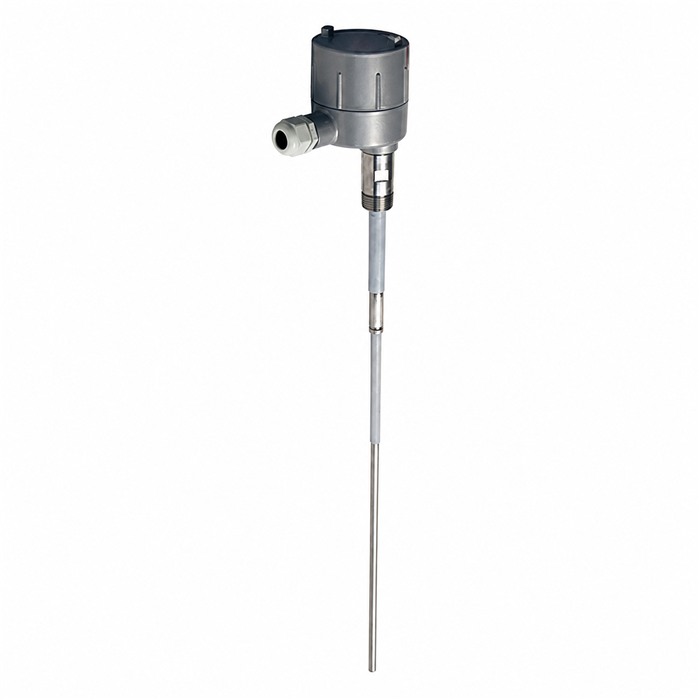
Start with METRAVON’s listed radar level meters and guided-wave radar where relevant. Comparing other technologies here is not a claim they are all confirmed METRAVON stock lines.
Three procurement mistakes: process, safety and communication
- Radar is not automatically rated for any temperature, pressure, explosion zone or custody-transfer standard; verify certificate scope.
- Clamp-on does not automatically mean zero plant leakage, intrinsic safety or compatibility with every tank wall.
- A passive magnetic indicator need not provide 4–20 mA, and a float switch is not a continuous meter.
- RS-485 is an electrical interface while Modbus RTU is a protocol; HART has loop requirements.
- A basic continuous-level alarm must not replace independent high-high protection without risk assessment.
Multi-site data acquisition can be assessed with METRAVON RTUs, subject to model-specific buffering, network and alert functions.
Level conversion, inventory and total cost
H = E − D
For a top-down non-contact instrument, E is reference-to-zero distance and D measured standoff.
Example: E = 6.0 m, D = 2.2 m, so H = 3.8 m.
Accurate level does not guarantee accurate stock volume. Geometry and strapping tables matter; custody transfer adds density/temperature corrections and metrology standards.
| Cost area | Frequently overlooked |
|---|---|
| Instrument | Options, certified versions, spares and transmitter accessories |
| Installation | Nozzles/flanges, shutdowns, brackets, cables and safe work |
| Commissioning | Software, PLC mapping, SAT and operator training |
| Maintenance | Cleaning, stuck floats, drift, spares and access |
Information for quotation and FAQ
For an accurate quote provide medium/composition, temperatures and pressures, tank height/diameter, minimum/maximum level, existing nozzles, continuous versus switch duty, local display, supply/telemetry, hazardous-area requirements, quantity and delivery timing. For retrofits attach the old model and wiring.

Q1. Is radar always more accurate than ultrasound?
No. Compare the specified performance of the candidate models under the actual mounting and process conditions. Ultrasound needs a suitable gas path; radar still needs a clear target and compatible antenna installation. A finer display increment does not establish better installed accuracy.
Q2. Is a magnetic indicator always power-free?
A basic local magnetic indication may operate without an electrical supply. A remote transmitter or electrical alarm fitted to the assembly may need power and separate wiring. List local indication, remote reading and alarm duties separately when requesting a quotation.
Q3. Can a float provide continuous measurement?
Yes, if the selected assembly is a continuous float transmitter rather than a point switch. Check float travel, density requirements, deposits and available installation space. A switch mounted at one elevation cannot provide a continuous level value to the control system.
Q4. Can a level gauge be used for custody transfer?
Do not accept a process-level accuracy figure as evidence of custody-transfer suitability. The project must establish the required metrological approvals and the complete quantity-measurement chain, including tank calibration and any necessary temperature or density corrections. Obtain documentation for the proposed configuration before purchase.
Pre-order decision: measurement duty versus protection duty
A project may require continuous indication, local mechanical reading, high-high protection and remote reporting at once. Separate these into requirements instead of asking one “high-accuracy gauge” to perform every duty.
| Required function | Procurement verification |
|---|---|
| Continuous process level | Span, installed accuracy, stability, interface and chemical compatibility |
| Local indication | Readability and whether display works without supply |
| High-high alarm | Independence, appropriate testing and qualification |
| Inventory / custody | Tank tables, density/temperature corrections and metrological acceptance |
| Remote operations | Acquisition, network/buffering, fault diagnostics and timestamps |
A complex tank may use continuous radar plus an independent point switch and an RTU or DCS, but the actual combination follows risk, physical interfaces and project requirements.
Request engineering selection and quotation from METRAVON
Provide medium, tank geometry, level span, temperature/pressure, nozzles/seals, local display and transmission needs, area classification and quantity. METRAVON can review its listed radar, guided-wave and data products; other technologies require availability confirmation.
Engineering email: Arvin@metravon.com
Phone / WhatsApp / WeChat: +86 153 6781 2163
