Chinese
 Spanish
 Russian
 Portuguese
 French
 German
 Indonesian
 Thai
Thai Vietnamese
 Arabic
 Italian
 Turkish
 Polish
 Japanese
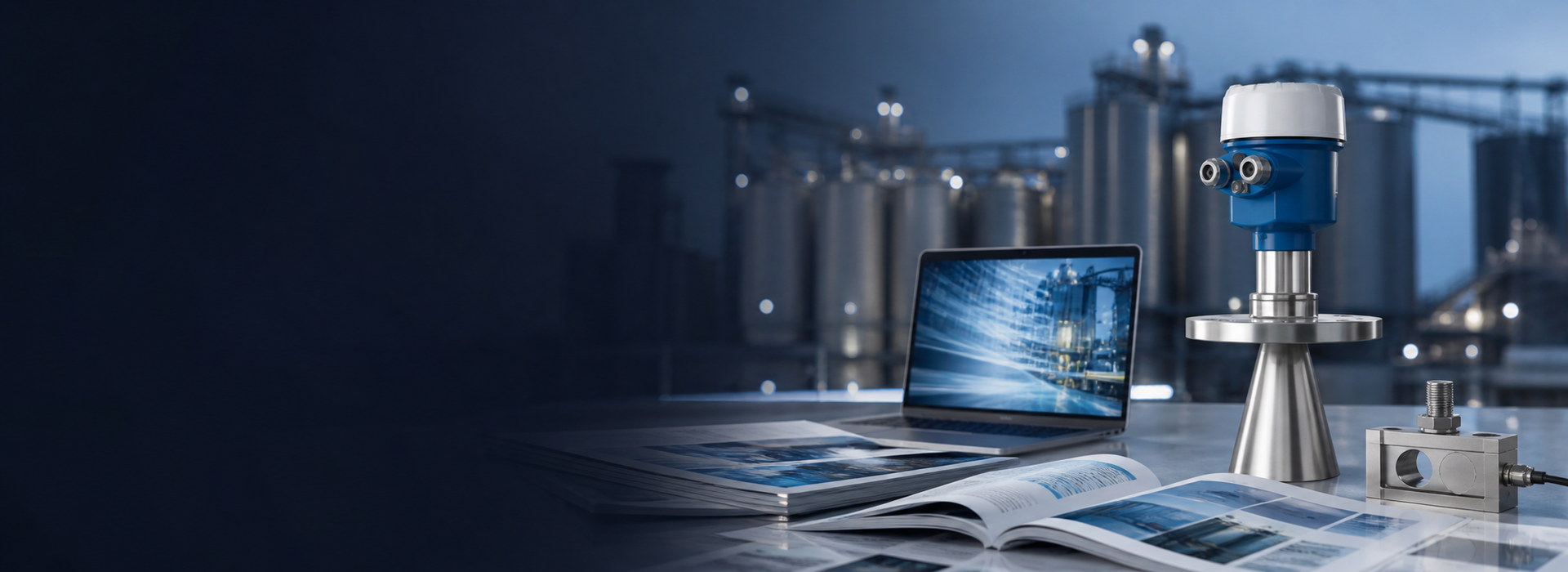
Chemical-tank radar level measurement avoids direct contact with the liquid at the antenna face in many designs, but the process seal, antenna, flange and enclosure still require material and safety review. Chemical identity, concentration, temperature, pressure, vapour, foam, dielectric response, crystallization and cleaning can affect measurement and mechanical integrity. Tank geometry and nozzle configuration determine the echo path, while hazardous-area and overfill requirements determine the wider architecture. Selection should be based on a process datasheet and compatibility evidence, not on a generic statement that radar works with corrosive liquids.
Build a complete chemical datasheet
List every product, concentration, contaminant, cleaning fluid and temperature range. Include vapour pressure, foam, agitation, solids and any tendency to polymerize or crystallize.
Provide normal and design pressure, vacuum, operating cycles and required accuracy. Identify inventory, control, transfer or independent protection duties.
Review wetted and exposed materials
Confirm process seal, antenna, flange, gasket and fasteners using manufacturer data and site compatibility practice. Consider vapour and condensate exposure above the liquid.
Do not infer compatibility from a broad material name. Concentration and temperature can change corrosion or permeation behavior, and cleaning media may be more aggressive than the product.
Control nozzle and internal echoes
Measure nozzle diameter, length, flange, weld intrusion and antenna position. Map agitators, coils, ladders, dip pipes, inlets and floating components.
Select beam angle and aiming to maintain clear sight to the surface. Evaluate stilling wells only when venting, material and maintenance are suitable.
Assess vapour, foam and condensation
Radar is less sensitive to vapour temperature than ultrasonic measurement, but heavy condensation, dense foam or low dielectric response can reduce signal quality or shift the returned interface.
Review echo curves for representative conditions and specify lost-echo handling. A last valid value must not appear current during a transfer or alarm duty.
Meet hazardous and overfill requirements
Verify exact hazardous-area marking, ambient limits, glands, barriers and grounding. Check pressure-boundary documentation and any functional-safety evidence required by the project.
Separate routine control from independent high-high protection when the risk assessment requires it. Define alarm response, shutdown, proof testing and bypass management.
Commission and preserve evidence
Verify reference plane, empty distance, span, blocking distance, output scaling and alarms. Capture echo curves at known or stable levels and compare local, PLC and inventory values.
Retain compatibility evidence, certificates, settings and as-left drawings. Revalidate after chemical, concentration, temperature, nozzle, internals or control-duty changes.
Complete a chemical-service management review
Link the instrument record to the current chemical compatibility assessment, safety data, inspection plan and change-control process. Define who reviews concentration or cleaning changes before they reach the tank.
Record the response to seal damage, leakage, unexpected corrosion and repeated echo loss. These events may require process isolation and materials review rather than another configuration adjustment. Set inspection triggers for product substitution, concentration increase, higher temperature and revised cleaning chemicals before service resumes after maintenance or process change with documented engineering approval.
Engineering checklist
- List all products and cleaning fluids.
- Verify materials at actual concentration and temperature.
- Survey nozzle and tank internals.
- Assess foam, condensation and signal margin.
- Confirm hazardous and overfill architecture.
- Record echo and loop acceptance evidence.
Frequently asked questions
Is radar completely non-contact?
The measurement is non-contact, but the process barrier and antenna assembly remain exposed to tank vapour and may contact condensate.
Can radar measure through foam?
Performance depends on foam density, dielectric contrast, frequency and signal processing; representative echo review is needed.
What data is needed for selection?
Provide chemical and cleaning data, tank drawing, pressure, temperature, range, nozzle, approvals and alarm duty.
Need a project-specific review? Send process data, drawings, photographs and acceptance criteria through our contact page.