


 Chinese
 Spanish
 Russian
 Portuguese
 French
 German
 Indonesian
 Thai
 Vietnamese
 Arabic
 Italian
 Turkish
 Polish
 Japanese


High-temperature high-pressure radar selection must use simultaneous pressure and temperature conditions. Taking the largest pressure from one option and the largest temperature from another can describe an assembly that has never been offered or approved.
Define Operating Pairs Instead of Separate Maxima
| State | Provide together | Review |
|---|---|---|
| Normal | Process pressure, temperature and medium at steady operation. | The connection, seal and probe or antenna must suit the same condition. |
| Startup | Heating sequence, pressure rise and surrounding temperature. | Transient heat paths may differ from the steady state. |
| Cleaning | Cleaning medium, pressure, temperature and duration. | The service envelope includes exposure outside normal production. |
| Shutdown | Cooling, vacuum if applicable, and retained process contents. | Seals and mounting must remain suitable through the complete cycle. |
High-Temperature High-Pressure Radar Selection With MV-RD705
The MV-RD705 is a guided wave liquid-level instrument. Its published options include temperatures up to 400 deg C, 20 MPa pressure options and a separately specified 40 MPa configuration. These references do not establish a universal 400 deg C at 40 MPa rating.
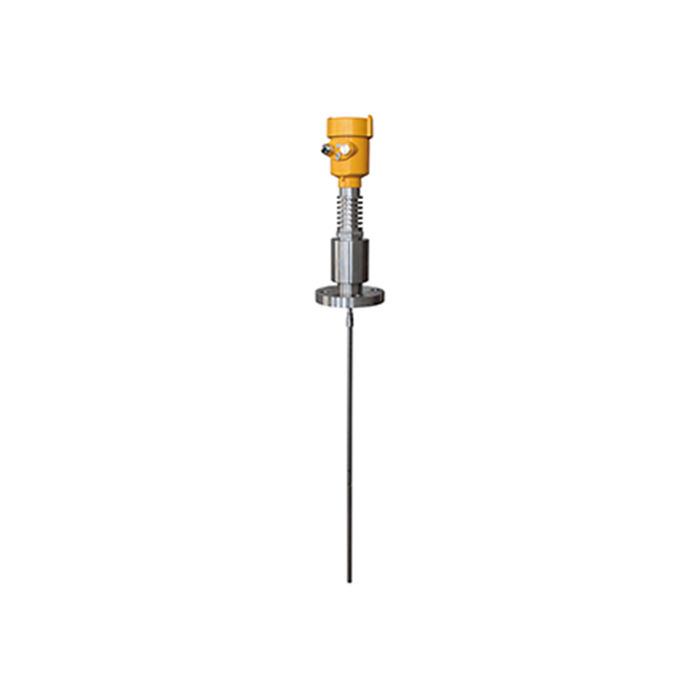
Request the process-connection standard, rating, seal construction, probe form and usable span on one controlled drawing. The published family range does not mean every rigid or flexible probe can be supplied at every length and rating.
Keep Pressure Integrity and Thermal Performance Separate
The vessel joint requires its own approved mechanical design and installation procedure. An instrument rating cannot compensate for a mismatched flange, gasket or adapter. Qualified personnel must follow the site's isolation and pressure-system procedures; a high rating never authorises loosening the connection in service.
Electronics have a separate ambient limit. Review insulation, nearby hot pipework and radiant heat around the enclosure. The thermal-extension review addresses that installation path rather than treating the process temperature as the housing limit.
Ask What the Radar Has to Measure in the Hot State
Steam or other gas-space conditions may require application-specific evaluation. Do not assume compensation is included merely because the product can withstand the process temperature. State whether the duty is surface level or another derived quantity and obtain the required configuration evidence.
Commission the reference and receiving loop before operation, then compare behaviour under representative hot conditions where safely practicable. Record actual pressure and temperature with the test. A cold electronics test does not prove hot-process measurement or long-term joint performance.
Pressure-Service Questions
Q1. Should the highest-rated option always be ordered?
No. Select the documented assembly that covers the required envelope and measurement duty. Extra family capability can add size or cost without solving nozzle, material or signal problems.
Q2. Does the high-temperature option establish cryogenic suitability?
No. Low-temperature duty needs its own material, seal and connection approval. Do not extend a temperature envelope beyond the documentation supplied for the ordered construction.
Summary
Approve a complete configuration at stated operating pairs. Request an MV-RD705 review with the pressure-temperature schedule and vessel connection drawing, listing any required compensation and documentation separately.
