Chinese
 Spanish
 Russian
 Portuguese
 French
 German
 Indonesian
 Thai
Thai Vietnamese
 Arabic
 Italian
 Turkish
 Polish
 Japanese
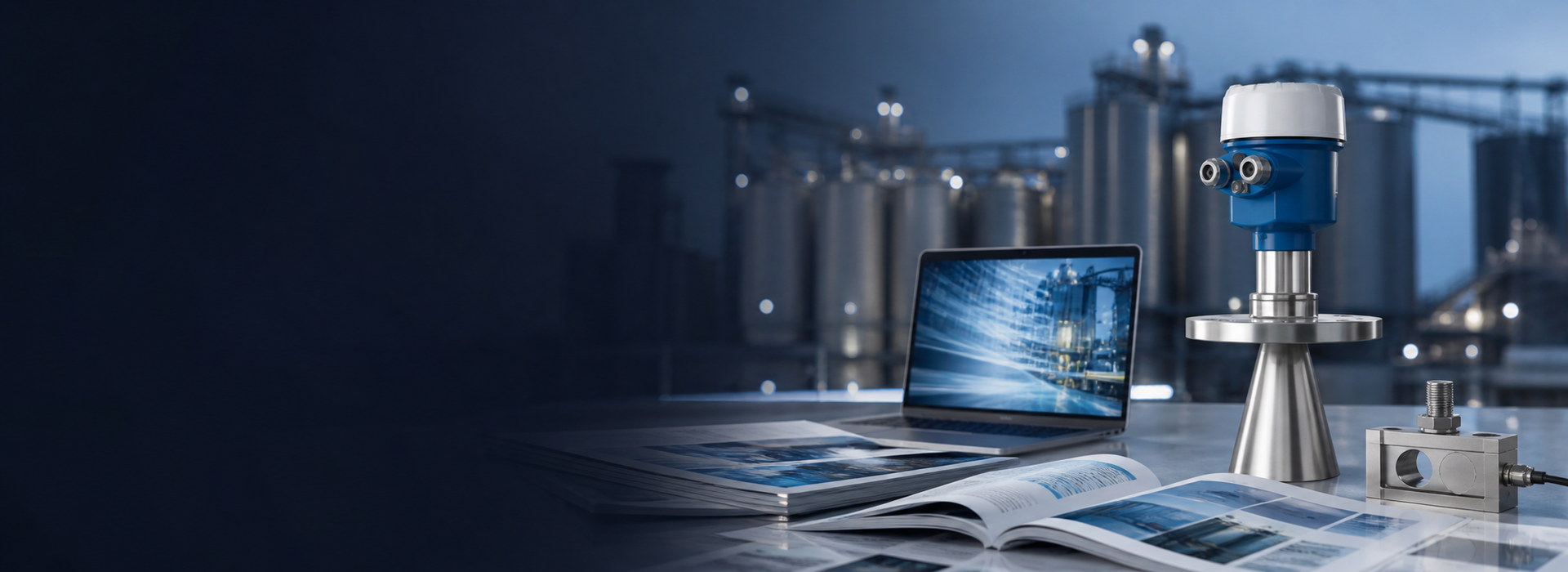
Water level sensor types should be compared against the measurement duty and site conditions rather than ranked universally. Non-contact radar measures distance and suits many tanks, channels and vessels where vapour, pressure or access make wetted sensors undesirable. Ultrasonic sensors also measure distance and can be economical in a clear, stable gas space, but temperature gradients, foam and condensation affect the acoustic path. Hydrostatic probes infer level from pressure and work well in wells, reservoirs and narrow tanks when water density and atmospheric compensation are controlled. Float switches provide simple point alarms or pump control but require free mechanical movement. Guided-wave radar follows a probe and can measure through some difficult vapour conditions, though coating, nozzle and probe mechanics matter. Conductivity and capacitance devices serve point or continuous duties when water properties and grounding are suitable. Define open or closed vessel, depth, pressure, water quality, foam, solids, freezing, access, power, output and hazardous classification. Separate continuous indication from independent high or low protection. Use one physical datum and a documented commissioning reference. The best technology is the one that remains testable and maintainable across credible operating states.
Radar and guided-wave radar
Use non-contact radar when a clear microwave path and suitable nozzle are available. Check internals, dielectric response and echo quality.
Use guided-wave radar where a probe is acceptable. Review coating, tensile load, clearance and interface requirements.
Ultrasonic measurement
Apply ultrasonic sensors in vented spaces with a clear beam and stable sound path. Keep maximum level below the dead zone.
Evaluate temperature gradients, steam, condensation and foam. Preserve echo diagnostics and do not force readings through invalid conditions.
Hydrostatic level probes
Use pressure measurement for wells, sumps and tanks when density is known. Define vented gauge or absolute compensation.
Protect the diaphragm, cable and vent from sludge, moisture and damage. Temperature and density changes become level error.
Float and point-level devices
Use floats for direct high, low or pump control where density provides buoyancy and movement remains unobstructed.
Check hysteresis, contact rating, coating and proof-test access. An external magnet test may bypass a stuck float.
Compare installation and lifecycle
Assess vessel modification, cable route, power, surge protection, cleaning, access and replacement rather than sensor price alone.
Match materials, enclosure and certification to water quality, pressure, washdown and location. Include spare and calibration strategy.
Commission from one datum
Verify known low, middle and high points and separate level accuracy from tank-volume conversion.
Record raw distance or pressure, scaling, alarms and control action. Recheck after relocation, geometry, density or process changes.
Engineering checklist
- Define continuous and point-level duties.
- Compare technology against vessel geometry.
- Include foam, solids, vapour and freezing.
- Use one documented reference datum.
- Evaluate maintenance and proof-test access.
- Verify alarms through final control action.
- Record why unsuitable technologies were rejected so later replacements do not repeat the same application error.
Frequently asked questions
Which water level sensor is most accurate?
Accuracy depends on application, installation and reference; no technology is best in every tank, well or channel.
Does hydrostatic level depend on density?
Yes. Pressure is converted to level using density, so temperature or composition changes can create error.
Why use a separate high-level switch?
It can provide protection independent of the continuous transmitter when the risk assessment requires it.
Need a project-specific review? Send process data, drawings, photographs and acceptance criteria through our contact page.
For remote water assets, compare data availability as well as nominal accuracy. A highly accurate sensor without surge protection, accessible maintenance or reliable telemetry may provide less useful information than a robust instrument with clear diagnostics. Specify local indication, stored data, communication retry, timestamp quality and behaviour during network outages so operators can distinguish a true level change from delayed reporting.