Chinese
 Spanish
 Russian
 Portuguese
 French
 German
 Indonesian
 Thai
Thai Vietnamese
 Arabic
 Italian
 Turkish
 Polish
 Japanese
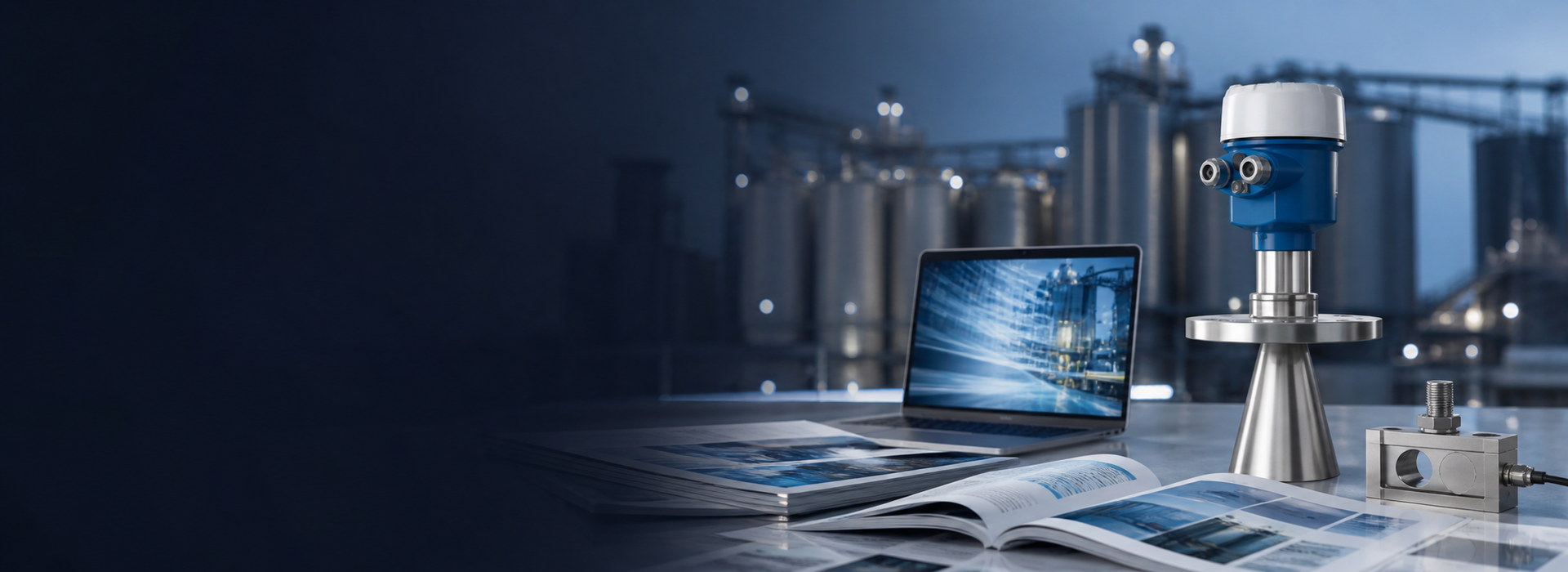
A tuning-fork level switch detects a change in vibration when liquid or bulk solid covers the fork. It has no moving drive mechanism, but its suitability still depends on density, viscosity, particle behaviour, coating and installation. Liquid and solids forks are not interchangeable by appearance. The fork must be located at the true switching elevation, clear of inlet impact and able to drain or shed material. For pump or overfill protection, the design must also define fail-safe output, fault response and an end-to-end proof test. Supply the exact product, minimum density, temperature, pressure and expected deposits with a vessel drawing. Describe whether the switch operates normally covered or uncovered and the consequence of a false trip or missed trip. For hygienic or aggressive service, include cleaning cycles and every exposed seal material. The selected delay must follow actual process dynamics; it should not be used to conceal unstable mounting, impact or heavy coating.
Select the correct application family
State liquid, slurry, powder or granule service and verify the model is designed for that medium. Record minimum density, viscosity, particle size and temperature.
Include foam, aeration, crystals and deposits. A fork may ignore light foam but this must match the intended measurand rather than being treated as universally beneficial.
Locate the switching point
Use the manufacturer's reference mark and insertion dimensions to establish the true trip elevation. Account for process connection and wall thickness.
Keep the fork away from fill jets, agitators and product flow that can create force or false switching. Orient the tines as specified for drainage or solids flow.
Verify materials and process seal
Check fork, seal, gasket, flange or thread against liquid, vapour, cleaning chemicals, temperature and pressure. Hygienic duties require suitable finish and cleanable installation.
Avoid a pocket where product remains after draining. Confirm whether buildup compensation covers the actual deposit rather than assuming any coated fork remains reliable.
Configure fail-safe behaviour
Specify high-level or low-level duty, relay or electronic output, normal state and fault current. Choose fail-safe mode so loss of power drives the approved alarm or trip state.
Use device diagnostics where available and distinguish covered, uncovered and fault conditions in the PLC. Document restart logic after a trip.
Separate control and protection
A fork can provide a robust independent point measurement, but independence depends on power, mounting, logic and final element as well as sensor technology.
Calculate stopping margin for high-high duty and remaining demand for low-low pump protection. Test valves, pumps, conveyors and alarms through the complete path.
Commission representative conditions
Verify dry and covered states using actual process material where safe. Test filling, draining, foam, deposits, wiring fault, power loss and recovery.
Record set mode, delay and as-left result. Inspect fork damage, coating and connection tightness and set proof-test intervals from risk and service evidence. Preserve as-found observations before cleaning so buildup-related failures are not erased from the maintenance record.
Engineering checklist
- Choose a liquid or solids fork deliberately.
- Verify density, viscosity and coating limits.
- Install at the true reference elevation.
- Define fail-safe and diagnostic states.
- Calculate high or low protection margins.
- Proof-test the complete action path.
- Record representative process material used during testing.
Frequently asked questions
Can one tuning fork measure continuous level?
No. It normally provides point detection at its installed elevation.
Will a fork always ignore foam?
No. Response depends on foam density and device design; verify against the required target.
Does a different sensor principle guarantee independence?
Not alone. Shared power, mounting, PLC or final elements can still create common failures.
Need a project-specific review? Send process data, drawings, photographs and acceptance criteria through our contact page.