Chinese
 Spanish
 Russian
 Portuguese
 French
 German
 Indonesian
 Thai
Thai Vietnamese
 Arabic
 Italian
 Turkish
 Polish
 Japanese
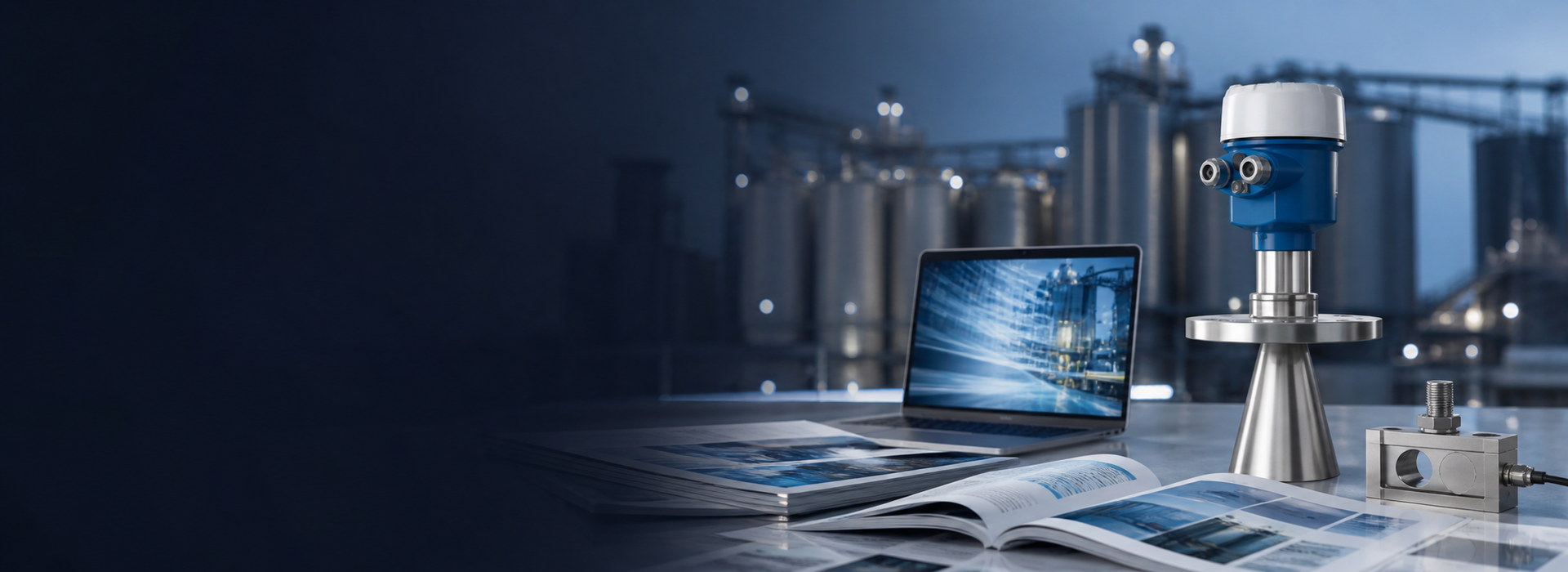
A liquid level sensor is appropriate when surface position, liquid depth or a limit condition directly supports the process decision. It may be the wrong primary measurement when the real requirement is transferred mass, custody quantity, interface composition or flow. The term also covers very different technologies, including radar, hydrostatic pressure, capacitance, floats and point switches. A useful specification defines the measurand, uncertainty and failure response first, then matches the technology to chemistry, vapour, foam, vessel geometry and maintenance. This prevents buying a familiar sensor that measures a convenient variable rather than the one operations actually need. Identify who uses the value, how quickly they must act and what independent evidence is available for acceptance. Provide actual process limits rather than nominal catalogue conditions. If media or recipes change, define their full envelope and a change-control process instead of assuming one initial setup remains valid indefinitely.
Start from the process decision
State whether the value controls filling, protects a pump, estimates inventory, detects leakage or trips on high-high level. Define range, response time, repeatability and total allowed uncertainty.
If the decision depends on mass, concentration or flow, compare weighing, analytical or flow measurement. Converting level may require geometry and density that change with product or temperature.
Compare suitable technologies
Non-contact radar avoids wetted exposure and mechanical probe loading when a clear path exists. Guided radar can suit some interfaces but introduces a probe and its coating or force risks.
Hydrostatic devices infer level from pressure and density. Capacitance, optical, float and vibrating switches can be effective for point duty when material properties and installation are compatible.
Define liquid and gas space
Record chemical identity, concentration, density, dielectric behaviour, conductivity, viscosity, temperature, pressure, foam, vapour, condensation and solids. Include cleaning and upset media.
For interfaces, define both layers, emulsion and required layer thickness. For foam or floating material, state which surface must be reported.
Fit the vessel
Map nozzles, inlets, agitators, coils, ladders and the highest safe liquid. Check blocking or dead zones, beam clearance, probe length and pressure boundary.
Verify all wetted and vapour-exposed materials, process seals and gaskets. Make inspection and removal possible without creating unsafe access or contamination.
Engineer alarms and faults
Calculate high and low setpoints from process response, pump suction, valve timing and line contents. Avoid arbitrary percentages that ignore vessel geometry.
Define safe action for lost signal, device fault, broken wiring and stale data. Use independent protection where risk assessment requires separation from the process transmitter.
Prove the complete installation
Commission multiple known levels and observe filling, emptying, agitation, heating and cleaning. Test local indication, PLC scaling, alarms, interlocks and power recovery.
Retain calibration or echo evidence and as-left settings. Reassess after product, density, vessel, nozzle, piping or logic changes. Acceptance should identify reference uncertainty, process state and unresolved limitations so future users do not treat a single successful check as universal proof of installed performance over time.
Engineering checklist
- Define the variable the process really needs.
- Compare technologies and conversion uncertainty.
- Document liquid, vapour, foam and interfaces.
- Verify geometry, seals and maintenance access.
- Calculate alarm margins and fault responses.
- Commission the full control path.
Frequently asked questions
Can liquid level replace mass measurement?
Only when geometry and density are known well enough for the required uncertainty.
Is non-contact always better?
No. It avoids wetted probes but still needs a suitable target, beam path, process seal and mounting.
When is a separate high-high switch needed?
When the risk assessment or standard requires protection independent of the normal control measurement.
Need a project-specific review? Send process data, drawings, photographs and acceptance criteria through our contact page.
Related measurement solutions
Non-contact radar level meters · Guided-wave radar level meters