


 Chinese
 Spanish
 Russian
 Portuguese
 French
 German
 Indonesian
 Thai
 Vietnamese
 Arabic
 Italian
 Turkish
 Polish
 Japanese


External Ultrasonic Tank Level Measurement for Solvents: Through-Wall Feasibility and Safety
A dedicated external ultrasonic system may detect level through the vessel wall and, where feasible, avoid adding a process penetration during a tank retrofit. However, external mounting does not mean zero plant leakage risk, intrinsic safety or compatibility with every wall construction.
Toluene, xylene, ethanol and acetone require attention to flammable vapors and area classification, but are not all simply “strongly corrosive liquids.” Continuous level feasibility depends on tank construction and a qualified model-specific trial.
Bottom-mounted continuous level versus side-wall point switch
| Design | Measurand | Key limitation |
|---|---|---|
| Bottom-mounted continuous system | Pulse through base and liquid, detect surface return for height | Sound speed, floor geometry, ringing, bubbles and product change |
| Side-wall point detector | Wet/dry state behind sensor at one elevation | One point is not continuous level; wall and coupling limits apply |
A conventional top-down ultrasonic meter sends sound through the tank gas space. Bonding it outside a tank does not convert it into a through-wall level instrument.
Acoustic principle and temperature dependence
Some bottom-mounted continuous systems emit and receive pulses travelling through the liquid column. The signal processor must separate wall/coupling delay from the liquid-path round trip; implementation is model-specific.
h ≈ v_liquid × Δt / 2
Δt is the processed liquid-column round-trip time, not the uncorrected complete transducer timing.
Liquid sound speed varies with temperature, composition and concentration; solvent mixtures need attention.
Even if the liquid transmits sound, entrained gas, stratification, solids or viscous attenuation can destroy a reliable return.
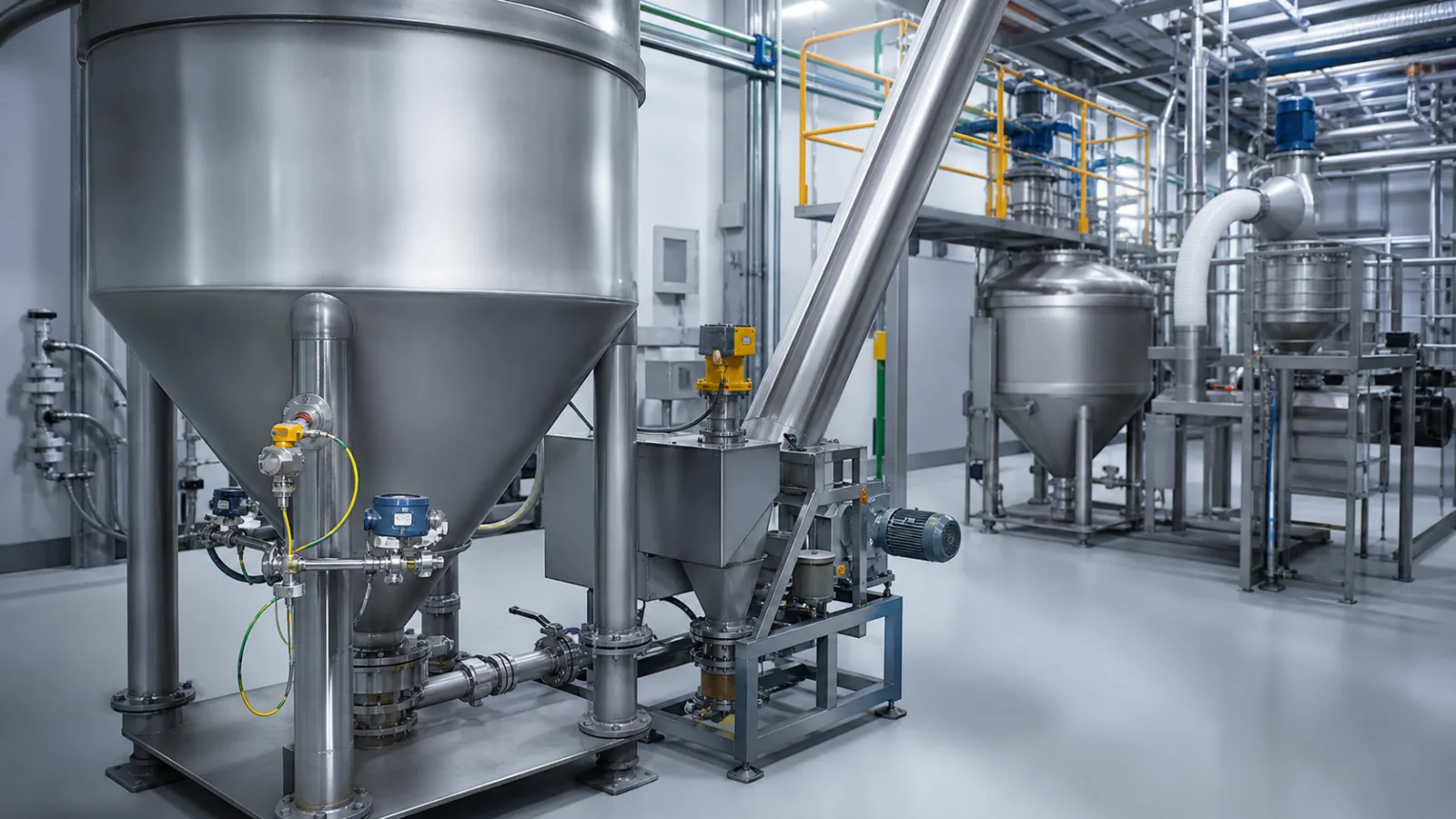
Wall construction, liners and mounting feasibility
| Site detail | Feasibility consequence |
|---|---|
| Wall material and thickness | Propagation, loss and ringing vary; no universal thickness claim |
| Rubber/PTFE lining or glass lining | Multilayer reflection or attenuation; vendor validation required |
| Jacket, double wall, insulation | A usable continuous acoustic path may not exist |
| Welds, corrosion, rough coating | Poor coupling and unstable signal |
| Conical floor, internals, deposits | Acoustic path may not reach free surface as intended |
Couplants, fixtures and surface preparation must follow instrument instructions and site work permits. Do not drill, grind or weld an in-service hazardous tank without approved controls.
Hazardous-area and process-safety boundaries
An external head can eliminate a new measurement-nozzle seal, but existing tank walls, flanges and valves retain leakage risks. It does not replace integrity testing or leak detection.
For flammable-solvent storage, electrical heads, transmitters and cabling within a classified area still need protection and certification matching the zone, gas group and temperature class. Clamp-on installation is not automatically Ex ia intrinsically safe.
Operating pressure, hazardous-area suitability and solvent compatibility must be confirmed for the selected assembly. External mounting alone establishes none of these qualifications.
When radar or another technology is more appropriate
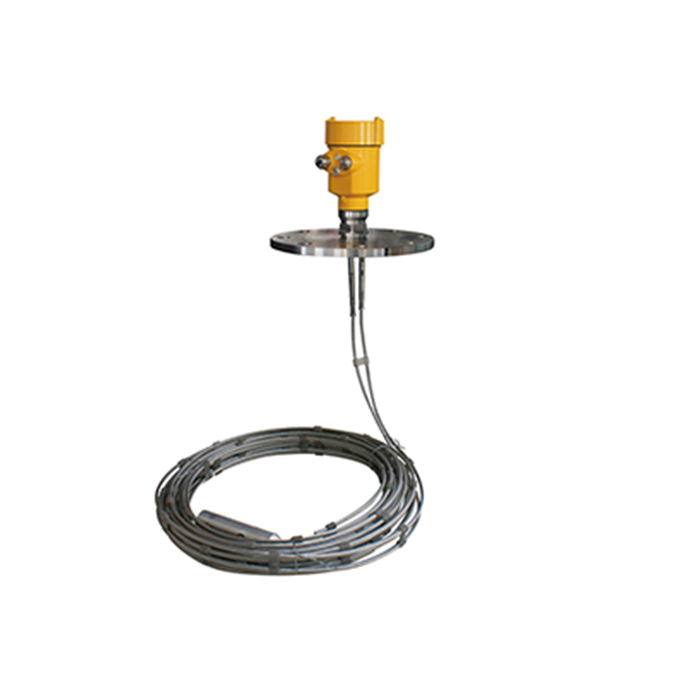
If an existing top nozzle is suitable, free-space radar may be a practical candidate. Guided-wave radar can be assessed where product contact is acceptable. Ordinary free-space radar cannot measure through a metal tank wall from outside.
Compare METRAVON radar level meters and guided-wave radar subject to the selected model’s process and hazardous-area approvals.
| Objective | First feasibility check |
|---|---|
| No added opening during retrofit | Clamp-on acoustic path, work permit and alternative nozzles |
| Continuous inventory height | Liquid-path echo, sound-speed correction and full-span trial |
| Point alarm | Side-wall switch qualifications and threshold repeatability |
| Safety high-high protection | Independent protection-layer requirements, not basic measurement alone |
Field trial, acceptance and procurement FAQ
- Submit wall alloy, thickness, base construction, lining, jacket and weld details.
- Provide solvent composition, temperatures, bubbles/deposits and level span.
- Check classified area, work permit and certified equipment scope.
- Safely test low, mid and high levels against an independent reference across relevant temperatures.
- Record couplant, mounting, loss-of-signal action and PLC mapping before replication.

Q1. Can every stainless tank be measured?
No. Provide wall thickness, lining, jackets and bottom construction before selecting the acoustic head. The proposed mounting position must produce a usable signal on that tank; a successful trial on another stainless vessel does not establish compatibility.
Q2. Can one side-mounted switch report continuous level?
A fixed point detector only indicates whether liquid is present at its sensing position. Continuous height measurement requires a system designed for that duty and verification across the operating span. Confirm the measurement principle before specifying a PLC analog input.
Q3. Can clamp-on always be installed without shutdown?
External mounting does not automatically authorize work on an operating tank. Access, surface preparation, fixtures and hazardous-area equipment must comply with site permits. If preparation or fastening cannot be performed safely in service, schedule the work during an approved shutdown.
Q4. Can toluene and acetone share one calibration?
Not without checking the instrument configuration and liquid properties. A continuous acoustic system that converts travel time using liquid sound speed must account for the actual composition and temperature. Verify readings against an independent reference after a solvent change rather than reusing the previous setup unchanged.
Application checks for four representative solvents
| Liquid | Common buyer question | Required confirmation |
|---|---|---|
| Toluene | Can electronics be mounted outside this tank? | Area classification, wall, sound speed and temperature |
| Xylene | Does isomer/mixture ratio change? | Sensitivity of sound speed to changing composition |
| Ethanol | Is water content or concentration variable? | Level error across composition and temperature |
| Acetone | How is the sealed tank classified? | Area approvals, coupling and full-span verification |
These are feasibility checks, not promises that any solvent necessarily works with clamp-on measurement or that an off-the-shelf METRAVON device exists. Strong-acid and high-purity applications need their own material and hygienic verification.
Request engineering selection and quotation from METRAVON
For solvents or other hazardous chemicals, provide tank alloy and thickness, liners/jackets, bottom construction, medium and temperature, hazardous-area classification, continuous-versus-point duty and photos. METRAVON can discuss measurement options; availability of any external ultrasonic model requires separate confirmation.
Engineering email: Arvin@metravon.com
Phone / WhatsApp / WeChat: +86 153 6781 2163
