Chinese
 Spanish
 Russian
 Portuguese
 French
 German
 Indonesian
 Thai
Thai Vietnamese
 Arabic
 Italian
 Turkish
 Polish
 Japanese

Chemical-process weighing can measure mass through foam, vapor and changing dielectric properties, but the system still responds to every external force on the vessel. Piping, pressure, thermal expansion, agitators and access structures may create errors or overload supports. Chemical compatibility and hazardous-area certification also apply to cells, junction boxes, barriers and maintenance methods. Selection should combine process duty, structural loads, measurement uncertainty and safety functions rather than treating the weighing system as a generic platform scale.
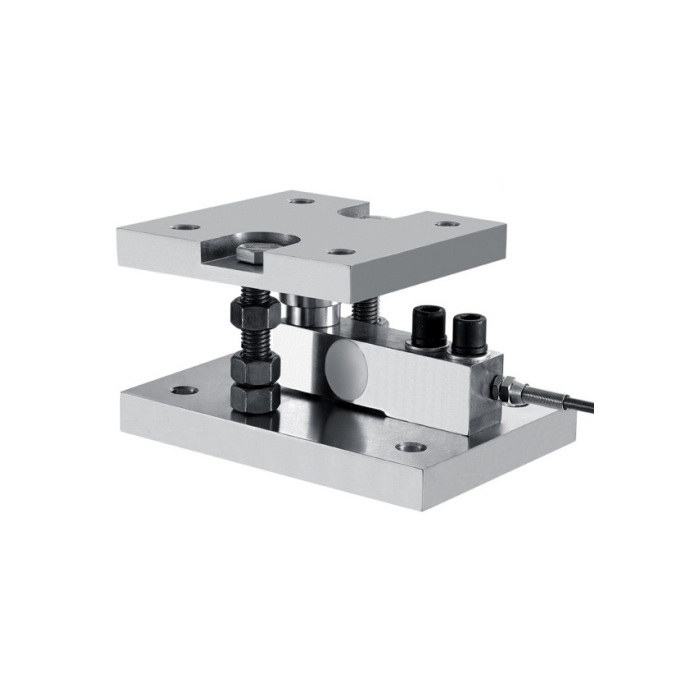
Define process and safety duties
List raw materials, intermediates, cleaning media, concentration, temperature, pressure and batch sequence. State whether weight controls charging, reaction, transfer, inventory or low/high protection. Identify independent safeguards and required hazardous-area boundaries. Measurement and safety functions need separate approval.
Calculate vessel reactions
Include vessel tare, maximum contents, mixer torque, recirculation, fill impact, centre-of-gravity shift, pressure thrust, wind and seismic loads. Determine compression and uplift at each support. Evaluate cleaning and maintenance states, which may change attachments or liquid distribution.
Control piping and thermal forces
Document every process pipe, hose, vent, jacket and utility connection with direction, support, pressure and temperature. Use appropriately flexible arrangements and independently support pipework where possible. Test weight through heat-up, pressure and valve states. Symmetry does not guarantee forces cancel.
Verify materials and hazardous compliance
Check load-cell, module, cable, junction-box and enclosure materials against spills, vapor, washdown and corrosion. Confirm exact zone or division, gas or dust group, temperature class, barrier and certificate conditions. Do not mix certified components without assessing the complete installation.
Design reliable failure behavior
Carry overload, open circuit, unstable signal, communication loss and maintenance state to the control system. Define whether batching stops, holds or alarms. A frozen weight must not continue authorizing chemical addition. Control setpoint, tare and calibration access by role and audit trail.
Coordinate batch dynamics
Set sampling, filtering and cutoff compensation from actual flow rate, valve delay, material in flight and agitation. Preserve raw and filtered tags with units and quality. Validate minimum and maximum recipes. Do not hide a mechanical fluctuation by excessive damping that worsens batch overshoot.
Calibrate safely
Plan traceable weights, substitution material or another approved reference without unsafe exposure or uncontrolled vessel entry. Verify range, repeatability, hysteresis, batch cutoff, alarms and recovery. Record process state, temperature, pressure and connections during calibration so results are reproducible.
Apply change control
Reassess after recipe, piping, vessel, agitator, module, barrier, electronics or software changes. Preserve as-found evidence before adjustment. Review trends for corrosion, restraint movement, cable insulation and calibration drift. Link repairs to the correct equipment and certificate records.
Engineering checklist
- Define measurement and safeguard roles.
- Calculate uplift and eccentric reactions.
- Quantify pipe and temperature forces.
- Verify complete hazardous-area scope.
- Stop unsafe batching on invalid weight.
- Calibrate with documented process conditions.
Frequently asked questions
Does weighing ignore chemical properties?
Mass measurement is less dependent on dielectric properties, but temperature, corrosion and external forces still matter.
Can the same signal provide batch control and safety shutdown?
Only when the risk assessment accepts the shared failure path and documented architecture.
Why test heated conditions?
Thermal expansion and piping forces can shift weight even when true mass is unchanged.
Decision record
Record the selected architecture, operating cases, assumptions, accepted limits and responsible approver. Attach drawings, calculations, calibration evidence and unresolved deviations. Include inspection interval, spare strategy, fault response and recoverable configuration location. Assign an owner and closure date to each conditional acceptance. Review actual drift, faults and maintenance findings after representative service, and revise the engineering basis when evidence contradicts an assumption. Make the record available to operations and maintenance, with revision history and asset identity, so later adjustments can be compared with the accepted baseline rather than treated as undocumented tuning.
Need a project-specific review? Send load cases, drawings, environment, signal requirements and acceptance criteria through our contact page.