Chinese
 Spanish
 Russian
 Portuguese
 French
 German
 Indonesian
 Thai
Thai Vietnamese
 Arabic
 Italian
 Turkish
 Polish
 Japanese
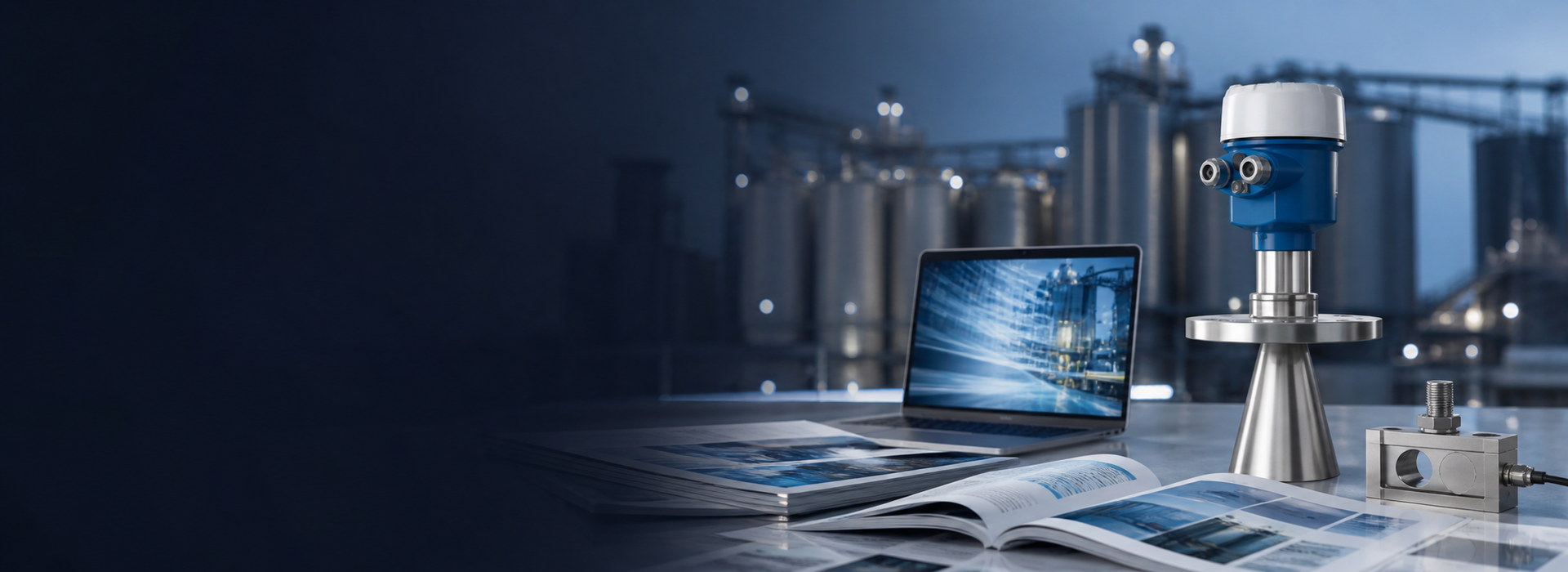
High-temperature or pressurized radar level measurement is an assembly decision, not a frequency-only purchase. The antenna, process seal, flange, gasket, housing and any thermal extension must remain suitable at normal, startup, shutdown, cleaning and credible upset conditions. Steam, condensation and rapid temperature change also alter the measurement environment. A useful RFQ therefore states the complete process envelope, vessel geometry, required duty and acceptance method, and asks the supplier to identify assumptions and limits for the exact offered configuration.
Define the full process envelope
List minimum, normal and maximum temperature and pressure, including vacuum, steaming, cleaning, startup and upset states. Identify the product, vapour composition, condensate, corrosive components and solids or coating. State whether temperature changes rapidly and whether the nozzle or roof can be hotter or colder than the bulk process. Design and approval should use simultaneous credible conditions rather than unrelated maximum catalogue values.
Specify the complete pressure boundary
Require materials and ratings for the antenna, seal, process connection, flange, gasket, bolts, adapters and isolation devices. Confirm the governing code, flange standard and hazardous-area approval. Do not assume that a high-temperature electronics rating proves process-seal suitability. Ask for model-specific drawings and certificates that match the ordered construction and identify any parts that cannot be replaced independently.
Manage heat at the electronics
Review conduction through the nozzle, radiation from the vessel, ambient temperature, insulation and solar gain. A thermal extension or remote arrangement may be necessary, but it must be an approved part of the assembly. Preserve ventilation and service access, and avoid wrapping the housing in process insulation. Define how enclosure temperature will be checked during commissioning under a representative hot condition.
Account for steam and condensation
Dense vapour, wet antenna surfaces and condensate at the nozzle can reduce signal margin or create reflections. Review nozzle projection, drainage, antenna geometry and any approved purge arrangement. Describe pressure and temperature transitions rather than only steady-state conditions. Selection evidence should address the actual vapour path and product dielectric behaviour; generic statements that radar is unaffected by steam are not an engineering basis.
Protect the beam and reference geometry
Provide vessel height, nozzle bore and length, reference plane, maximum level, internals, inlet jets and moving equipment. Check antenna projection and the beam envelope through every adapter. Thermal movement can change alignment or dimensions, so identify the governing reference state and tolerance. The high alarm must retain adequate clearance from the blocking distance at the most demanding process condition.
Define output and failure behaviour
State power, 4–20 mA, HART or digital communication requirements, barriers, cable entries and surge protection. Define fault current, lost-echo response, stale-data limit and alarm behavior in the PLC or DCS. If the measurement contributes to overfill protection, document independence and response time separately. A valid local display is not proof that the control system handles an invalid measurement safely.
Require evidence before award
Ask for an exact model code, outline drawing, pressure and temperature ratings, wetted materials, approvals, installation limits, configuration tools and deviations. Require the supplier to mark values that need confirmation. Compare quotations only after these boundaries are aligned; a lower-priced unit may omit a thermal extension, rated seal, mating hardware or commissioning support required by the application.
Plan acceptance under representative conditions
Inspect identity, materials, flange, gasket, antenna projection, alignment, grounding and cable sealing before startup. Capture baseline echo curves and compare known levels at ambient and representative hot conditions where practical. Record enclosure temperature, process pressure, output scaling, alarms and recovery after transitions. Unobserved conditions should remain explicit limitations with an owner and a future verification trigger.
Engineering checklist
- State simultaneous temperature and pressure limits.
- Approve the complete process-pressure assembly.
- Review heat transfer to the electronics.
- Address steam, condensate and temperature transitions.
- Verify beam, blocking distance and reference plane.
- Test output, faults and representative hot operation.
Frequently asked questions
Can a standard radar be used if only the housing stays cool?
Not on that fact alone. The process seal, antenna, connection and approvals must also suit the complete duty.
Does radar ignore steam?
No. Vapour and condensation effects depend on the application and must be reviewed with signal margin and geometry.
What should remain open after commissioning?
Any untested maximum condition should be recorded with an operating control and a defined later verification method.
Need a project-specific review? Send process data, drawings, photographs and acceptance criteria through our contact page.