


 Chinese
 Spanish
 Russian
 Portuguese
 French
 German
 Indonesian
 Thai
 Vietnamese
 Arabic
 Italian
 Turkish
 Polish
 Japanese


Intermittent RS485 communication needs evidence from the failed period. A bus that reads correctly while production is stopped may fail when a drive starts, a cabinet warms up or more instruments are polled. Record affected addresses, error counts and operating conditions before reconnecting cables or increasing retries.
Separate a shared bus fault from one device's failure
If several addresses fail together, inspect shared power, the trunk and polling activity. If only one address fails, compare that device's supply, spur, terminals and response timing with its neighbours. These are starting points, not diagnoses: one defective node can also disturb an entire segment.
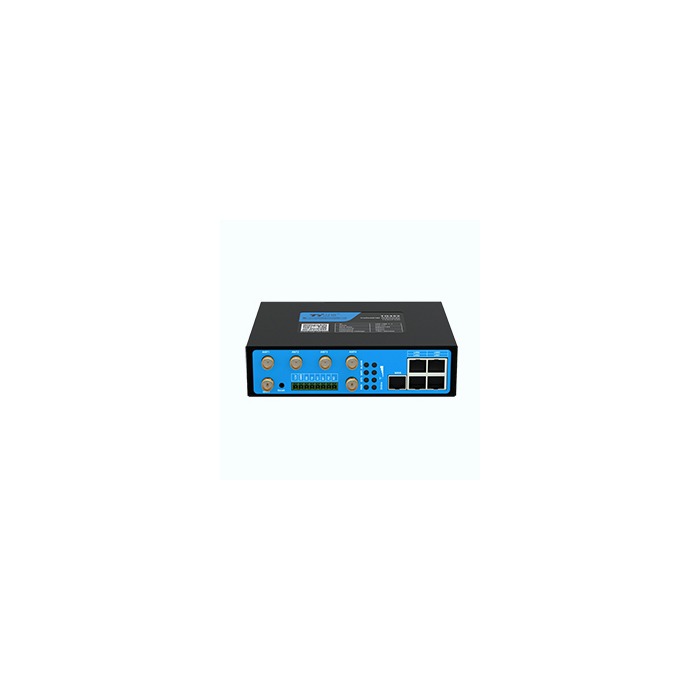
The METRAVON TG453 gateway lists two RS485 interfaces and an RS232 debug port. Confirm which RS485 port carries each group before comparing logs. Two ports can support separately planned segments when the firmware supports the required tasks, but their presence does not specify an allowable cable length, instrument count or scan rate. The debug port is not an additional field RS485 connection.
Use the fault pattern to choose the next test
| Pattern | Useful evidence | Test direction |
|---|---|---|
| One node | Failures stay with one address while other devices respond. | Check that node's power, connection, address uniqueness and timing before replacing the gateway. |
| Motor start | Errors coincide with a recorded switching event. | Compare cable routing, supply disturbance and signal measurements under the same event. |
| Added load | A previously stable segment changes after devices or polling tasks are added. | Review electrical loading, branch wiring and whether requests now overlap. |
| Long run | The fault appears after temperature or operating time changes. | Log cabinet temperature and supply at the affected equipment; inspect joints during an authorised shutdown. |
Correct the physical arrangement, not just the labels
Draw the installed trunk and its branches. For a conventional two-wire bus, use a main trunk with short drops; assess existing stars before adding more cable. Termination belongs at the physical ends of the segment, with the arrangement specified for the cable and devices. Check built-in termination before adding external parts. Biasing also needs a deliberate design rather than a resistor set at every node.
Confirm the actual terminal functions from both manuals. A and B lettering alone is not enough to establish compatible polarity across different equipment. Signal reference, shield and protective earth have different purposes. Follow the approved bonding design; do not disconnect protective earth to see whether communications improve.
A resistance reading taken with power isolated can help find an open circuit or unexpected parallel termination, but connected electronics affect the result. It is not a substitute for a wiring drawing or a waveform assessment. Qualified personnel should use suitable isolated equipment when checking a live industrial bus, particularly between grounding zones.
Diagnose intermittent RS485 communication under normal traffic
Keep timeouts, CRC errors and valid exception replies as separate counters. Compare a quiet-period capture with a failed-period capture using the same analyser settings. Look for overlapping transmitters, delayed replies and whether failures move when a device is placed on an approved short test segment. Never add a second uncontrolled master as a diagnostic shortcut.
Reduce the polling load as a controlled comparison, then restore the intended rate. If only the reduced rate works, establish whether device response time, serial timing or electrical margin is limiting operation. A successful slow test is not acceptance for the original production schedule. For requests that fail consistently rather than intermittently, use the Modbus request and register checks.
Repair verification questions
Q1. Is a lower baud rate an acceptable permanent solution?
It can be, if every device supports it and the resulting scan still meets the application's response requirement. Repeat the conditions that caused the fault. A lower rate does not resolve damaged insulation, unsuitable grounding or a loose terminal, even if it reduces visible errors.
Q2. When should a repeater or isolation be considered?
Consider segmentation when the route, loading or grounding domains require it. Select the hardware from the resulting bus design and environment. Adding a repeater without finding duplicate addresses or competing pollers leaves those causes in place.
Q3. How long should the repaired bus be observed?
Choose an observation period that includes the known trigger and the required operating cycle, with an agreed error criterion. Record total requests as well as failures. Ten errors in a short low-traffic test and ten errors over a large production run are not equivalent evidence.
Summary
Close the fault with an updated bus drawing, the changed setting or component, and comparable before-and-after traffic records. For a TG453 field-network review, include cable routes, connected devices, port assignments and the fault timeline. Those details determine whether rewiring, segmentation or polling changes are justified.
