Chinese
 Spanish
 Russian
 Portuguese
 French
 German
 Indonesian
 Thai
Thai Vietnamese
 Arabic
 Italian
 Turkish
 Polish
 Japanese
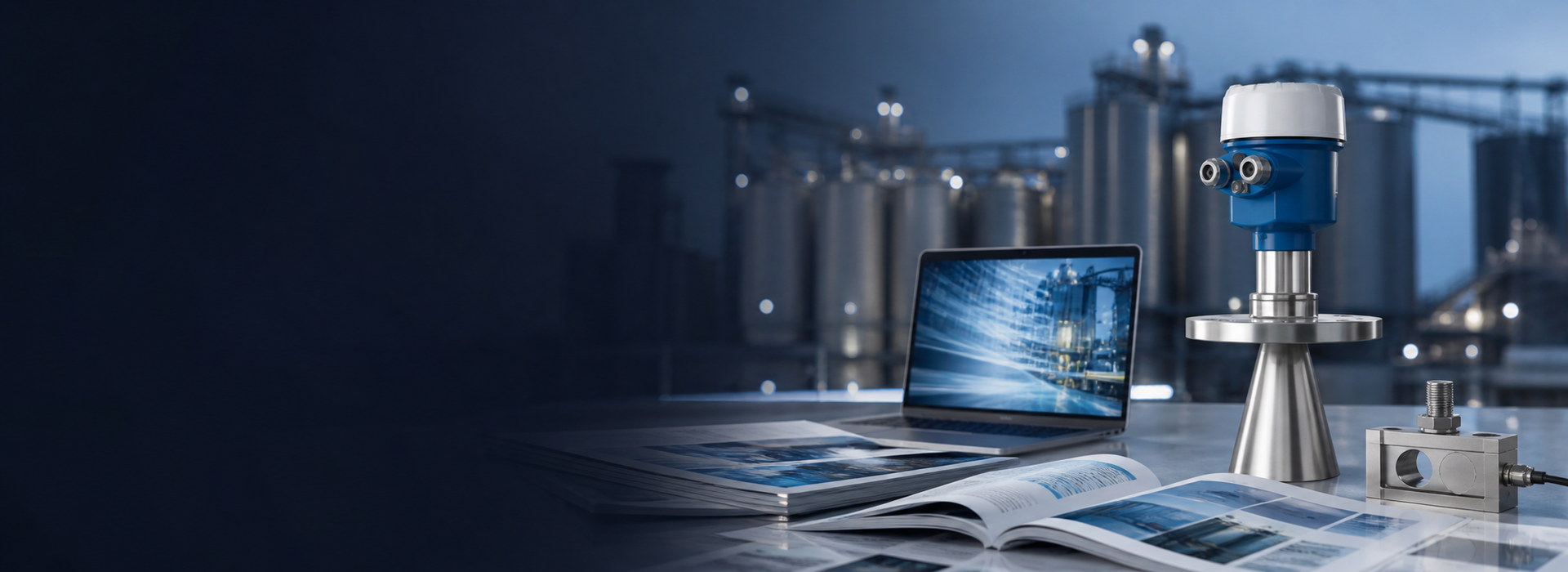
A label such as acid-resistant, PTFE-lined or 316L does not prove that a radar level meter suits a chemical tank. Compatibility depends on the exact chemical, concentration, temperature, impurities, vapour phase, pressure, cleaning method and exposure time. Every process-facing component—not only the antenna—must be reviewed against normal, startup, cleaning and upset conditions.
Define the complete chemical envelope
List the trade name and composition of the liquid, concentration range, contaminants, temperature and pressure. Include dilution water, catalysts, inhibitors and products created during reaction. Corrosion can accelerate sharply with temperature or a small impurity, so a broad entry such as 30% acid at ambient temperature is not enough for a heated batch vessel.
Describe the gas space separately. Condensate above the liquid can be more aggressive than the bulk phase, and cleaning chemicals or steam may expose parts that are dry during production. Record maximum duration as well as peak values.
Map every exposed component
Identify antenna, process seal, flange face, gasket, bolts, process adapter, purge connection and any exposed metal behind a lining. A non-metallic antenna does not protect an unsuitable gasket or flange. Confirm whether the instrument uses a barrier that isolates electronics from the process and how leakage would be detected.
Review external atmosphere too. Chemical fumes, salt air and washdown can attack housings, glands and brackets. The enclosure material and cable entry system need their own compatibility check.
Use material data correctly
PTFE often offers broad chemical resistance, but permeation, cold flow, mechanical support and temperature limits still matter. PVDF can provide useful chemical and mechanical properties but is not interchangeable with PTFE. 316L may perform well in many services yet be vulnerable to chlorides, reducing acids, crevices or stress-corrosion conditions.
Use current manufacturer compatibility data for the actual grade and manufacturing form. Treat charts as screening tools, not warranties. Where consequences are high or data conflict, obtain written application confirmation and consider representative coupon or material testing.
Check installation and temperature boundaries
Keep the antenna clear of the fill jet, crystallized deposits and metal obstructions. Confirm nozzle diameter, antenna projection and condensation behaviour. A protective lining must not create a recessed pocket that traps product or a narrow bore that generates false echoes.
Separate process temperature from electronics temperature. Thermal extensions, insulation boundaries and ambient sun load affect the allowable installation. Confirm gasket load and flange torque for temperature cycles without applying values from an unrelated flange system.
Plan inspection and containment
Define what maintenance can be performed without opening a hazardous vessel. Inspection should look for swelling, cracking, discoloration, leakage, loose connections and deposits. Establish replacement criteria before service rather than waiting for a measurement fault.
Level measurement does not replace overfill protection, leak detection or secondary containment. Assign each protection layer according to the site's risk assessment and verify alarms independently.
Worked selection review
A tank stores a heated alkaline solution but is periodically cleaned with an acidic agent. The production liquid alone suggests several suitable materials; the cleaning cycle eliminates an elastomer seal and exposes the underside of the flange to condensate. The final specification records both media, their temperatures and exposure times.
During commissioning, the team verifies the process barrier, antenna projection, echo curve, local reading, PLC scaling and high alarm. The compatibility evidence and approved material list are retained with the asset record.
Engineering checklist
- Record exact chemicals, concentration and impurities.
- Include vapour, cleaning and upset conditions.
- List every wetted and externally exposed component.
- Verify the exact PTFE, PVDF, metal and seal grades.
- Confirm nozzle, temperature and pressure limits.
- Keep independent protection functions separate.
Frequently asked questions
Is PTFE suitable for every acid and alkali?
No. Permeation, temperature, mechanical design and the complete chemical mixture still require review.
Can 316L be selected from pH alone?
No. Chlorides, concentration, temperature, oxygen and crevice conditions can dominate corrosion behaviour.
Who should approve chemical compatibility?
The user should provide complete process data, and the equipment supplier and material specialist should confirm the proposed construction for the stated conditions.
Need a project-specific review? Send the medium data, vessel drawing, operating conditions and acceptance criteria through our contact page.
Related measurement solutions
Non-contact radar level meters · Guided-wave radar level meters