Chinese
 Spanish
 Russian
 Portuguese
 French
 German
 Indonesian
 Thai
Thai Vietnamese
 Arabic
 Italian
 Turkish
 Polish
 Japanese
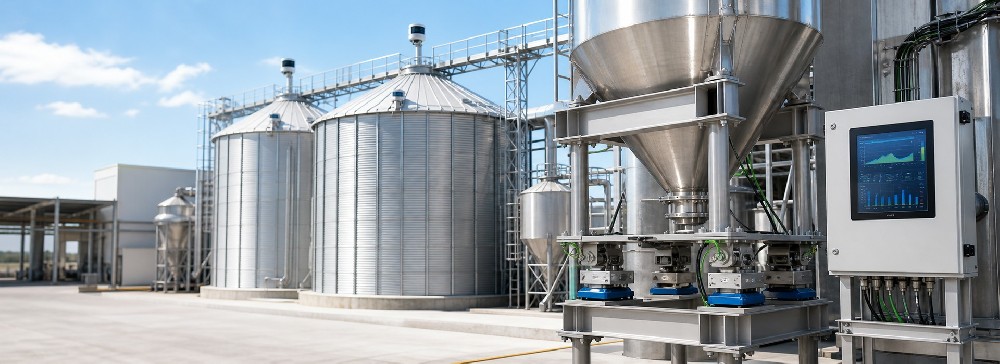
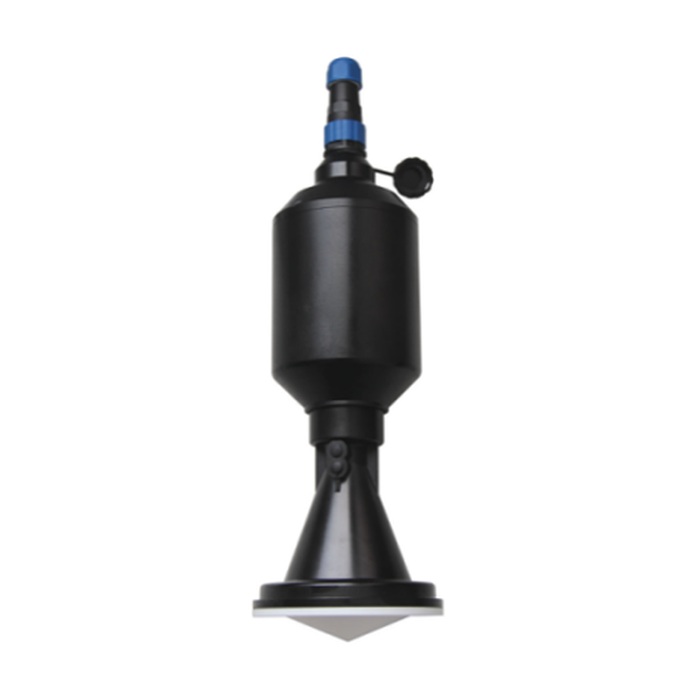

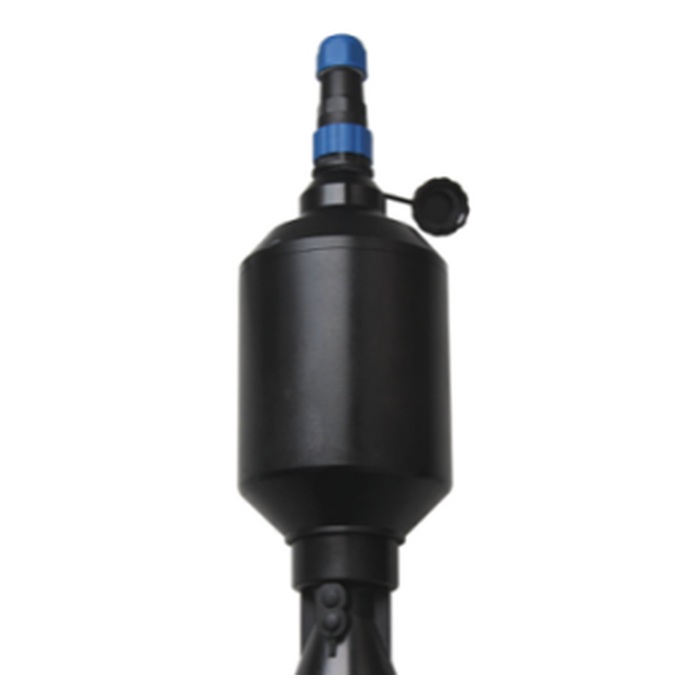
selection summary
It is used for non-contact continuous water level measurement in manholes, drainage pipe networks and rivers. The reference range is 0-30m. It adopts PP fully sealed housing and has a protection level of IP68. Before ordering, you must also confirm the installation elevation, maximum and minimum water levels, protection, brackets, power supply and communication, lightning protection and whether flow calculation is required.
Product overview
MV-RD908F IP68-rated 26 GHz radar water level meter is used for non-contact continuous water level measurement in open water bodies or municipal water scenes. The meter outputs distance or water level, which can be used for real-time monitoring, over-limit alarm and change trend analysis; it is not a radar flowmeter that alone completes flow calculation.
Measurement principle
The 26 GHz radar emits microwave pulses from the installation point to the water surface. After receiving the echo from the water surface, it calculates the distance from the antenna to the water surface, and then converts the real-time water level based on the installation base elevation. The instrument does not come into contact with the water body and is suitable for monitoring points with high risks of sewage, floating objects and siltation.
Usage scenarios
- Urban manholes, rainwater and sewage pipe networks and underground monitoring points susceptible to short-term water accumulation.
- Non-contact continuous water level and rising trend monitoring of rivers, channels and reservoirs.
- Points that are not suitable for submersible sensors in sewage, floating objects, silt or corrosive environments.
- It needs to be connected to RTU, gateway or remote site of online hydrology platform through RS485 Modbus.
Value applied to procurement and technicians
Technical parameters
| Typical applications | Sewers, manholes, rivers and high humidity water level monitoring points |
|---|---|
| Measuring range | 0-30m |
| Measurement accuracy | ±5mm |
| Working frequency | 26 GHz |
| process connection | Gantry frame or locking flange, flange from DN80/3 inches |
| process temperature | -40~80℃ |
| process pressure | -0.1~0.3MPa; open water bodies are usually confirmed by normal pressure |
| Protection level | IP68 |
| Shell | PP fully sealed shell |
| Electricity | Two-wire system DC24V; four-wire system DC6-24V or AC220V (confirm according to output configuration) |
| Signal output | RS485 Modbus or 4-20mA/HART |
| Measurement interval | About 1 second, changes with parameter settings |
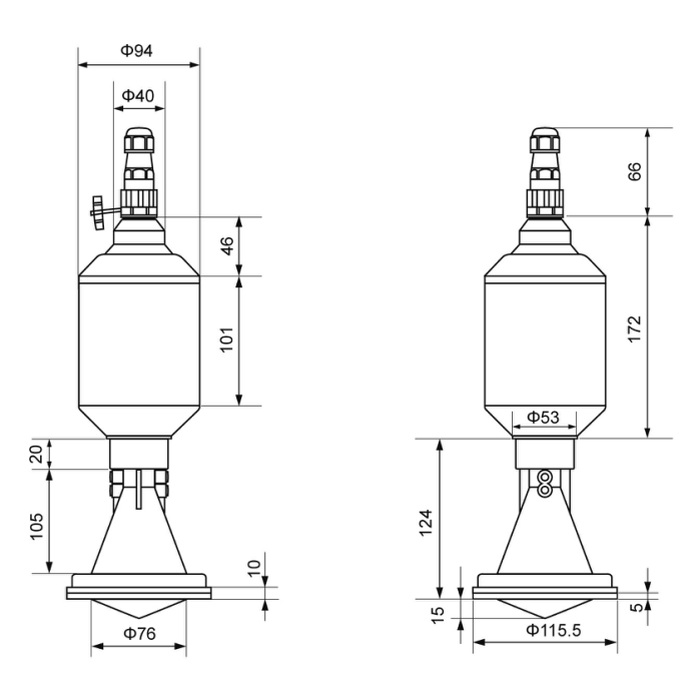
Description: The page parameters are used for inquiry and preliminary selection. The range, accuracy, protection, housing, power supply and output need to be confirmed according to the complete model combination. The upper limits of different configurations cannot be used at the same time by default.
Selection guide
- Provide the maximum distance from the installation point to the lowest water surface, the highest water level and the allowable blind zone. The measurement range must retain a flood margin.
- Describe manholes or river sections, structures under bridges, waves, foam, floating objects and facilities that may block the beam.
- Confirm whether the device is likely to be submerged for a short period of time and check IP68 conditions, cable sealing and lead-through according to the final model.
- Choose gantry frame or locking flange, and provide bracket diagram, installation reference elevation and lightning protection grounding plan.
- Unify RS485 Modbus or 4-20mA/HART, power supply voltage, station number, baud rate and platform acquisition cycle.
- If it is necessary to calculate the flow rate, the parameters, cross-section and calibration relationship of the water measuring building must be provided at the same time, or the flow rate measurement must be configured.
Key points for installation and commissioning
- The antenna is aimed vertically at a representative water surface, avoiding shaft walls, bridge members, guardrails and water drop points.
- The highest water level cannot enter the measurement blind zone, and floods, surges and back pressure in the well should be included in the safety margin.
- For outdoor installation, reliable brackets, lightning protection grounding and cable drip bends should be installed, and sealed joints should be checked.
- Use the measurement datum and the local elevation datum to complete the zero point conversion and record the installation elevation to avoid saving only the instrument height.
- Check on-site ruler readings, communication values, alarm thresholds and network disconnection cache during low water level, normal water level and rising water stage.
Related water level and flow products
FAQ
What scenarios is MV-RD908F suitable for?
It is suitable for non-contact water level monitoring points such as manholes, sewers, drainage pipe networks, rivers, etc. where there is high humidity or where water may accumulate for a short period of time.
What is the measuring range and accuracy of MV-RD908F?
The reference range of product specifications is 0-30m, and the reference accuracy is ±5mm; the final usable range also needs to deduct the blind zone and retain the flood margin.
Does IP68 mean it can be soaked in water for a long time?
Long-term immersion conditions cannot be judged solely by the word IP68. Enclosure, cable connections, immersion depth, duration and installation method should be confirmed as per final model specification.
What is most easily overlooked when installing a manhole?
It is most easy to ignore the fixed echo of the well wall and ladder, the highest water level entering the blind zone, the water intrusion of the cable, and the manhole cover blocking the communication and maintenance space.
What is the value of PP fully sealed shell?
PP fully sealed enclosures are beneficial in high humidity and corrosive environments, but cable entries still need to be properly sealed and protected from mechanical shock, pulling, and non-instructional water immersion.
Can MV-RD908F directly measure flow?
Flow cannot be measured directly. It outputs distance or water level; flow also requires water measurement building formulas, water level-flow rate curves, or flow velocity and cross-sectional area data.
Will the radar water level gauge be affected by sediment and floating objects?
The sensor does not contact the water body, which can reduce sediment adhesion and floating objects entanglement, but large-area floating objects, waves and fixed obstacles may still form abnormal echoes.
How to connect radar water level meter to RTU or PLC?
RS485 Modbus or 4-20mA/HART available. Before connecting, the power supply, station number, baud rate, range, fault value, sampling period and grounding must be unified.
Why must the base elevation be recorded during installation?
The instrument first measures the altitude. Only by knowing the elevation of the radar datum can the water level and elevation be stably converted and the same data datum restored after maintenance and replacement.
What information do I need to provide when making an inquiry about MV-RD908F?
Please provide the minimum and maximum water levels, installation elevation, site photos, sections and obstacles, temperature, protection, power supply and communication, lightning protection, platform interface and whether flow calculation is required.
Ordering instructions
When ordering, please provide the minimum and maximum water levels, radar installation base elevation, site and section photos, waves and floating objects, brackets and process connections, protection and temperature, power supply and communication, lightning protection grounding, platform protocol, alarm purpose and whether flow calculation is required. The final parameters are subject to the written selection confirmation and order drawing.